
RAYONG, Thailand – Industry Minister Varawut Silpa-archa visited Map Ta Phut Industrial Estate in Rayong on May 30 to meet with major industry operators and discuss plans to transform the area into a Smart & Sustainable Industrial Complex, positioning it as a regional hub for green and intelligent industry. Speaking during the visit, Varawut described Map Ta Phut as the heart of Thailand’s industrial sector and the country’s largest base for petrochemical, energy, and related industries. The complex comprises six industrial estates and one industrial port, serving as a critical pillar of Thailand’s economy and investment activity within the Eastern Economic Corridor (EEC).
The minister said the government remains committed to strengthening Thailand’s industrial competitiveness while promoting sustainable development. He emphasized the goal of turning Map Ta Phut into a model for next-generation industrial estates through the adoption of advanced technology, innovation, and efficient environmental management.
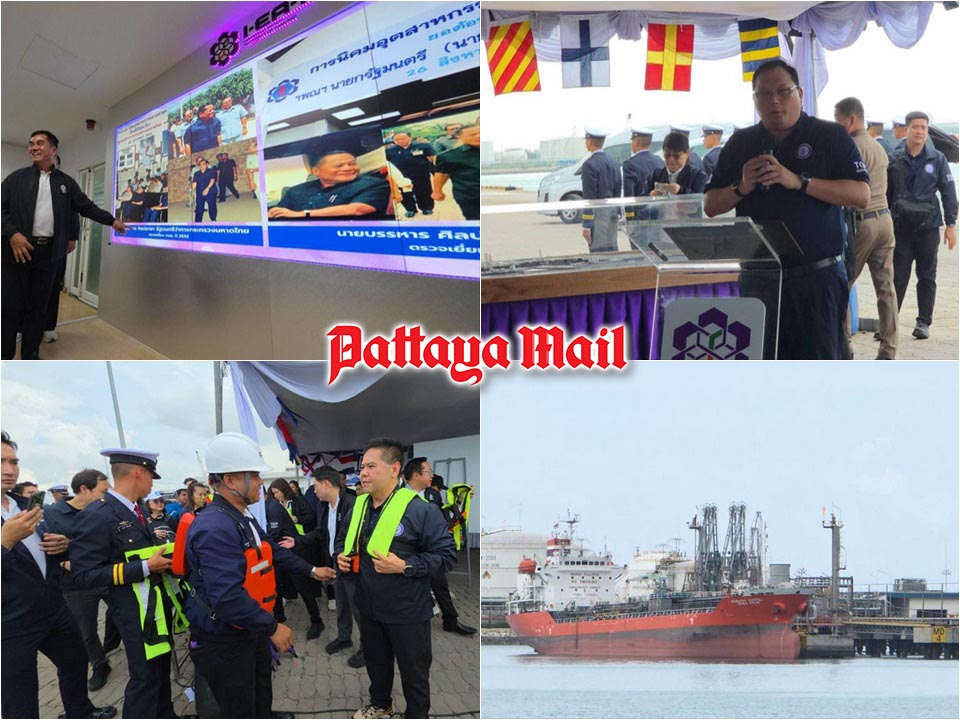
During the visit, Varawut toured Map Ta Phut Industrial Port and the energy learning center operated by BLCP Power to study energy and environmental management practices in the area.
Representatives from several major industrial companies, including Bangkok Industrial Gas, BLCP Power, Global Power Synergy, IRPC, PTT Global Chemical, SCG Chemicals, and Star Petroleum Refining, attended discussions and outlined five major challenges currently facing Thailand’s industrial sector. The first challenge is increasing competition in the global petrochemical industry, driven by excess supply in Asian markets, which is affecting profitability and discouraging new investment. Industry leaders called for improved infrastructure and regulatory reforms to enhance business efficiency. The second challenge is rising energy and utility costs, which continue to impact industrial competitiveness. Companies urged greater access to clean energy, expanded shared utility systems, and stronger support for renewable energy projects to help meet RE100 sustainability commitments.
The third challenge involves growing environmental and carbon-reduction requirements imposed by international markets. Particular concern was raised over the European Union’s Carbon Border Adjustment Mechanism (CBAM), which could increase costs for Thai exporters. Industry representatives proposed joint public-private investment in green infrastructure, clean energy, hydrogen technologies, and carbon capture, utilization, and storage (CCUS) systems. The fourth challenge concerns regulatory procedures. Businesses called for faster approval processes, reduced bureaucracy, digitalized EIA and EHIA procedures, one-stop service systems, and the establishment of regulatory sandboxes to support industrial innovation. The fifth challenge focuses on logistics and transport efficiency. Stakeholders advocated for the development of a Smart Port system, improved coastal shipping services, integrated port data management through a Port Community System, and expanded central pipeline networks to reduce costs and improve safety.
Varawut said the Ministry of Industry and the Industrial Estate Authority of Thailand have acknowledged the proposals and are prepared to support infrastructure and ecosystem development to strengthen Thailand’s competitiveness and attract future industries. Meanwhile, IEAT Governor Sumet Tangprasert said the agency is shifting its role from industrial estate developer to a broader Industrial Infrastructure and Ecosystem Platform provider. The strategy will focus on four key areas: shared utility systems, carbon-reduction platforms, circular economy initiatives, and the transformation of industrial estates and ports through 5G, artificial intelligence, and IoT technologies. The visit reflects the government’s broader strategy to transform Map Ta Phut from a traditional industrial base into a regional center for smart and sustainable industry, capable of meeting the demands of an evolving global economy and increasingly stringent international trade standards.