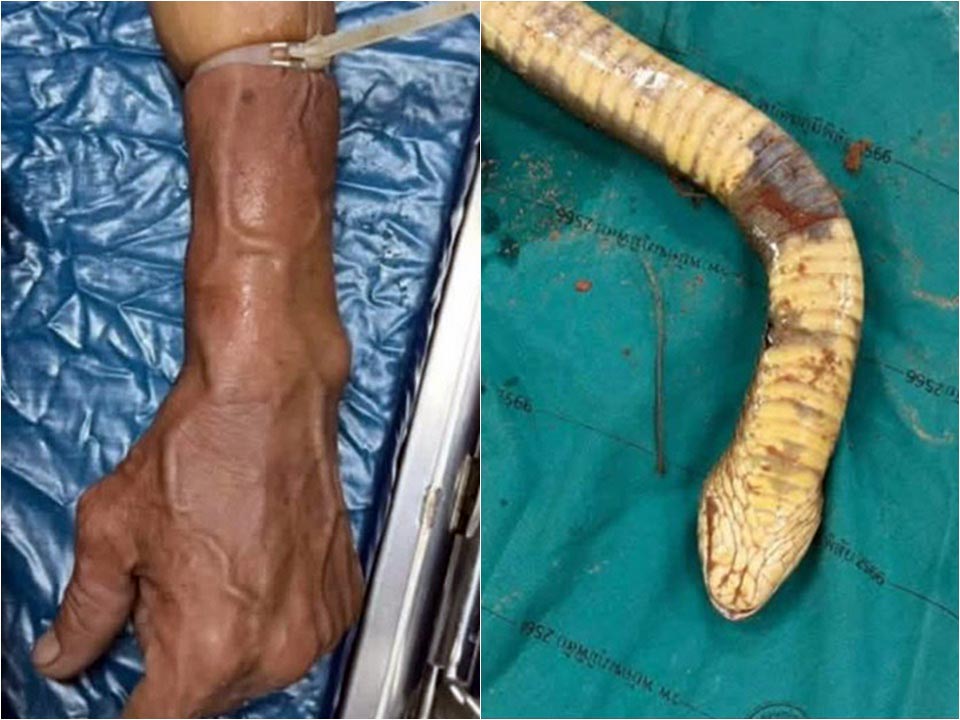
BANGKOK, Thailand – Popular Thai social media pages are urgently warning the public to stop using the traditional practice of tying tight tourniquets after snake bites, saying the outdated method does not stop venom from spreading and could instead lead to permanent disability or even amputation. On May 23, Facebook user “Jack Thekop” shared a warning after encountering another snakebite case where the victim’s arm had been tightly bound with a makeshift tourniquet.
The post quickly gained attention online after the user stressed that tying off a limb does not prevent venom from reaching the heart and can dangerously cut off blood circulation. “Doctors are going to faint,” the post joked, before adding: “If the limb loses blood supply, the patient could end up losing an arm.” The post advised that the correct first aid method is to wash the wound with clean water and immediately take the victim to hospital. It also warned against cutting the wound, attempting to suck out venom, or tightly binding the affected limb until the pulse disappears. Instead, people were urged to remember the appearance of the snake to help doctors administer the correct treatment.
Popular Thai page “Drama-addict” also echoed the warning, explaining that modern medical guidance no longer recommends tourniquets for snakebite victims because they do not stop venom from entering the bloodstream and may severely damage tissue due to restricted circulation. The page advised that snakebite first aid should instead resemble treatment for a broken arm or leg — immobilizing the affected area with a splint, wrapping it gently, keeping the victim still, and rushing them to hospital as quickly as possible. The warning comes as Thailand enters the rainy season, when encounters with venomous snakes become more common, especially in forested and rural areas.