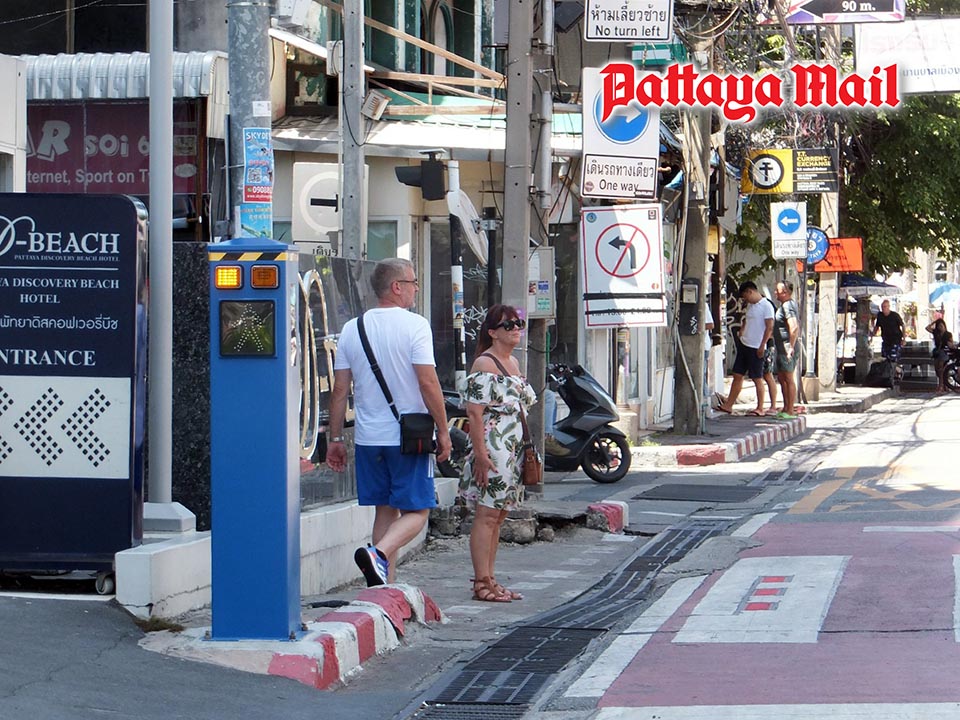
PATTAYA, Thailand – For a city that markets itself as a global tourist destination, Pattaya is facing growing criticism over a basic but increasingly urgent issue: pedestrian safety. Recent incidents involving crosswalk crashes have reignited long-standing concerns from both residents and visitors, many of whom say walking in the city—whether on the road or even the sidewalk—has become dangerously unpredictable.
Online discussions, particularly on local forums and expat-driven platforms, paint a troubling picture. One commenter bluntly stated that Pattaya “doesn’t protect pedestrians—not only on the street, but even on sidewalks,” adding that injuries can happen simply from navigating poorly maintained walkways. Another described the situation as something rarely seen elsewhere in Thailand: vehicles speeding through zebra crossings with little regard for those attempting to cross. “The zebra stripes,” the comment noted, “seem to indicate only a possibility of crossing—not a right of way.”
“Real-Life Frogger” on Pattaya Streets
The comparison that resonated most was stark: crossing the road in Pattaya is like playing a “real-life Frogger,” a reference to the classic arcade game where players dodge traffic to survive. It’s not just exaggeration. Many say marked crossings—painted in red and white to improve visibility—are largely ignored by drivers. “It’s a waste of money,” one comment read, suggesting that many motorists either don’t understand or simply disregard the markings. Even signal-controlled crossings offer little reassurance. “Crossing at lights is taking your life in your hands,” another resident wrote, noting that there is “no guarantee vehicles will stop.”
Sidewalks No Safer Than Roads
Concerns extend beyond traffic. Sidewalk conditions—particularly in areas like Jomtien—have come under fire. A stretch frequently mentioned is along Jomtien Second Road, between Thappraya Road and Soi 7, where locals say pedestrian infrastructure has “never been a priority.” Broken pavement, uneven surfaces, and obstructions make walking hazardous, especially for older visitors—a key demographic in Pattaya. Some critics even pointed to inattentive or elderly drivers as an added risk factor, though opinions vary on that issue.
A Gap Between Policy and Reality
Authorities have repeatedly stated that pedestrian safety is a priority. However, critics argue that enforcement remains weak and infrastructure improvements inconsistent. Suggestions from the public range from stricter traffic enforcement to practical upgrades, such as audible crossing signals to alert drivers who may not be paying attention to traffic lights. But underlying many of these comments is a deeper frustration: a perception that pedestrian safety is treated as secondary in a city built around vehicles and tourism volume.
Tourism Image at Stake
The issue goes beyond inconvenience—it touches on Pattaya’s international reputation. For tourists, especially families and older travelers, the ability to move around safely on foot is not optional. When crossing the street becomes a risk, it raises uncomfortable questions about the city’s readiness as a world-class destination.
Until meaningful changes are made—both in infrastructure and driver behavior—the message from the ground is clear: In Pattaya, being a pedestrian still means taking your chances.