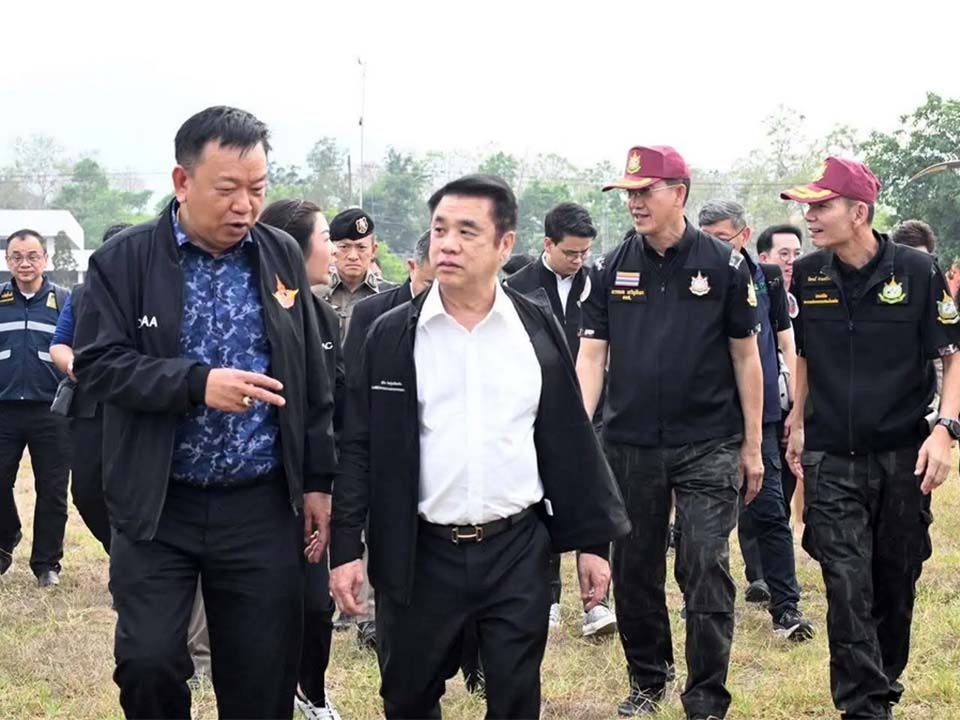
BANGKOK, Thailand – Minister of Agriculture and Cooperatives Suriya Jungrungreangkit has introduced a proactive plan to address the severe impact of the “Super El Niño” phenomenon. With expectations of extreme heat and significantly lower-than-average rainfall threatening vast agricultural areas, the Minister has mobilized the Royal Irrigation Department and the Department of Royal Rainmaking and Agricultural Aviation to protect the livelihoods of farmers nationwide.
The Ministry’s strategy is based on four pillars: “Store, Replenish, Adapt, and Monitor.” The Minister has instructed the Royal Irrigation Department to prioritize water for consumption and manage dam reserves to ensure efficient distribution to farmland approaching harvest. At the same time, the Department of Royal Rainmaking will deploy rapid-response units to drought-affected areas to conduct cloud seeding and restore moisture to forests and plantations when weather conditions allow.
Permanent Secretary Winaroj Subsongsuk stated that the Ministry is promoting a shift to “High-Value, Low-Water” crops. Farmers are encouraged to replace long-term crops with short-cycle, high-demand plants that require less irrigation. To support this change, the government is using the “Pirunraj Agricultural Service Center” mobile application as a one-stop service for information, early warnings, and emergency relief.
A dedicated task force has also been formed to integrate weather and water data from meteorological authorities. This team will provide on-site guidance to help farmers adjust planting schedules and relocate livestock if necessary. The Minister emphasized that these coordinated efforts aim to stabilize farmers’ incomes and prevent widespread crop failures amid this climate crisis. (NNT)