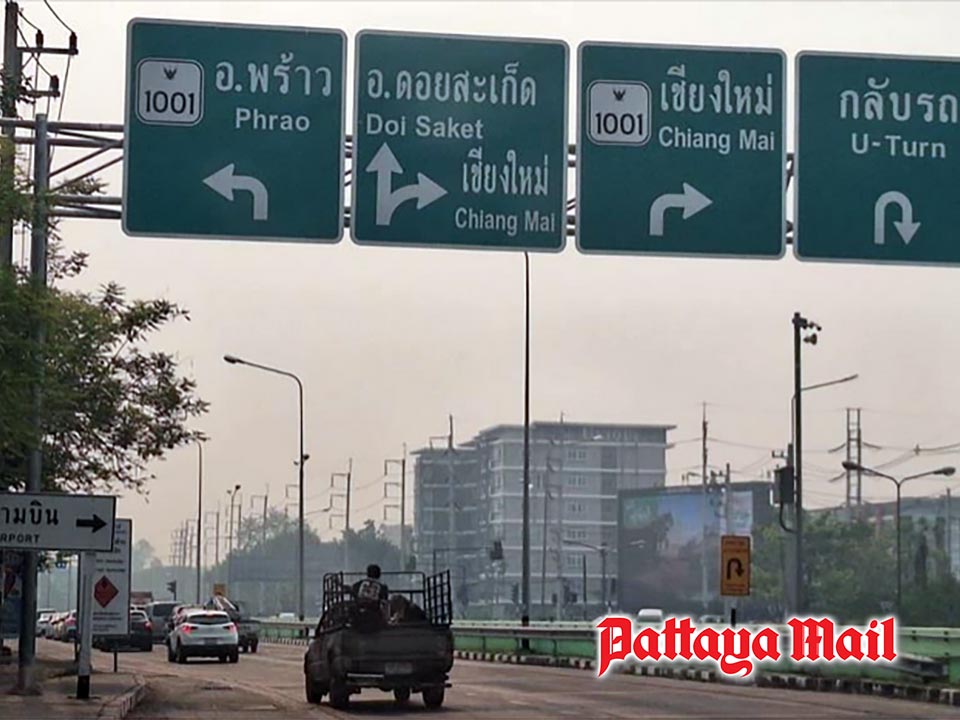
PATTAYA, Thailand – Northern Thailand’s air pollution crisis has intensified as ongoing illegal forest fires continue to push PM2.5 levels into hazardous territory, prompting provincial authorities to impose a full forest closure and tighten enforcement measures across the region.
Officials in the Chiang Mai say the situation has remained critical due to continuous wildfire activity and suspected illegal burning in forest and agricultural areas, despite sustained efforts by authorities, volunteers, and firefighting teams.
On April 17, satellite monitoring detected 89 wildfire hotspots in Chiang Mai alone, with the highest concentrations reported in Chiang Dao (14 points), Mae Taeng (12), Hot (11), Wiang Haeng (9), Omkoi (8), Mae Chaem (7), Doi Saket (7), and Mae On (5). Across 17 northern provinces, more than 1,073 hotspots were recorded, with Nan province reporting the highest total at 257.
Authorities say fire outbreaks have continued almost daily throughout the past month, placing severe pressure on firefighting teams who have had little respite even during the Songkran holiday period.
Air quality readings across Chiang Mai show hazardous conditions at multiple monitoring stations. PM2.5 levels recorded in urban and surrounding districts ranged from around 66 to over 144 micrograms per cubic meter, far exceeding Thailand’s safety standard of 37.5. Air quality index (AQI) readings ranged from 176 to as high as 270, indicating serious health impacts for the general population.
The Pollution Control Department’s monitoring stations in areas including Chang Phueak, Si Phum, Suthep, Hang Dong, Chom Thong, Mae Chaem, and Chiang Dao all reported “unhealthy” to “very unhealthy” air conditions.
Global air quality tracker IQAir also ranked Chiang Mai among the most polluted major cities in the world on April 17, with an AQI of 231 and PM2.5 levels reaching 156 micrograms per cubic meter. The city was listed as the third most polluted major urban center globally at the time, behind Cairo, Egypt, and Delhi, India.

In response to the worsening situation, provincial authorities have announced a 100% forest closure across Chiang Mai. Officials will conduct strict patrols and enforcement operations, warning that anyone found violating forest closure orders or engaging in illegal burning will face legal action.
Authorities also said that agricultural land burning will be strictly targeted, with officials considering the possibility of cutting government assistance and subsidy eligibility for offenders.
While northern regions continue to struggle with severe haze, weather conditions in Pattaya remain comparatively clear, with hot but stable daytime skies and only isolated chances of thunderstorms. Despite earlier nationwide warnings for summer storms, the coastal city has so far enjoyed relatively good visibility and typical tropical heat, offering a stark contrast to the pollution-heavy conditions in the North.
Officials stressed that the combination of persistent illegal burning, dry conditions, and seasonal wind patterns has created a sustained haze crisis affecting both urban and rural communities, with health impacts expected to continue unless fire activity is significantly reduced.
Residents are being urged to limit outdoor activity, wear protective masks, and monitor air quality updates as the region continues to battle one of its most severe pollution episodes in recent years.