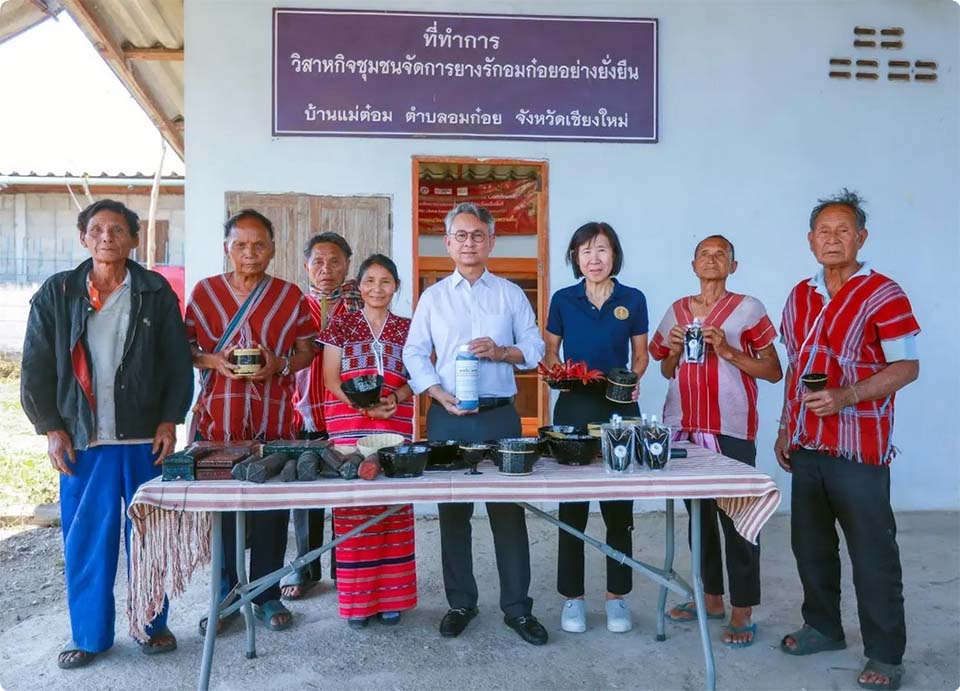
CHIANG MAI, Thailand – The Sustainable Arts and Crafts Institute of Thailand (SACIT) has launched a new initiative to restore the use of “rak” resin, a key material in traditional lacquerware, as part of steps to support the long-term sustainability of the handicraft sector. The effort addresses growing concerns over raw material shortages affecting artisans.

The agency is working with local networks and community enterprises in Omkoi district, Chiang Mai province, to promote sustainable sourcing and management of rak resin, which underpins Thai lacquer craftsmanship.
SACIT Director Anucha Thirakanont said the project connects the full-value chain, from raw material collection to product development, allowing traditional knowledge to be preserved while adapting to current market demand.
Local artisans are contributing by passing on techniques for harvesting and processing rak resin, a practice rooted in Lanna culture and widely used in religious art and temple restoration. Plans are also underway to adapt lacquer techniques into modern products to attract younger generations and expand market opportunities.
The program is set to showcase successful Thai lacquerware brands and artisans, promoting the sector as both a cultural asset and an economic driver, while supporting sustainable resource use and growth in the creative economy. (NNT)