The cliché “down under” drifted into my mind when I was tasting the 30-Mile Shiraz that I’d picked up at a local wine shop. I first tasted this wine some years ago but it’s often pleasant to renew acquaintances. Incidentally, the phrase “down under” has been in use since the 19th century when it referred specifically to Australia and New Zealand. There’s even a popular song of the same name which is perceived as something of a patriotic song in Australia, often jokingly referred to as “the real Australian National Anthem”. Out of casual curiosity, I listened to the song and although it was an enormous hit in Australia and New Zealand in the 1980s, it’s not something that I’d want to hear very often.
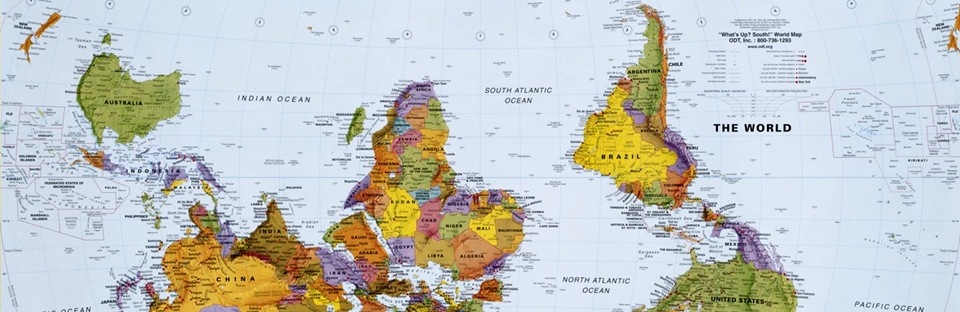
Scientifically speaking, the expression “down under” is meaningless, because Australia is not “under” anything. Look at Earth from space and there’s no “top” nor “bottom.” Even so, when we look at a modern world map, we naturally expect to see north at the top. It was not always thus. As historian Eric Johnson explained, “the idea of north-up maps is a relatively recent standard in the long history of cartography. For thousands of years, maps were drawn differently. Some maps had south at the top. Others featured east or even west at the top. It all depended on cultural priorities, religious symbolism, navigational needs and technological limitations.” Johnson went on to explain that several factors contributed to the concept of “north-up” maps, including the influence of the ancient Greeks and later the advent of the magnetic compass. Maritime navigation, trade routes and European cultural and political factors also influenced “north-up” map orientation.
The first European contact with Australia was a series of encounters in the early years of the 17th century. The Dutch were among the first with Willem Janszoon arriving in 1606, closely followed by the Spanish. Over the following years, Dutch explorers navigated the region and although they audaciously referred to it as “New Holland” they concluded that the land was much too barren and inhospitable to warrant serious attention. Not for some years did other explorers recognize the vast richness of Australia’s resources.
Over a hundred years later, the British showed up in the form of the First Fleet, led by Captain Arthur Phillip. It had departed from Portsmouth in May 1787 and arrived nine months later partly with the intention of setting up a penal colony. The colony of New South Wales was established in 1788 and during the next eighty years, about 162,000 British convicts were transported there, partly to reduce pressure on crowded prisons at home. Most of the crimes involved petty theft, but being “transported” was not a joyful experience because the voyage from Britain to South Australia could take up to twelve weeks.
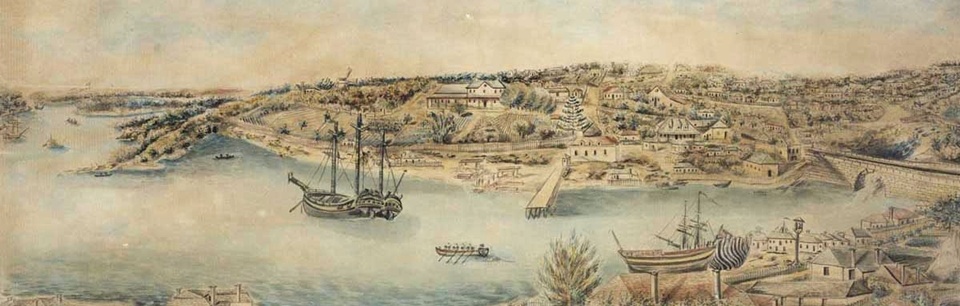
Of course, the Aboriginal Australians had been in Australia since their arrival about 50,000 years earlier. They had come from the region known today as Maritime South East Asia and over the millennia created settlements throughout Australia and many of its 8,000 nearby islands. The artistic, musical and spiritual traditions they established are among the longest surviving in human history. The Aboriginal communities must have regarded the motley crowd of settlers and convicts with some curiosity. Early interactions were often friendly and Captain Phillip, who had become the first Governor of New South Wales, wanted harmonious relations with the local people and felt that they should have the same rights as everyone else. The British settlements expanded and Aboriginal communities began to experience disruptions to their traditional lifestyles. Conflicts arose as the indigenous people sought to defend their land and resources from the British, leading to many violent confrontations.

Captain Phillip had introduced grapevines to Australia on his arrival, but due to inappropriate climatic conditions, disease or lack of expertise, the original vines failed before any wine could be produced. Undeterred, Captain Phillip then planted three acres of vines near Sydney. Although they were successful, it was many years before Australian wine really got under way. The first Australian wines were exported in the 1820s and they were popular in England, where Australia became known as “John Bull’s Vineyard”. During the 1950s, over 75% of exports were fortified wines and sold under names like “Australian Sherry” but later years saw the emergence of quality table wines. There are currently about 370,000 acres (about 580 square miles) of vineyards in Australia and producing more than 621 million liters of wine a year.
More than half of it comes from South Australia. Although many “international” grapes are grown in Australia, the country is especially associated with Shiraz. This is because the Australian wine industry purposely promoted the image. Wine-writer Madeline Puckette says, “The marketing paved the way for Australia wine production to triple since 1990. However, despite the success, Australian wines have suffered drawbacks. Some American wine critics have disparagingly referred to them as ‘critter wines’ referring to the images of native animals and birds that adorn many Australian wine labels”. And in case you’re wondering, the American word “critter” first appeared in 1815 and it’s a dialectal pronunciation of “creature”. Anyway, the result was that consumers avoided Australian wines under the mistaken belief that they were simple wines for unsophisticated drinkers. No doubt some of them were, but things have moved on and some companies are now making top-class products.
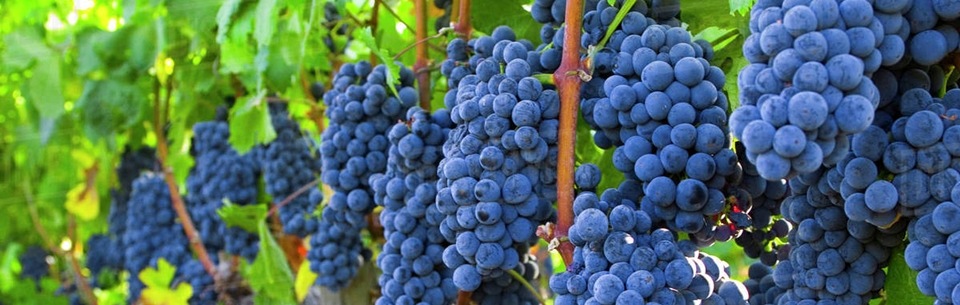
A typical Australian Shiraz is powerful stuff with a spicy, peppery aroma. It’s been described by wine-writer Karen MacNeil as, “rustic, manly and yet elegant.” The adjective “manly” might seem an odd (and perhaps politically dodgy) adjective for a wine, but I know what she means. A typical Australian Shiraz is not a wine for wimps and those of a delicate disposition. Shiraz is exactly the same grape as Syrah, which made its reputation in the Northern Rhône region of France, where it’s been growing since Roman times. Although the grapes are the same, Australian Shiraz is made into fruitier, more powerful aromatic wines than its comparatively reserved French cousins.
30-Mile Shiraz (red), South Eastern Australia. Bt 690 @ Wine Connection.
This is a rich, dark crimson wine with hints of purple and a slightly oily appearance, which always seems to me a good sign. It’s a vibrant and approachable red with bold fruit flavours and soft tannins. The aroma is quite complex. Rich black cherries, herbs and fresh pepper come through first. If you really concentrate you might pick up the smell of pear drops and a hint of moist tobacco. These secondary aromas are rather faint and you might not detect them at all. To give the wine a chance to reveal its aromatic secrets, it’s a good idea to open the bottle about 20-30 minutes in advance
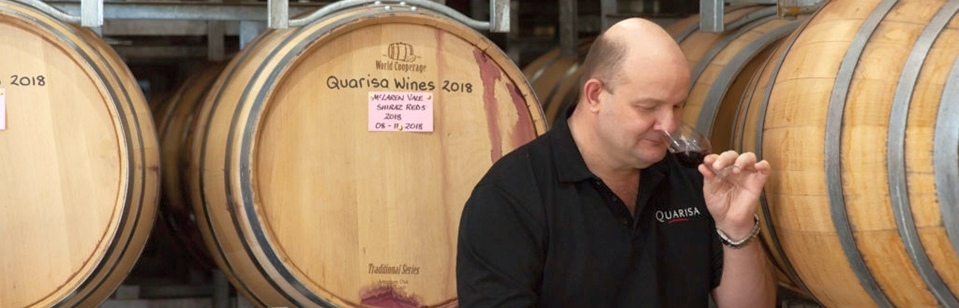
I was rather expecting a turbo-charged Shiraz and the wine to hit the palate like a torpedo. To my surprise and delight, it has a winsome, gentle touch. The wine is dry of course, but has a soft, almost silky mouth-feel and a satisfying smooth foundation of tannin with beautifully balanced fruit flavours. There’s a lovely long and soft, dry cherry finish too. This is a well-made wine that really stands out from the crowd. It’s also excellent value for money. Try it with grilled red meat or indeed any assertive meaty dishes. It will even enhance a lowly beefburger or barbequed food. The wine was made by the award-winning winemaker John Quarisa. Critic James Halliday praises him for his “great value” wines and this red for “rich, dark fruits to fill the mouth”.
Deakin Estate Moscato (white), Victoria, Australia. Bt 650 @ Wine Connection
Many people forget about “dessert wines” which is a shame, because they are delightful to end a special meal. I wrote about this wine a few months ago, but it’s worth another reminder. It’s an easy drinker and although it’s a dessert wine, it would be more accurately described as “semi-sweet”. Incidentally, the word “dessert” comes from the French word desservir, which means “to clear the table” and referred to the end of the meal eaten after the table had been cleared of everything else.
To make a sweet wine, the fermentation is stopped at the winery before the yeast converts all grape sugars into alcohol. Moscato wines are made primarily from Muscat grapes, known for their fruity flavors like peach, orange blossom, and honeysuckle. They are best served chilled and can be paired with desserts or enjoyed on their own. This is one that has had excellent reviews and comes from Deakin Estate, a relative newcomer to the Australian wine scene. Although the land was bought in 1967, the company didn’t start producing wine until the 1990s by which time some of the vines had achieved a venerable age. This wine has won several prestigious awards including a bronze medal at the UK’s International Wine Challenge.
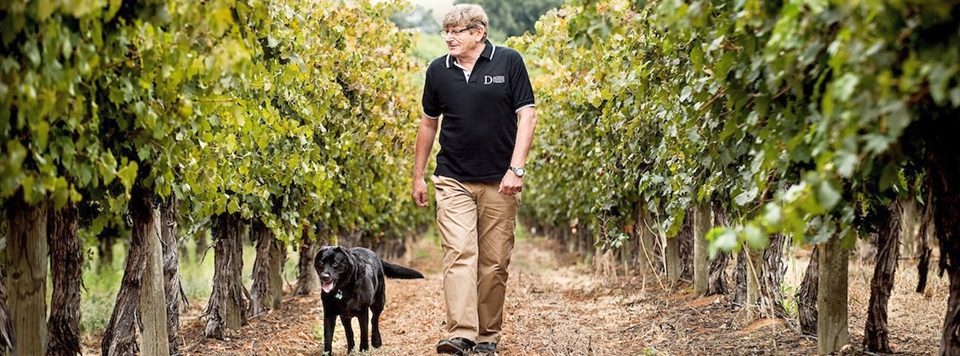
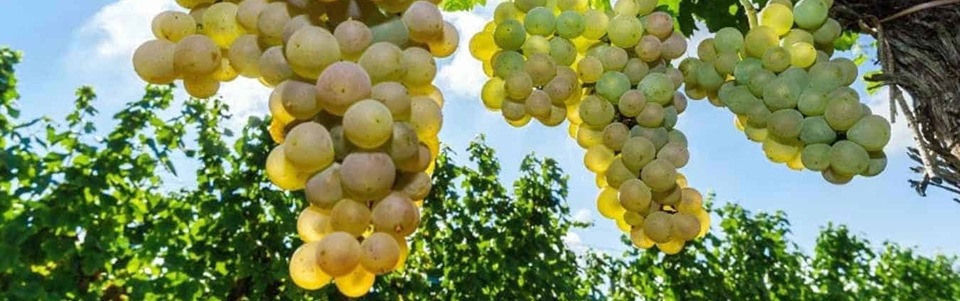
To my mind, this is a splendid dessert wine at a bargain price. It’s a pale-yellow with faint hint of lime on the aroma and the distinctive smell of sweet raisins. And this, is one of the hallmarks of Moscato, because as far as I know, it’s the only wine that smells of grapes. The taste has a delicate acidity and a slightly spritzy quality which makes it delightfully refreshing. At only 6% ABV this wine is remarkably low in alcohol and there’s an attractively long finish too. Crafted by Deakin Estate’s head wine-maker Frank Newman, this charming wine brings hints of green apples on the palate, and it would make an excellent partner for a dessert. It would bring a new dimension to an ordinary pudding and proved a perfect match for my home-made apple pie, a traditional English dish with a history that dates back to England’s turbulent fourteenth century.