PATTAYA, Thailand – The proposed increase in Thailand’s Passenger Service Charge (PSC) from 730 baht to 1,120 baht is more than a routine policy adjustment. It represents a structural question about how Thailand finances its aviation infrastructure and, more broadly, how the country positions itself in an increasingly competitive regional tourism market. A jump of more than 50 percent in a single move is not a minor inflationary adjustment. It is a significant upward reset in the cost of departing Thailand.
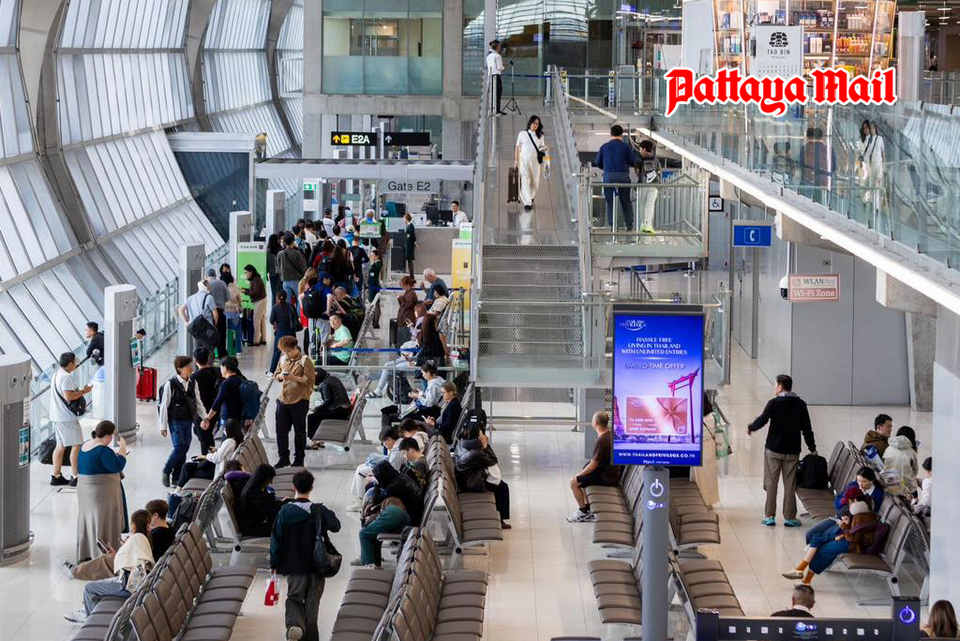
Since the charge is automatically embedded in the airfare, its impact extends beyond airport balance sheets and into the pricing decisions of airlines and the booking behaviour of travellers worldwide. Under the management of Airports of Thailand (AOT), major gateways such as Suvarnabhumi Airport and Don Mueang International Airport function as critical economic arteries for the country. The real issue is not simply whether the increase is justified, but whether Thailand’s airport revenue structure has become overly dependent on passengers themselves.
Revenue structure: a question of balance
Globally, airport revenues are typically divided into two primary categories Aeronautical revenue passenger charges, landing fees, and airline service fees and Non aeronautical revenue retail concessions, duty free operations, property leases, advertising, hospitality, and logistics activities. Leading international airports have increasingly strengthened their non aeronautical streams, as these tend to generate higher margins without directly raising the psychological cost of travel.
The stronger the commercial ecosystem inside and around an airport, the less pressure there is to raise passenger fees. The PSC increase therefore invites a policy question “Has Thailand sufficiently diversified its airport income streams, or does passenger charging remain the primary lever for funding large scale expansion? If the latter is true, it may suggest that the revenue model remains structurally imbalanced and that each future infrastructure upgrade could translate into higher direct costs for travellers.
Competitive sensitivity eroding the “Value Destination” advantage? Thailand has long benefited from a reputation as a high value destination offering strong quality to cost appeal. Yet that advantage begins not at the hotel check in desk, but at the moment a traveller compares airfare prices online. In the highly competitive low cost carrier market, even a few hundred baht can influence route economics. For short haul regional travel within Southeast Asia, where multiple destinations offer similar flight times and experiences, cost sensitivity is acute. If Thailand’s departure fees rise substantially while neighbouring markets maintain lower cost structures, the country may gradually lose a portion of its structural competitiveness. The effects may not be immediate, but they could surface over time in airline capacity decisions, frequency reductions, or route reallocations.
The “User Pays” principle and the test of value
Supporters of the PSC increase argue that major infrastructure expansion new terminals, security upgrades, digital systems, and capacity improvements requires significant capital. The economic logic of the “User Pays Principle” is clear those who benefit from the infrastructure should help finance it. However, public acceptance is shaped less by theory than by experience. If higher fees translate into noticeably shorter immigration queues, reduced congestion, faster baggage handling, and smoother overall passenger flow, then the increase may be viewed as a rational investment. If not, it risks being perceived simply as an added burden. The credibility of the policy will ultimately depend on tangible, measurable improvements.
A broader strategic shift?
Another dimension worth examining is whether Thailand is consciously shifting from a volume driven tourism model toward a higher yield strategy. If the long term objective is to attract higher spending travellers, modest increases in travel cost may not be decisive. However, if large segments of the economy continue to rely on high visitor volumes and price sensitive markets, raising structural travel costs could ripple through the broader tourism value chain. In this sense, the PSC decision is not merely an aviation issue. It is intertwined with national tourism policy and economic positioning.
Beyond 1,120 Baht
Ultimately, the debate is not about 390 additional baht per passenger. It is about whether Thailand’s airport revenue framework is sufficiently diversified and sustainable. It is about whether raising passenger charges is a strategic necessity or the easiest available fiscal instrument. And it is about whether the country’s tourism model is evolving in a way that aligns with these pricing decisions. The answers to these questions will determine whether the PSC increase strengthens Thailand’s long term competitiveness or signals the need for deeper structural reform beyond incremental fee adjustments.