A Funeral Buffet That Tells a Different Story
From time to time, Thailand is described in foreign commentary as the sick man of Asia a country portrayed as politically unstable, economically distorted, legally inconsistent, and socially fragile. It is a convenient label, often recycled in opinion columns, policy papers, and armchair geopolitical analysis. But labels, as always, tell us more about the observer than the observed. If Thailand were truly a “sick” country in the deeper social sense fractured, hostile, or exhausted it would not behave the way it did in a small village in Isaan, during a moment that recently went viral across the nation.
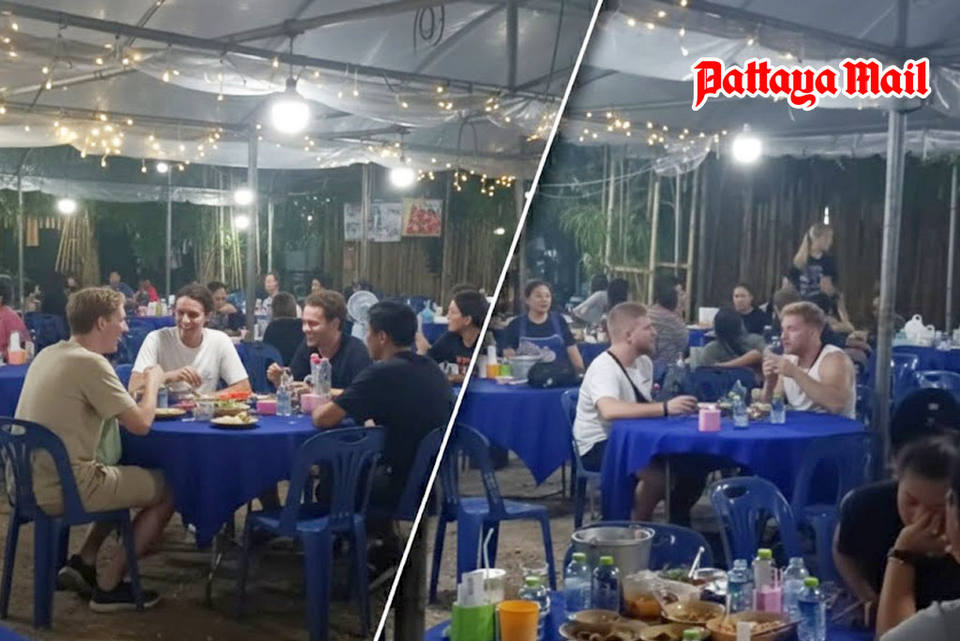
Two foreign travelers, passing through rural northeastern Thailand, saw a house filled with tables and people eating together. Assuming it was a buffet, they walked in and sat down. What they had actually entered was a traditional Isaan funeral. They were not shouted at.
They were not questioned aggressively. They were not told they were trespassing. Instead, villagers asked their names, where they were from, and then quietly, instinctively brought them food. Only later was it explained: this was a funeral, and in Isaan culture, funerals are communal. Anyone who passes by may eat.
This moment matters precisely because it is unremarkable to Thais. No one filmed it to demonstrate kindness. No one framed it as a moral lesson. It simply happened. This is not how a socially “sick” country behaves. A genuinely broken society becomes defensive. It draws hard lines between insiders and outsiders. It polices space aggressively. It treats strangers as risks to be managed, not people to be welcomed. Ironically, this is far closer to what a visitor might experience in parts of the United States a country far wealthier, far more powerful, and far more confident in its global standing. Walking uninvited into a private gathering in rural America would more likely result in suspicion, confrontation, or police involvement than a shared meal.
This is not a moral judgment on Americans. It is an observation about social structure. High-trust societies behave differently from low-trust ones, regardless of GDP or military strength. Thailand today is undeniably tightening its legal framework. Tax enforcement is stricter. Business structures are being scrutinized. Immigration rules are applied more seriously than before. These changes are often cited as evidence of decline or dysfunction. But regulation is not sickness. Enforcement is not collapse. And order is not hostility.
What the “funeral buffet” moment reveals is something many external analyses miss Thailand’s social fabric remains remarkably intact. Beneath the noise of politics and policy, there is still a reflexive human generosity one that does not require explanation, branding, or approval. This is why expatriates continue to choose Thailand, even as living here becomes more complex. Not because the system is easy, but because the society is humane. Not because rules are absent, but because people are not reduced to rules.
If Thailand were truly the sick man of Asia, it would not have room at the table for strangers. It would not feed people who do not belong. And it certainly would not do so without asking for anything in return. Sometimes, the healthiest truths about a country are not found in policy papers or think-tank reports but at a funeral table, where no one asks who you are before handing you a plate of food.