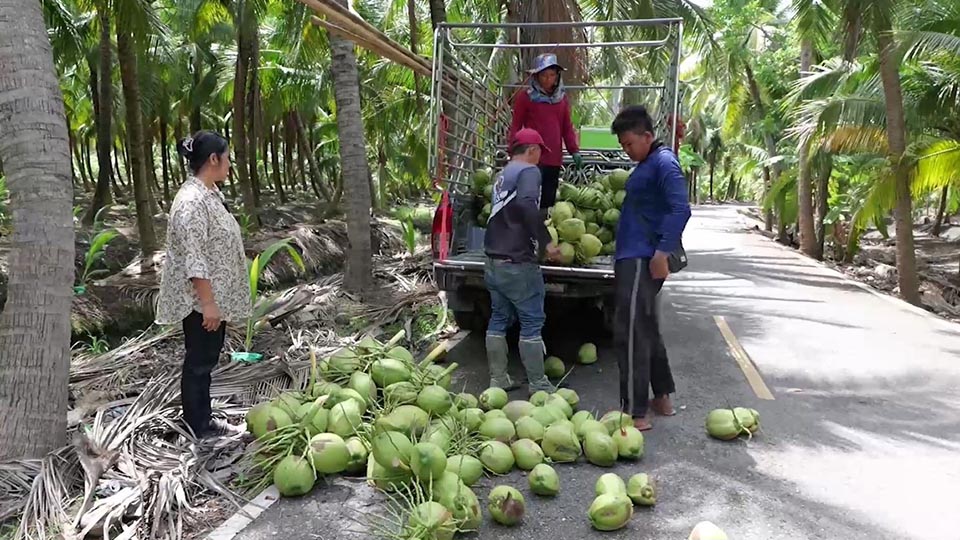
SAMUT SONGKHRAM, Thailand – Thai coconut farmers are e struggling with a drastic price slump as aromatic coconut prices have plummeted to as low as 2-3 baht ($0.06 – $0.09) per fruit, down from previous highs of over 30 baht, prompting government intervention.
The price collapse, which began in mid-2025, has hit major production hubs like Samut Songkhram particularly hard. After a brief recovery to 8-9 baht earlier this month, prices crashed again within days. Farmers from five provinces—Samut Songkhram, Samut Sakhon, Nakhon Pathom, Ratchaburi, and Phetchaburi—are gathering in Ratchaburi today to demand fair pricing and government action.
Government Cracks Down on Middlemen
Agriculture Minister Thamanat Prompow has ordered a special task force to investigate and negotiate with middlemen accused of price manipulation. The Minister noted that while farm-gate prices have hit rock bottom, international demand for Thai aromatic coconuts remains strong, suggesting that the domestic price drop does not reflect global market realities.
He expressed confidence that prices would rebound within two weeks, warning that legal action will be taken against those found exploiting farmers.
Emergency Distribution Measures
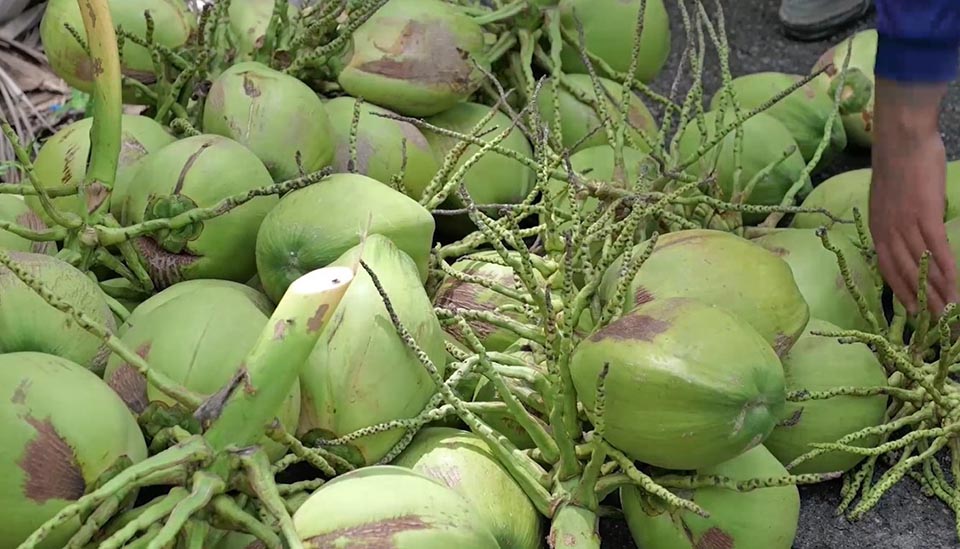
In an immediate effort to stabilize the market, the Department of Internal Trade has launched a distribution program to move surplus stock. Wittayakorn Maneenate, Director-General of the department, announced that at least 20 direct-to-consumer sales points have been set up across Bangkok and surrounding areas.
The emergency measure aims to distribute over 200,000 coconuts quickly. “We are also linking farmers directly with major retailers, wholesalers, and tourist markets to bypass exploitative intermediaries and ensure a fairer price structure across the supply chain,” he said. (TNA)