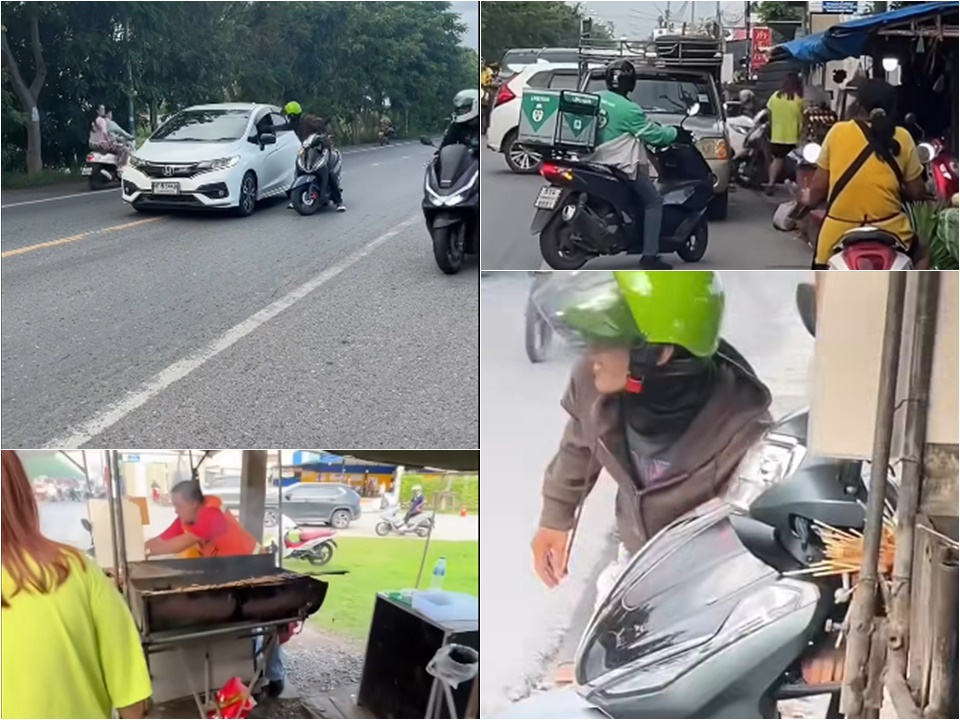
BANGKOK, Thailand – Thailand’s roads are increasingly becoming arenas for personal justice, as escalating incidents of road rage push citizens into tense and dangerous confrontations. From minor disputes to violent collisions, the public is left anxious, unsure whether a simple traffic altercation might turn into a physical clash—or worse.
A recent example unfolded in broad daylight in Bangkok outskirt area, where a white sedan rammed into a motorcycle, sending it crashing into a roadside satay stall. The skewer-laden trays were scattered across the pavement, while the two drivers continued arguing in the middle of the street. Footage posted on the Facebook page “Than Pao” quickly went viral, with netizens criticizing the reckless driver and demanding accountability—not just for the confrontation, but also for the damage caused to the innocent vendor caught in the chaos.
This incident is far from isolated. Social media is replete with clips of heated disputes turning violent, highlighting a troubling trend where disputes that should be resolved legally are instead played out on the streets. Citizens are not only at risk from the drivers themselves but also from collateral damage to bystanders and small businesses, as seen in the satay stall incident.
Experts warn that the proliferation of “street justice” incidents erodes public trust in law enforcement and increases fear among ordinary citizens. While Thai courts remain the formal avenue for dispute resolution, a growing number of road users appear to bypass the legal system entirely, letting anger dictate actions. Authorities face mounting pressure to enforce traffic and assault laws strictly, educate the public on safe conflict resolution, and protect vulnerable bystanders from the consequences of these furious confrontations.
As road rage incidents continue, citizens are urged to stay vigilant, avoid escalating minor disputes, and rely on official channels rather than personal vengeance. Until systemic enforcement and public awareness improve, Thailand’s roads may remain a high-tension zone where tempers, not traffic laws, often rule.