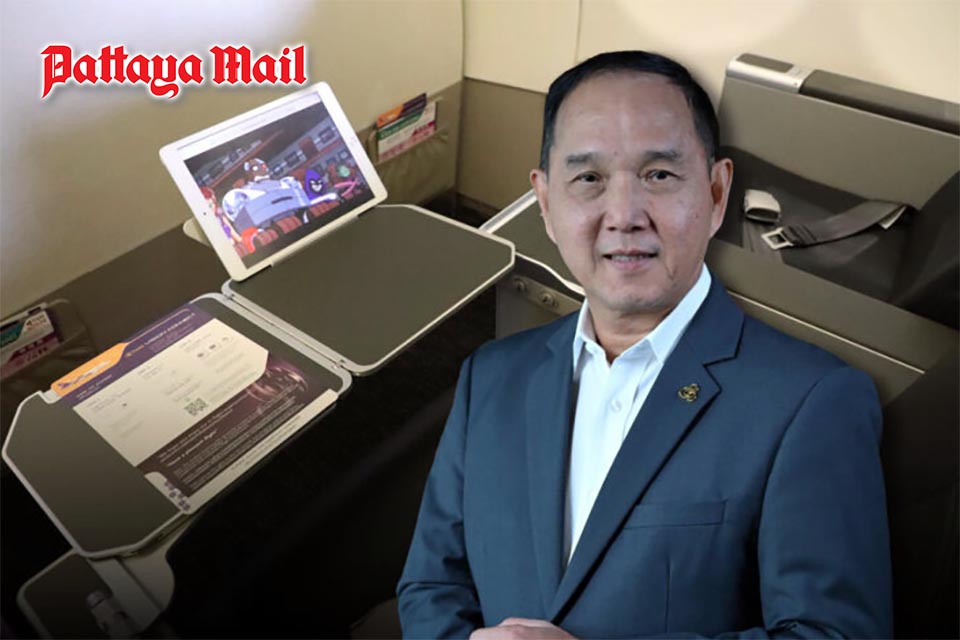
PATTAYA, Thailand – Thai Airways is set to phase out first-class service on all routes, instead enhancing its business class offering to provide a premium experience on par with traditional first-class standards. The move aligns with global airline trends, as carriers such as American Airlines, Turkish Airlines, and Oman Air have already discontinued first-class seating, while new fleets from Emirates and Qatar Airways feature none. The strategy allows passengers to enjoy high-end comfort without paying first-class prices, while giving airlines the opportunity to improve margins and compete internationally.
CEO Chai Eamsiri stated that Thai Airways aims to elevate passenger experience across all classes by upgrading its fleet for efficiency and global competitiveness. Over the next two to three years, the airline plans to restructure its cabin layout to include business class, premium economy, and economy seating, completely phasing out first class. Passengers who desire an extra level of luxury will still have premium seats in the front rows of business class.
The airline has already begun upgrading its narrow-body Airbus A320 fleet, introducing business class seats with greater recline, premium entertainment systems, and enhanced comfort. By the end of 2025, 20 A320s and A321s will feature these upgrades, with additional A321neo aircraft arriving in 2026. Wide-body aircraft, including Boeing 777-300ERs and Airbus A350s, will also be refurbished with new business and premium economy seating, ensuring a consistent high-quality experience across all flights.
Thai Airways’ long-term plan includes a fleet of 150 aircraft by 2033, with 98 wide-body and 52 narrow-body planes, targeting a 35% market share at Suvarnabhumi Airport by 2029. The updated business-class seats will match or exceed the comfort of former first-class seating, particularly in the front rows, eliminating the need for a separate first-class cabin while enhancing profitability and global competitiveness.