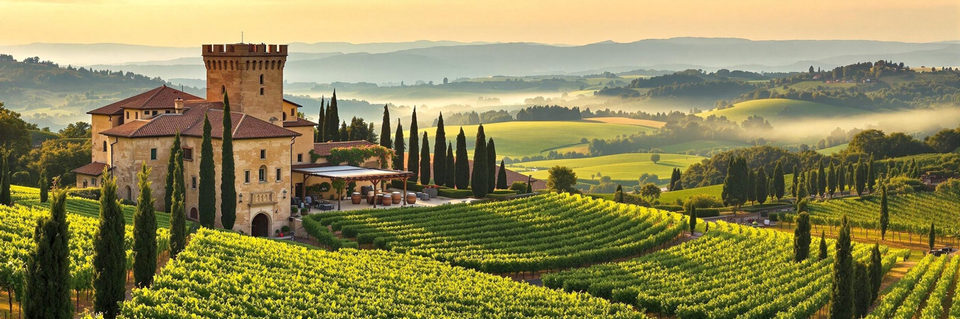
Did you know that a third of the world’s wine comes from Italy? Looking around the local shops, you would never have guessed. Most of the supermarkets have few Italian wines on offer. This really is a shame because Italy offers a wealth of wines, many of them classics. And of course, they make the perfect match for Italian food. Ask someone to name any Italian wine and the chances are that will suggest Chianti. To be strictly accurate, Chianti (kee-AN-tee) is an Italian wine region. It’s in Tuscany, the hilly region of north-east Italy near the top left of Italy’s “leg”. The winemakers there have called their wine Chianti since the fourteenth century.
During the 1960s and 1970s, Chianti was instantly recognizable by its traditional squat straw-covered flask, called a fiasco. They were used in their dozens to decorate the ceilings of many an Italian restaurant. In my student days, it was almost de rigueur to have a few of these rustic-looking bottles around one’s room, ideally with a candle stuck in the top of each one. However, the straw-covered bottle was usually more interesting than its contents because the wine was usually rustic plonk.
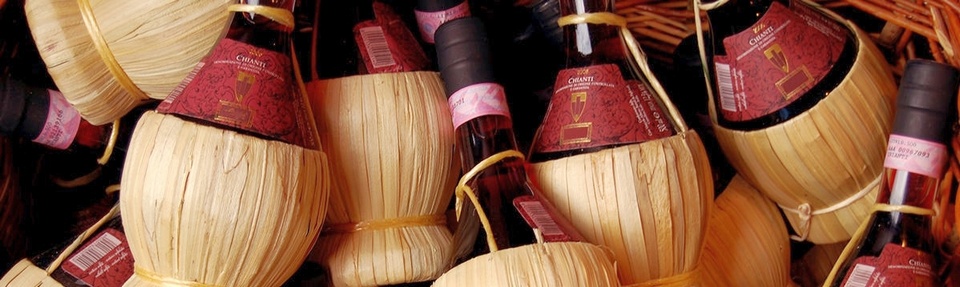
Back in those days, Chianti was dismissed in wine circles as a cheap “spaghetti wine” and it’s taken decades for Tuscan wine-makers to sharpen up their act and produce top-quality wines that now achieve international quality standards. Perhaps to shake off the dodgy image of yesteryear, almost all decent Chianti today comes in standard wine bottles. Most wines made in the Chianti region are red, but a relatively small amount of white Chianti is also produced.
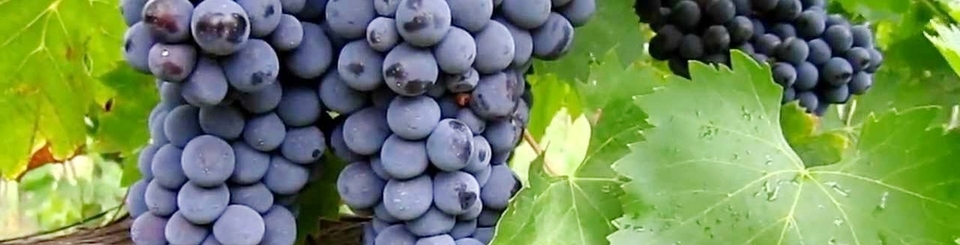
Chianti is made from one of Italy’s most widely-planted grapes, Sangiovese (san-jo-VAY-zay). It’s often blended with about 5% of the local Canaiolo Nero. Sangiovese traditionally produces red, dry wine invariably with aromas and flavours of sour cherry, violets, raspberry and spice. Sometimes, you can even pick up a trace of rhubarb. There’s also a white Sangiovese, but outside the region it’s as difficult to find as a three-legged chicken.
The Etruscans and the Greek settlers produced wine in Italy long before the Romans got started, with the result that Italy has some of the oldest wine-producing regions in the world. Today, there are well over 45,000 wineries in Italy. Grapes are grown almost everywhere and it’s estimated that there are more than a million vineyards throughout the length of the country. There are thousands of different indigenous Italian wine grapes too, rarely seen elsewhere.
In 1716, the splendidly-named and conspicuously rotund Grand Duke Cosimo III de’ Medici demarcated the first Chianti wine zone, now known as Chianti Classico. It was thus the world’s first designated wine region and while this comparatively small area is still revered for its exceptional wines, Chianti production has since spread outwards to the surrounding countryside.

Because of this, there are two basic Chianti denominations. Wines labeled Chianti Classico DOCG come from the historical heartland. It lies between Florence and Siena and the wines are subject to strict regulations. This is where the best wines are made and Chianti Classico wines have justly acquired a reputation for producing complex, structured wines which can be matured for years. Wines labeled Chianti DOCG (without the “Classico”) come from anywhere else in the Chianti region. Here the wine-makers are subject to fewer regulations.
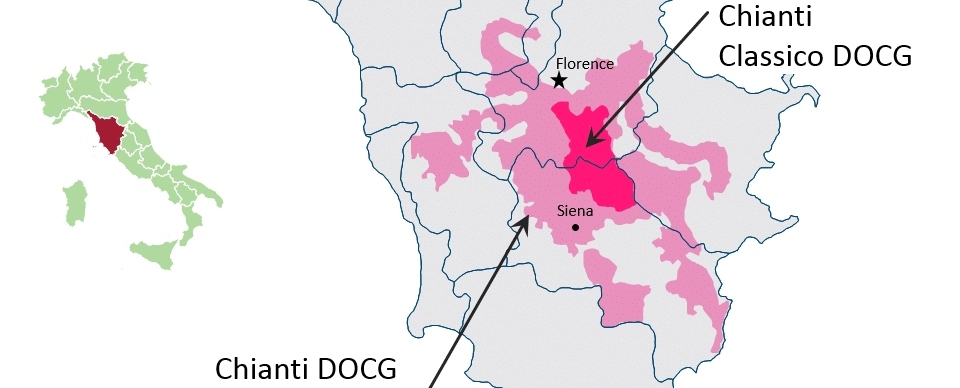
The abbreviation DOCG stands for Denominazione di Origine Controllata e Garantita which, as you can probably guess, is a guarantee of origin and compliance with the manufacturing regulations. Samples of DOCG wines are officially tasted and checked for quality and to guard against imitations, bottles are individually numbered.
I’ve noticed that one or two Pattaya restaurants offer Italian house-wine contained in huge glass bottles, usually concealed discretely behind the restaurant counter. These bottles weigh as much as a small dog and I always avoid them. The bottles I mean, not small dogs. The problem with a such a large bottle is that a disproportionate amount of air (which contains 21% oxygen) can allow the wine to over-oxidize. If the bottle is only half full, the wine is likely to be over the hill and possibly half-way down the other side.
Villa Puccini Chianti DOCG Riserva 2021 (red), Italy. Bt 850 @ Wine Connection.
The hilly landscapes of the Chianti region are home to vineyards that benefit from excellent sunlight exposure and well-drained soils. Villa Puccini is one of the important wineries in Tuscany and not to be confused with the similar-sounding Piccini Winery of the same region. If you have been paying attention, you’ll know already what DOCG means. The word Riserva indicates that the wine has been matured for a minimum of two years in the barrel before being bottled. And in case you’re wondering whether there is a musical connection, Villa Puccini was once home to the famous Giacomo Puccini who, as a successful opera composer, developed a taste for all things luxurious, including fast cars and motorboats. And wine, of course.
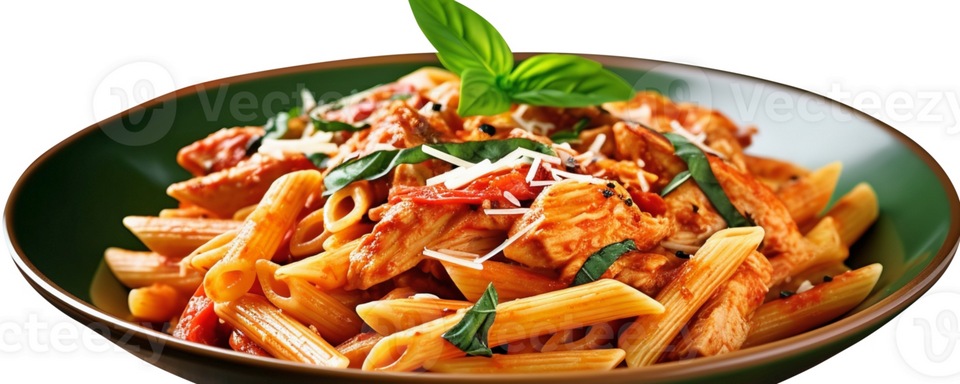
The wine is a dark, ruby-red with the typical assertive Sangiovese aroma of cherry, spice and dried herbs. At 12.5% ABV, it’s a medium-bodied dry wine with soft and unobtrusive tannins and smooth on the palate. It has the characteristic flavour of sour cherries. There’s also a reasonably long finish, with an attractive touch of acidity. The wine has received generally enthusiastic reviews in the media, and one critic claimed that she could also detect chocolate, coffee and orange peel on the flavour. Wine Enthusiast gives the wine 88 points and if such things interest you, this rating means “very good value and well recommended”. A fair assessment, I’d say. Like most Italian wines, Chianti is perfect for food; not only the rich Tuscan cuisine but also pizza and pasta. It’s a basic but very good quality wine and as an experiment, I made a brightly-flavoured pepperoni pizza, enhanced with capers and tiny snippets of green chili. As I expected, the pizza and Chianti combination worked perfectly.
Sampling this wine reminded me yet again how essential it is to taste the wine at the appropriate temperature. When I sampled the wine, the evening temperature in the house, with all the doors and windows open had dropped to a pleasant 29°C. The wine tasted excellent at 25°C and at this temperature, it had a firmness of body, splendid balance and the mouth-feel was delightfully smooth with a subtle touch of acidity. Reducing the temperature to 22°C made the wine feel a little too “tight” and tannic. In a cool-climate country, we’d normally serve Chianti at around 15-18°C and only a lunatic would drink it at 25°C. But in our tropical climate, 15-18°C would feel uncomfortably icy.
Oxidization plays an important role in wine production. Ironically, like alcohol itself, too much oxygen can be a bad thing. When a wine bottle is opened, the oxygen in the air brings about rapid changes to the aroma and taste. It’s known as aeration and it’s the same process that turns a slice of apple from white to brown. The appropriate degree of aeration can soften a tannic red and impart nutty or earthy flavours. In quality wines, it can also enhance the primary aroma and taste to reveal deeper secondary and tertiary notes. Too much aeration, and the wine turns into vinegar. Many good-quality red wines benefit from at least 20-30 minutes air exposure before tasting, which is why a wine jug or decanter is so useful. I nearly always pour a red wine – even a cheap one – into a decanter first to let it benefit from a small dose of oxygen.
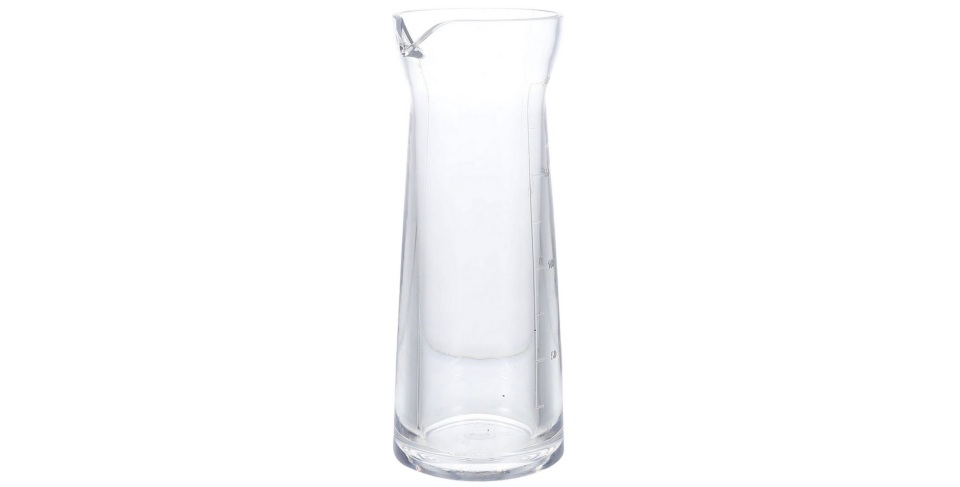
Some people (and many waiters) seem to believe that having opened the bottle, it should then be left to stand for a couple of minutes “to breathe”. This is nonsense, because only a tiny surface area of liquid in the bottle’s neck is exposed to the air. It’s too small to make any difference. Better to simply pour the wine into the glasses and let it rest for a few minutes. And incidentally, you can buy small 250ml decanters, so if you are with two other people, you can divide the contents of an entire 750ml bottle evenly at the start of the meal, thus avoiding unseemly fist-fights later.
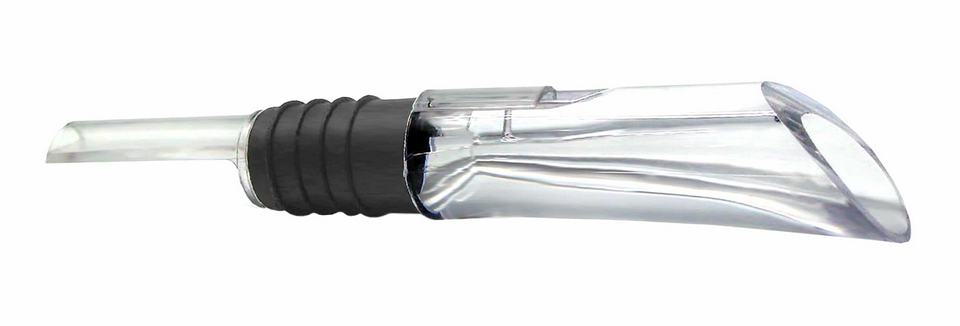
I have seen some people using a device called an aerator, which dispenses with the need for a decanter. I suppose they can be handy if you are interested in small kitchen accessories. There are two main types. One type is held above the glass while you pour the wine through it, and the other type fits into the neck of the bottle. The neck-fitting devices range from simple aerator/pourer like the one shown, to elaborate electric devices which, I suspect do much the same thing for a lot more money.
If you have the opportunity, try this Villa Puccini Chianti Riserva with your next Italian meal. Like so many Italian wines it’s excellent with food, but not something to sip reflectively while watching the sun setting over the horizon. An ice-cold Martini Bianco would probably be more appropriate.