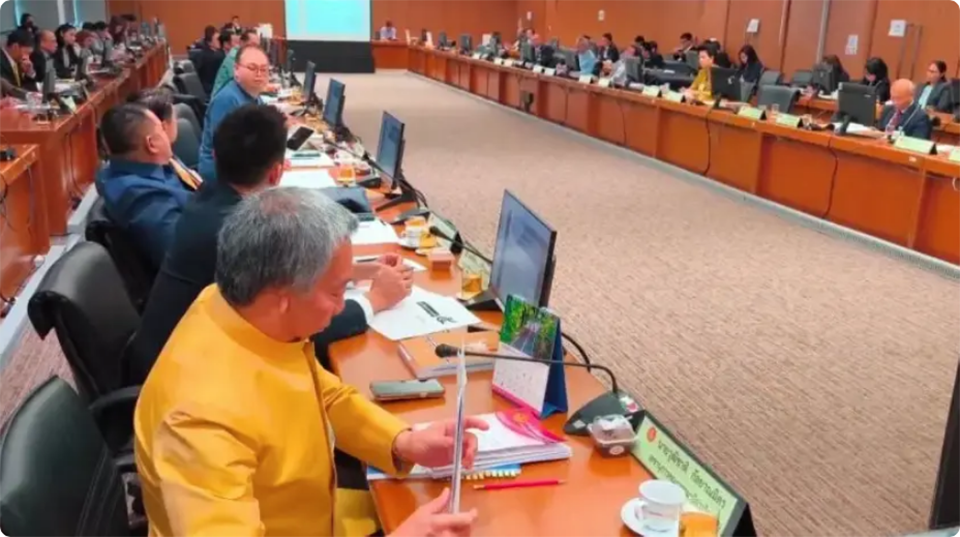
BANGKOK, Thailand – The Thai Senate is formally studying three amnesty bills, firmly excluding corruption offenses from consideration, while the inclusion of lèse-majesté cases remains a point of significant debate.
During a meeting chaired by Senate President Mongkhon Surasajja, a Senate committee agreed to review the bills that were previously passed by the House of Representatives.
Nifarid Radenahmad, Deputy Chairman of the Committee on Political Development, stated that there is a strong consensus against pardoning individuals involved in corruption.
The debate over including offenses under Section 112 of the Criminal Code is ongoing, with divided opinions requiring more in-depth study. A special sub-committee may be established to carefully screen and determine the final scope of the amnesty.
Addressing concerns that the bills might favor specific groups, Nifarid affirmed his belief in equal opportunity for all parties. He stressed the importance of protecting the monarchy and said the committee would carefully scrutinize all cases. He personally believes that those who intentionally committed corruption against the nation should not be granted amnesty.
Regarding Section 112, he explained that protecting the head of state is a common practice globally. He added that for cases where political opinion is cited as a defense, there are frameworks to determine if defamatory intent was present, allowing for careful differentiation by decision-makers. (NNT)