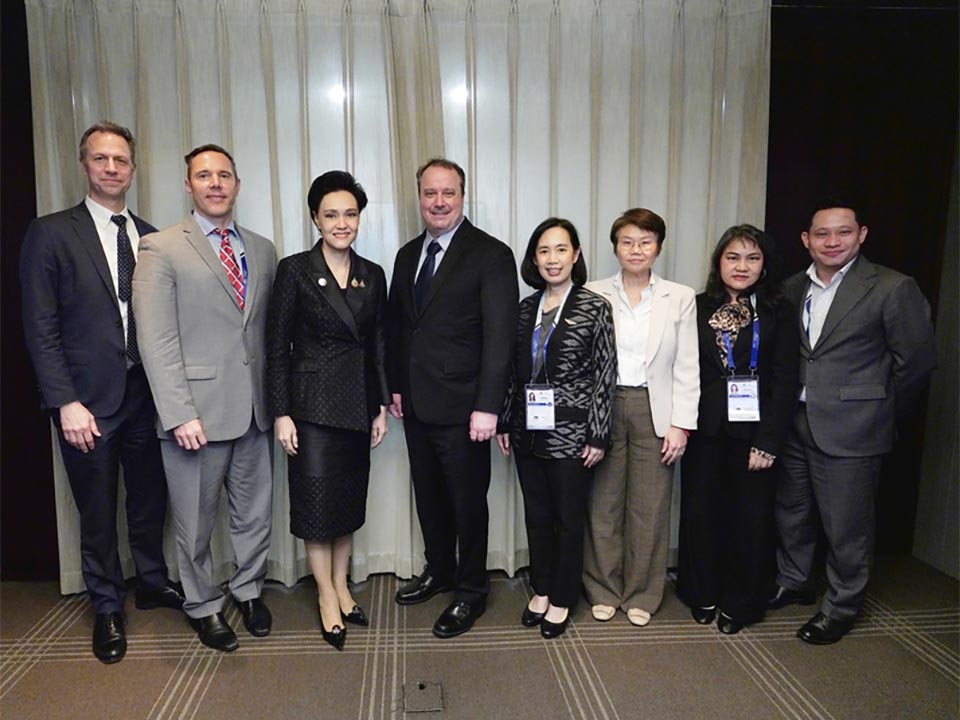
SHENZHEN, China – Deputy Prime Minister and Commerce Minister Suphajee Suthumpun has called for lower U.S. tariffs to protect Thai exporters and maintain the country’s trade competitiveness. She discussed the issue with Deputy United States Trade Representative Rick Switzer in Shenzhen, China, on November 18, following the signing of a joint statement on the proposed Agreement on Reciprocal Trade (ART).
Suphajee requested a reduction in the U.S. Section 301 tariff related to forced labor concerns from 12.5% to 10%, in line with rates offered to other trading partners. The U.S. side agreed to proceed with the reduction process, although it has not announced an effective date. Thailand also sought preferential treatment under upcoming U.S. measures addressing excess production capacity.
Suphajee warned that higher tariffs could put Thai exporters at a disadvantage, potentially costing them orders and market share. The United States is Thailand’s largest export market, with shipments worth approximately 2.37 trillion baht in 2025, supporting around 1.25 million Thai jobs. Bilateral trade totaled 93.65 billion US dollars, with Thailand recording a surplus of 51.36 billion dollars.
Both countries are working to finalize the ART agreement following the joint statement signed by Prime Minister Anutin Charnvirakul and U.S. President Donald Trump in Manila on November 17. The agreement still requires legal review, Thai Cabinet consideration, public consultations, formal signing, parliamentary review, and any necessary legislative amendments before taking effect. (NNT)