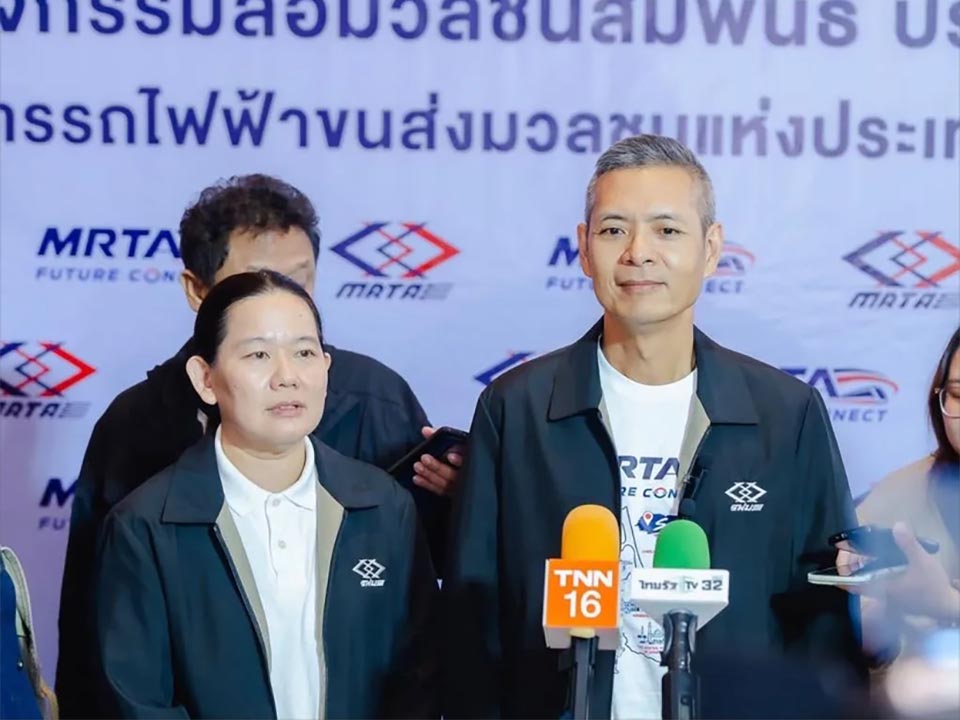
BANGKOK, Thailand – Thailand’s Mass Rapid Transit Authority (MRTA) is reviewing plans for urban rail projects in five major provincial cities, reassessing routes, investment models, fares and passenger demand before committing to construction. MRTA Governor Kachaphon Udomthamphakdi said the agency would work with local authorities and the Department of Land Transport to ensure proposed systems are practical, financially viable, environmentally friendly and suited to residents’ travel habits.
The five provinces covered are Chiang Mai, Phuket, Nakhon Ratchasima, Phitsanulok and Songkhla. The review follows changes in local economic and social conditions since the COVID-19 pandemic, which have affected earlier assumptions about passenger numbers and project feasibility.
To assess demand before investing in rail infrastructure, MRTA plans to coordinate trials of electric buses along proposed rail routes and at planned station locations. The trials will help determine whether actual travel patterns match previous studies.
Phuket already operates electric buses, while Chiang Mai is seeking an operator. Songkhla’s provincial administration has introduced electric bus services in and around the city, charging 15 baht for an entire journey. Nakhon Ratchasima and Phitsanulok are preparing to procure vehicles.
Chiang Mai could be the first of the five cities to advance with a rail project, followed by Phuket and Nakhon Ratchasima, although decisions will depend on the review findings. Affordability remains a key concern, with fares needing to reflect local incomes and services integrated with other transport options.
Hat Yai monorail faces redesign
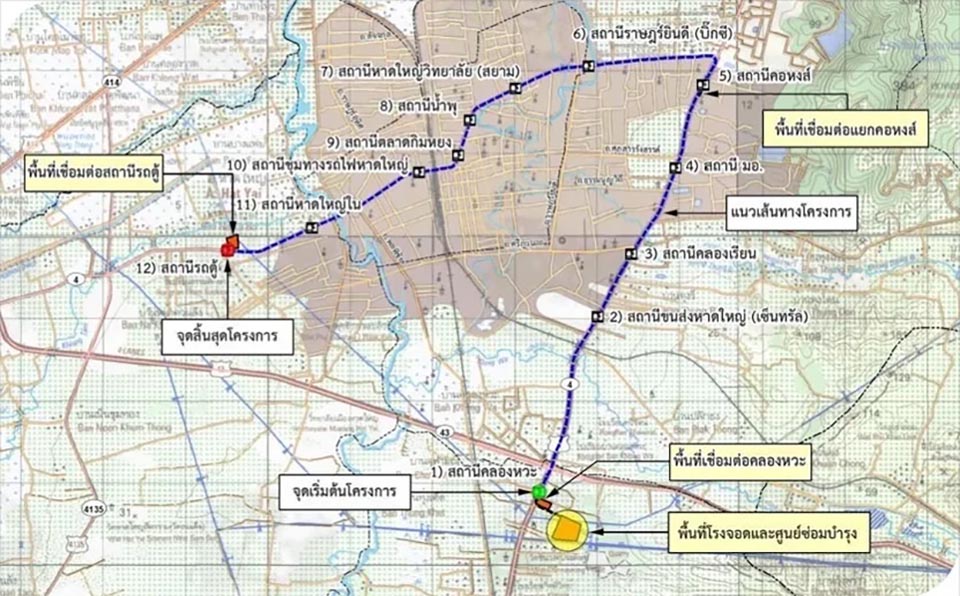
The proposed Hat Yai monorail in Songkhla is among the projects under review. The original plan, developed by the Songkhla Provincial Administrative Organisation about a decade ago, has an estimated investment cost of 16.19 billion baht, excluding trains.
The proposed 12.54-kilometre route would run from Khlong Hwa intersection along Kanchanawanich Road to Kho Hong intersection, then continue along Phetkasem Road to the minivan station. It would include 12 stations, a depot and maintenance centre at Khlong Hwa, and three transport interchange points.
The environmental impact assessment for the original project expired in early 2026. MRTA is awaiting the legal authority to take responsibility for the Songkhla rail project before commissioning a new feasibility review and design study.
Under the preliminary schedule, the review would begin in early 2027 and take about a year. Cabinet approval could be sought in 2029, followed by the selection of a private-sector partner under a public-private partnership model. Construction could begin in 2031, with services targeted to open in 2035.
MRTA is considering design changes to reduce costs, including using ground-level tracks outside the city centre. The agency also plans to reassess the connection with Hat Yai railway station, which is more than nine kilometres from the proposed route.
The review will examine population density, reliance on private vehicles, urban expansion and passenger demand to determine suitable routes and affordable fares.
Flood evacuation role under consideration
The devastating floods in Hat Yai in 2025 will also inform the redesign. MRTA plans to assess how the proposed transport system could support emergency assistance and evacuation during future flooding, with safety and route planning incorporated into the design.
The agency will visit Hat Yai to hold public consultations and gather residents’ views before finalising the revised plans. If implemented, the project is expected to reduce travel costs and journey times, ease air pollution and support urban development, investment, tourism and the local economy.