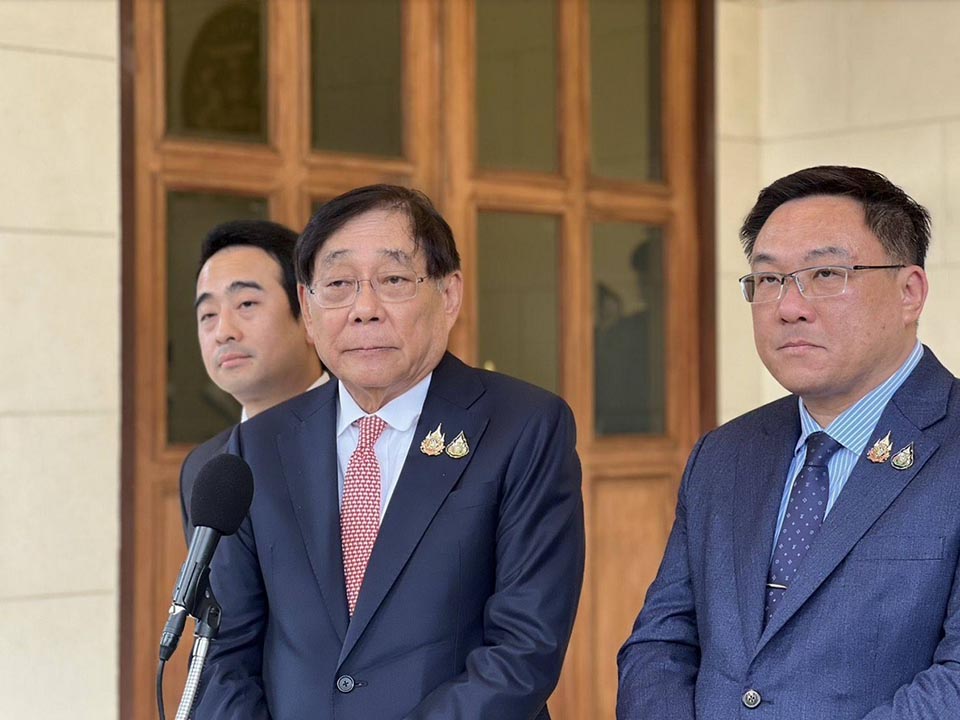
BANGKOK, Thailand – Deputy Prime Minister and Finance Minister Phichai Chunhavajira announced today, May 19, that the government will postpone the 10,000-baht digital wallet scheme until the economic situation becomes more favorable. Speaking after the second meeting of the Economic Stimulus Policy Committee at the Government House, he explained that while the scheme remains a priority, adjustments must be made in light of changing global and domestic conditions.
Minister Phichai emphasized that the delay is not due to a lack of funding. The government has a budget of 157 billion baht allocated for the project, but it is now reviewing how best to use these funds. When the digital wallet program was initially proposed, economic projections assumed GDP growth of 3.3 to 3.5 percent and inflation between 1.2 and 1.5 percent. However, due to slower-than-expected recovery and increasing external pressures, particularly from U.S. economic policies, the government now sees a need to revise its approach to economic stimulus.
As part of this reassessment, the government plans to redirect the allocated funds to more urgent structural needs. These include improvements in water management for consumption and agriculture, upgrades to transportation infrastructure such as dual-track railways and high-speed trains, and targeted support for the tourism sector. There will also be assistance for small and medium-sized enterprises (SMEs) affected by international policy shifts to help them remain competitive and retain employment.
The digital wallet project was originally scheduled to begin in phases. Phase three, targeting 2.7 million Thais aged 16 to 20, was expected to launch in the second quarter of 2025. Phase four, for 13 million people aged 21 to 59, was planned for September. A final phase would cover those without smartphones or who missed earlier registrations.
Phichai stressed that the program is only being postponed, not canceled. The government will reconsider its rollout once the economic climate becomes more suitable. He also addressed concerns that injecting money into the economy at this time might inadvertently stimulate foreign markets rather than domestic consumption, given the current influx of imported goods. This view aligns with a recommendation by Bank of Thailand Governor Sethaput Suthiwartnarueput, who recently urged the government to revisit the plan due to shifting economic realities.