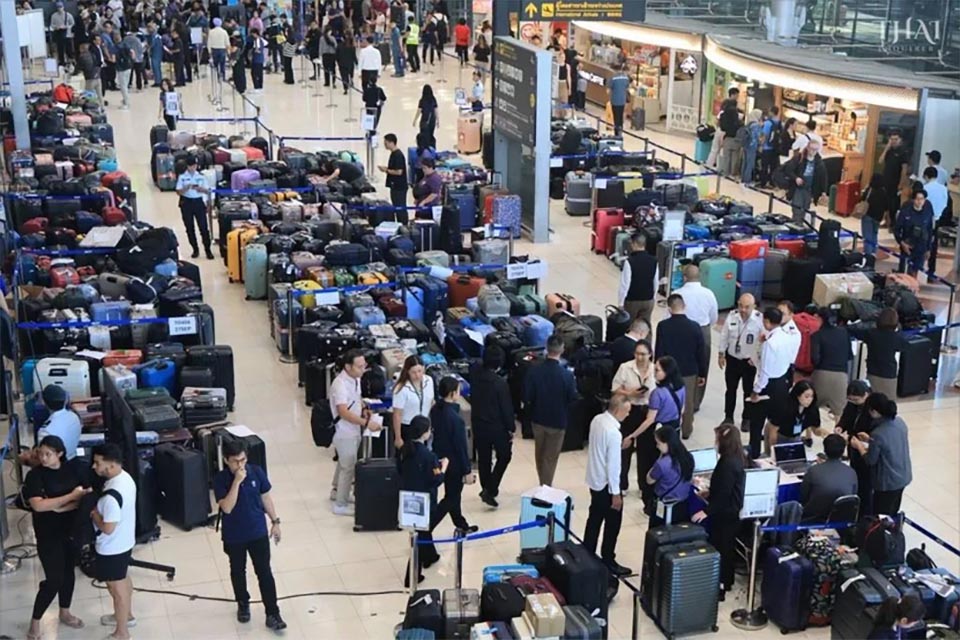
BANGKOK, Thailand – More than 10,000 pieces of passenger baggage were left stranded at Suvarnabhumi Airport amid a severe ground-handling shortage, with the disruption also contributing to the cancellation of around 40–50 flights, Deputy Transport Minister Siripong Angkasakulkiat told the House of Representatives.
Siripong was responding to a live parliamentary question from Democrat Party-list MP Sakoltee Phattiyakul about the baggage crisis, which has caused major disruption for passengers. In some cases, flights departed without passengers’ luggage being loaded and transported to their destinations.
The Ministry of Transport began receiving reports of the problem on September 26–27 and coordinated support from Royal Thai Air Force personnel from the morning of September 27 to help clear the growing baggage backlog. Separate government updates have also confirmed that thousands of bags accumulated after flooding disrupted staff availability at the airport.
Siripong said the main cause was insufficient ground-handling manpower, with only about half of the required workforce able to report for duty. The shortage created a bottleneck in baggage handling and caused delays to continue.
Thai Airways is now a private company and therefore has primary responsibility for managing the operational problem, he said, while the Ministry of Transport has coordinated government support to reduce the impact.
The ministry has also made clear to Thai Airways management that the response should not be based solely on profit and loss. Passenger confidence, the reputation of the national carrier and Thailand’s image must also be considered.
Thai Airways has confirmed that it will provide compensation and assistance to affected passengers at rates above the minimum required by law, with the aim of reducing the impact and restoring passenger confidence.
Siripong said future contracts with third-party ground-handling providers should include clear penalties and fines for service delays. He also accepted proposals to review the structure and duration of such contracts to reduce the risk of similar disruptions affecting passengers and the country’s aviation system again.
Earlier government figures showed that more than 10,000 bags accumulated between September 26 and 29, with about 8,000 still awaiting clearance on September 30. Authorities estimated that the backlog could take another three to four days to clear at a handling capacity of up to 2,000 bags per day.