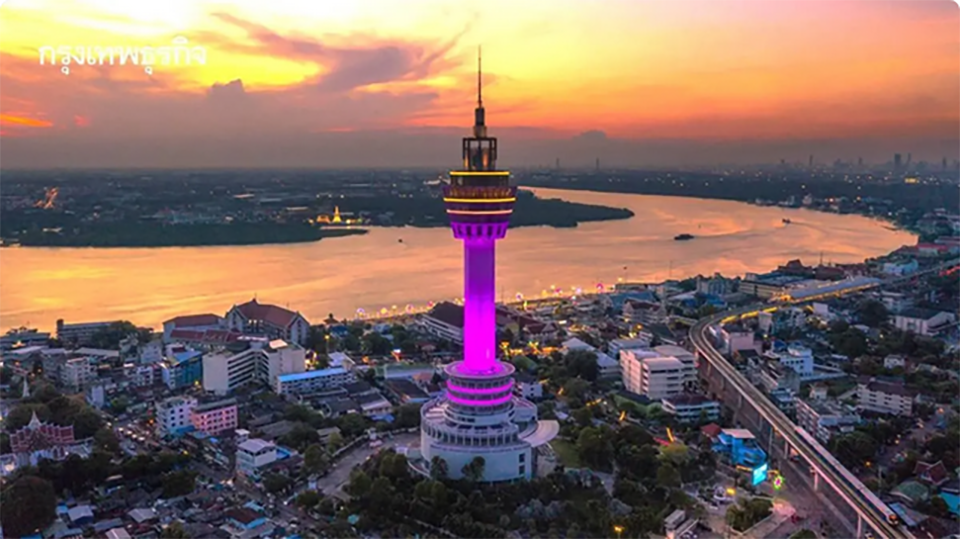
BANGKOK, Thailand – Samut Prakan, one of Thailand’s key coastal provinces, is at risk of losing nearly a third of its land to permanent flooding between 2030 and 2050 if sea levels rise as projected by climate scientists. The culprit is global warming, which is accelerating ice melt and driving up sea levels worldwide.
The threat is not abstract. Local residents are already living with tidal flooding, storm surges, and rainwater that has nowhere to drain. Just last week, neighborhoods along Srinakarin, Phraeksa, and Sukhumvit roads were submerged despite rainfall of less than 70 millimeters, as seawater pushed up the Chao Phraya River and surrounding canals.
Associate Professor Dr. Seri Suphratid of Rangsit University, an Intergovernmental Panel on Climate Change or IPCC expert, warns that if sea levels climb 0.30–0.70 meters over the next few decades, more than 30% of Samut Prakan will sink permanently. That would have a devastating domino effect on Bangkok, which sits directly inland.
“By the time it happens, it will be too late to fix,” Seri cautions, stressing the urgency of long-term flood defenses, climate adaptation, and smarter urban planning.
High-resolution flood models developed with ESRI already show that communities in Bang Phli, Bang Sao Thong, and Bang Bo face serious risks. Housing estates, factories, and wetlands alike could all be underwater if nothing changes.
Experts emphasize the need for local warning systems, not just national alerts, so that communities can respond quickly to rising water levels. Countries like Japan, with its J-Alert and L-Alert systems, show how localized preparedness can save lives and livelihoods.
For Samut Prakan, the choice is clear: plan now, or watch the city slowly drown over the next two decades.