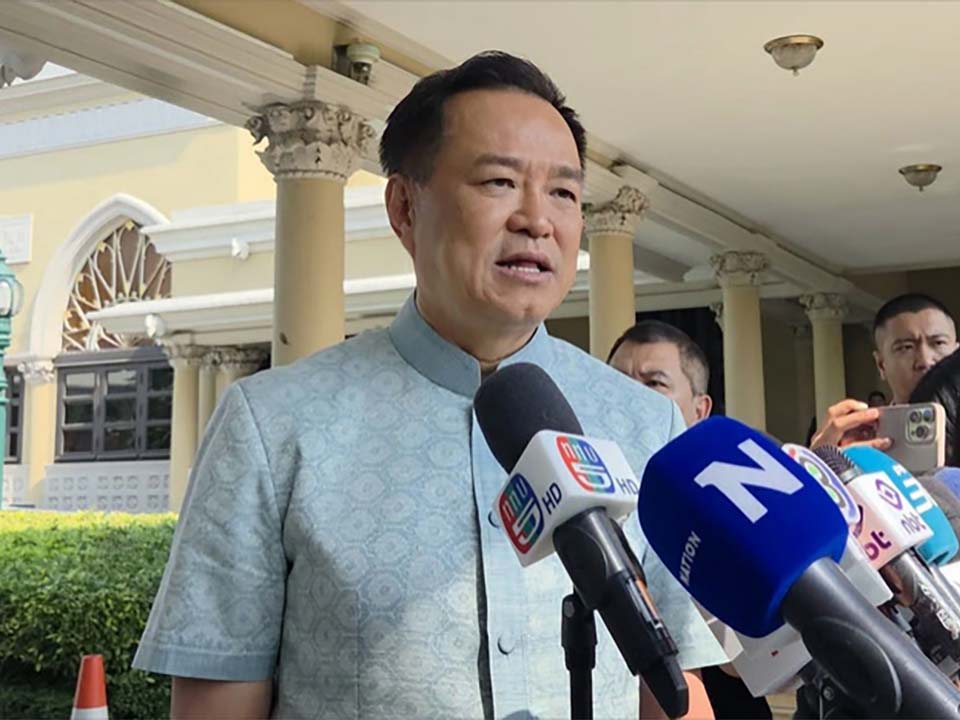
BANGKOK, Thailand – Prime Minister and Interior Minister Anutin Charnvirakul said on Thursday, Feb 12, he has approved, in principle, measures to strengthen Thailand’s border security, including reinforcing border fencing and enhancing military capabilities. He stressed that the government has the authority to cancel the 2001 Memorandum of Understanding (MOU44) through a Cabinet resolution without the need for parliamentary approval.
Speaking to reporters at 11:34 a.m., Anutin addressed concerns following an incident in Si Sa Ket province in which a Thai soldier stepped on a landmine. He said the incident did not involve any clash, as it occurred in an area under Thai control where demining operations are ongoing. The blast, he noted, was an accident in a high-risk area where unexploded mines remain, underscoring the need for stricter movement controls and clearly defined patrol routes.
On reports of provocation by Cambodian youths near the border, Anutin said such incidents can occur among civilians and on social media, but emphasized that Thailand and Cambodia have formal government-to-government agreements in place and Thai authorities will remain within Thai territory.
Asked whether building border fences would help reassure the public, Anutin confirmed that the plan will proceed, alongside boosting the armed forces’ capacity and overall strength, which he has already approved in principle.
Regarding MOU44, Anutin said he has instructed the Ministry of Defense, the National Security Council, and the Ministry of Foreign Affairs to take action, adding that there is no fixed timeline. He reiterated that the Cabinet has the legal authority to revoke the MOU directly.
He added that MOU43, which concerns border demarcation, remains beneficial to Thailand and is currently being implemented. While adjustments could be discussed in the future, Anutin said the current understanding is that “whoever is where they are, stays there,” in line with the latest ceasefire agreement.