BANGKOK, Thailand – Pheu Thai party leaders have sharply criticized Deputy Prime Minister and Minister of Public Health Anutin Charnvirakul for ordering the revocation of poker’s official sports status, claiming the move could cost Thailand as much as 1.4 billion baht per event and stifle the development of new tourism-driven economic opportunities.
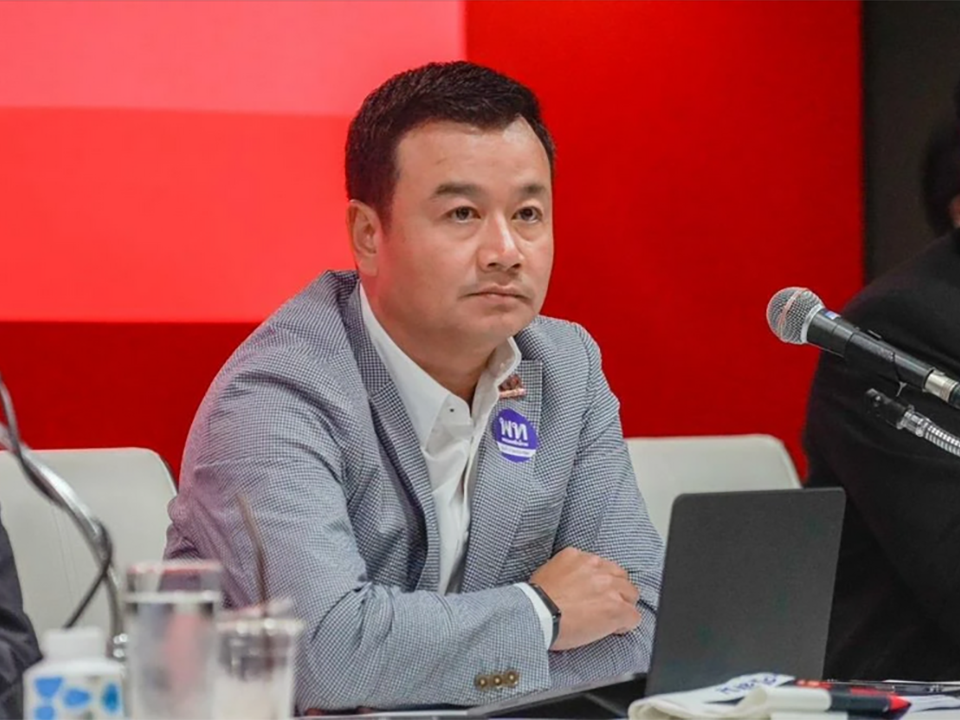
Acting Secretary-General of Pheu Thai, Sorawong Thienthong, a former Minister of Tourism and Sports, argued that the decision to reclassify poker under gambling regulations contradicts global trends and undermines Thailand’s efforts to promote a “new sports tourism economy.” He questioned whether the move serves the country’s interests or political agendas.
Poker has been internationally recognized as a mind sport since 2024 by the International Mind Sports Association (IMSA), requiring skill, strategic thinking, and mental endurance. The Sports Authority of Thailand (SAT) formally approved poker, along with flag football, as official sports in July 2025, with strict rules prohibiting gambling during competitions. Officials noted that citing gambling concerns to block the sport is therefore unfounded.
Globally, poker now has more than 450,000 registered players across over 50 member countries, with a wider base of more than 100 million players. Experts have argued that if Thailand were to host an annual Poker Tour Festival, the event could generate substantial tourism revenue. According to estimates by the Thailand Convention and Exhibition Bureau (TCEB), each visiting participant spends around 20,000 baht per day for 7–14 days. Drawing 10,000 participants could bring in over 1.4 billion baht per event.
Sorawong emphasized that poker is a strategic sport rather than gambling, and many countries use it to promote tourism and attract high-value visitors. He warned that the government’s decision prioritizes politics over economic development.
He also contrasted the government’s crackdown on poker with its lax approach to the legal cannabis market. Citing a 2025 study by Arizona State University, he noted the presence of harmful contaminants, including mycotoxins and diacetoxyscirpenol, in seized cannabis. Unlike the United States, which requires over 30 safety tests and certificates of analysis (COA) before sale, Thailand has yet to establish a proper safety standard for cannabis products.
“Why does the government allow potentially harmful commercial substances while blocking a tourism sport capable of generating hundreds of millions in revenue?” Sruang asked. He warned that the move could cost Thailand valuable opportunities to develop a high-value sports tourism sector and leave the country at a disadvantage compared with regional competitors.