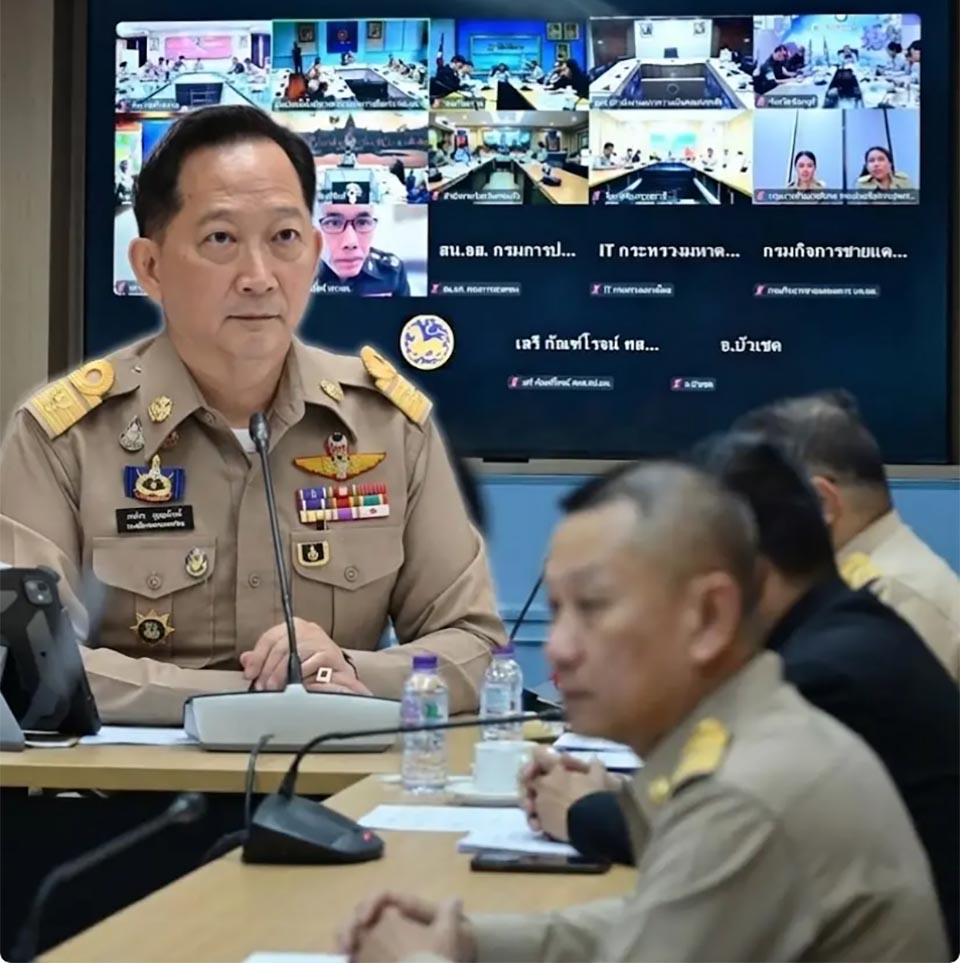
BANGKOK, Thailand – The Ministry of the Interior has convened a high-level meeting with the governors of seven Thai–Cambodian border provinces to review the enforcement of the General Border Committee (GBC) agreement and to oversee security conditions following recent unrest. The session was chaired by Phasakorn Boonyalak, Deputy Permanent Secretary for Interior, who was assigned to lead the meeting on behalf of Permanent Secretary Unsit Sampuntharat.
The meeting followed the third special session of the Thailand–Cambodia General Border Committee held in Chanthaburi, where both countries agreed to a ceasefire effective midday on December 27. The current phase covers a 72-hour monitoring and assessment period set to conclude at midday on Dec. 30, during which conditions are being reviewed to determine whether civilians can safely return to their homes and resume normal life.
Officials reviewed the key provisions of the joint statement, including maintaining existing troop positions, refraining from provocation, preventing harm to civilians, and allowing displaced residents to return to their homes from shelters. Non-military measures under review include mine clearance, countering false information, border demarcation, and suppression of cross-border scam operations, supported by coordination mechanisms such as hotlines and joint working groups.
Phasakorn stressed that any return of residents must occur only after military units confirm the area is safe. Clearance of unexploded ordnance must be completed before travel, and transport and movement must be coordinated by provincial and local agencies. After arrival, residents are instructed to report suspicious objects immediately to local leaders and security personnel.
The meeting also reviewed a revised compensation framework for civilians and officials affected by the border situation, which is being prepared for cabinet approval. Provincial administrations were instructed to assess damage to livelihoods, agriculture, and infrastructure, including utilities and public facilities, and to proceed with assistance and repairs under emergency relief regulations. (NNT)