

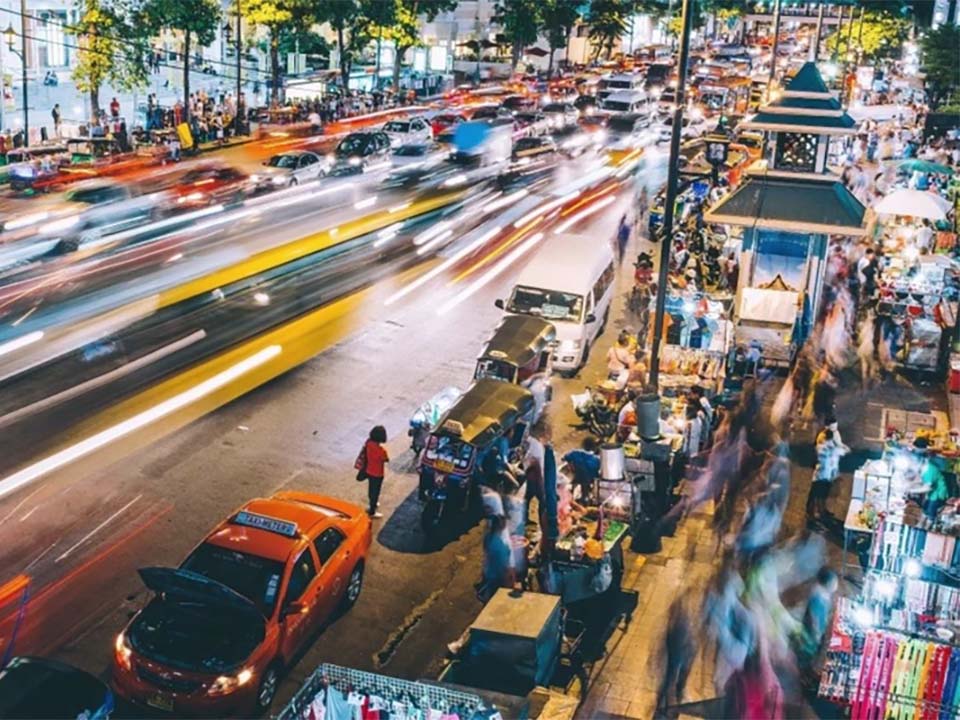
BANGKOK, Thailand – Informal workers account for nearly two-thirds of Thailand’s employed population, yet continue to face major inequalities in income, opportunity and social protection, according to the Puey Ungphakorn Institute for Economic Research (PIER). Assoc Prof Dr Sasivimon Varunsiri Paweenawat, an economist at Thammasat University’s Faculty of Economics and PIER researcher, presented the findings during a Research Talk titled “Dynamics of Informal Labour in the Modern World” at the BOT Symposium 2025.
Her research found that the Covid-19 pandemic affected informal occupations differently and accelerated changes in the composition of the workforce. It did not, however, reduce informal employment across all occupations. Between 2019 and 2024, the number of motorcycle drivers increased by almost 49%, reflecting the expansion of delivery services and platform-based work. Domestic workers and market vendors also increased in number, while home-based workers and street vendors declined. Although the overall proportion of informal workers fell, employment trends varied considerably between occupations.
Informal work offers flexibility and independence in managing working hours, but this does not necessarily mean shorter working days or greater job security. Domestic workers, home-based workers, market vendors, motorcycle drivers and street vendors generally worked 40 to 48 hours a week, with many working longer.
Nor does informal employment always mean low earnings. Home-based workers, market vendors and street vendors earned average hourly incomes of more than 110 baht, above the national workforce average of 87.3 baht. However, informal workers remain exposed to unstable incomes, limited protection and unsafe working conditions. The research found that unsafe working environments affected approximately 5.1% of informal workers in Bangkok and 7.7% of motorcycle drivers.

Women face particular challenges. Flexible informal work can help them earn an income while managing family and care responsibilities, but it does not necessarily provide equal economic opportunities. Between 2017 and 2021, the gender wage gap among informal workers reached 10%. Digital technology and online commerce have created new opportunities for flexible employment, but access to technology does not guarantee equal benefits. Education, skills, digital readiness and family responsibilities all influence workers’ ability to take advantage of these opportunities.
The research recommends designing social welfare and protection systems around the realities of different occupations, rather than focusing solely on moving informal workers into conventional formal employment. All workers should have continuous access to basic social protection, with additional safeguards tailored to their specific risks. These include accident insurance and income compensation for injured motorcycle drivers, with platforms sharing responsibility; stronger basic employment rights for domestic workers; flexible contribution arrangements for vendors with fluctuating incomes; and greater transparency in work conditions and pay for home-based workers.
The study also calls for clearer access to benefits and responsibilities among relevant parties, ensuring that social protection continues when workers change jobs. This approach reflects the principle of “portable rights”, allowing workers to retain protection throughout their working lives. (Story & Photo: Prachachat Business)