


PATTAYA, Thailand – Koh Larn’s popularity brings welcome income to local businesses, but managing the island’s growing visitor numbers requires more than attractive beaches and stricter parking enforcement. The island faces a range of infrastructure, safety and environmental challenges that need consistent attention from Pattaya City.
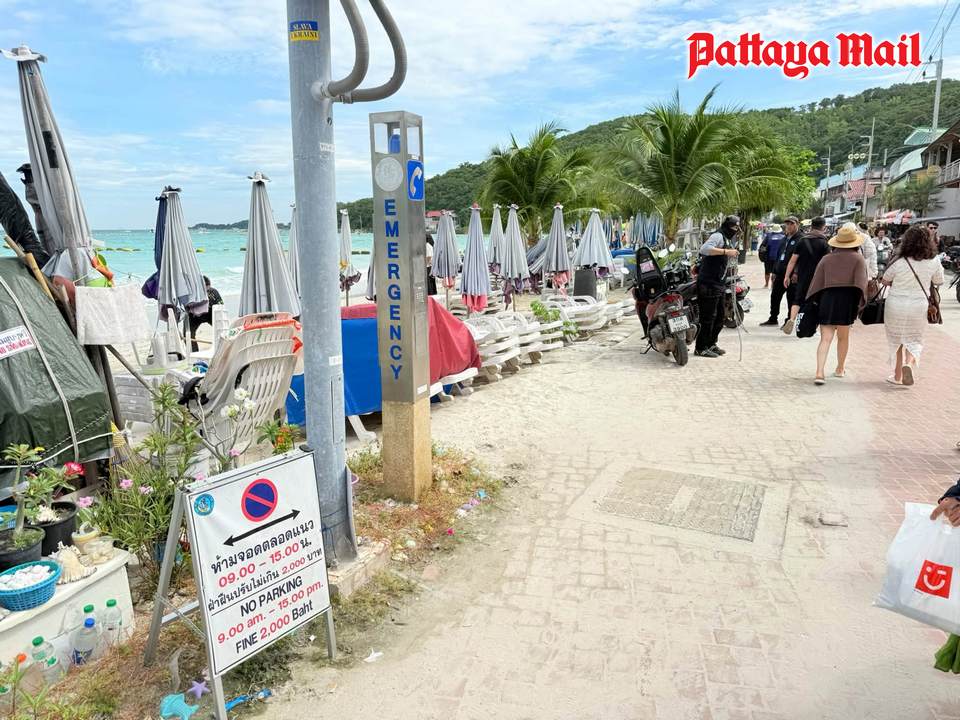
The latest reminder concerns Tawaen Beach, where municipal officers are enforcing parking restrictions between 9am and 3pm. Motorists who park in prohibited areas during these hours face wheel-clamping and fines. The measure is intended to keep the busy beachfront orderly and prevent vehicles from obstructing access. But parking is only one part of the picture.
Koh Larn’s steep and sometimes challenging roads require careful driving, particularly from visitors unfamiliar with the island. Clear warning signs, road maintenance, speed control and better traffic management are important to reduce accidents. Strong coastal winds and rough seas also create additional risks, particularly during unsettled weather. Visitors need timely information about sea conditions, while boat operators must put passenger safety first.
Water supply is another long-standing concern. Tourism places considerable pressure on the island’s limited resources, particularly during busy periods. In July, Pattaya Mayor Poramet Ngampichet outlined plans to expand freshwater production from approximately 400 cubic meters per day to between 1,000 and 3,000 cubic meters through reverse-osmosis technology. Current demand is estimated at 1,000–1,500 cubic meters daily, depending on visitor numbers.
Waste management is equally important. Pattaya opened an integrated waste management center on Koh Larn in April 2026, following years of concern over accumulated rubbish. The facility is designed to process up to 50 tons of waste daily. Its long-term success will depend not only on its capacity but also on reliable operation, proper waste collection and greater cooperation from businesses and visitors. Wastewater treatment and drainage also need continued attention. New treatment facilities have been developed to serve areas where existing systems could no longer cope with growing demand, while officials have inspected blocked drains and coastal areas affected by monsoon waves.
Koh Larn needs a coordinated, long-term plan covering road safety, parking, boat transport, sea safety, deteriorating piers, water supply, waste and wastewater management, and overcharging. Enforcing parking rules is a start, but protecting the island’s tourism future also means fair prices, safer travel and reliable infrastructure for residents, businesses and visitors.