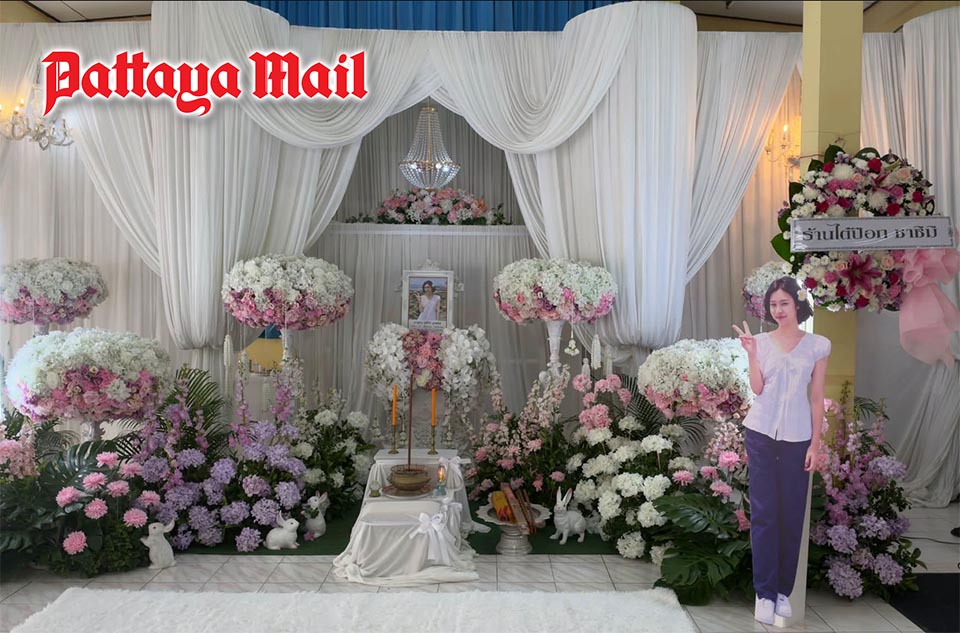
PATTAYA, Thailand – The family of a 17-year-old Grade 11 student is seeking answers from a hospital in Banglamung district, Chonburi province, after maintenance workers allegedly carried out drilling and renovation work inside a patient room while their seriously ill daughter was receiving treatment.
The student, identified as Tonkhao, died on November 11 after battling a tumor affecting her nervous system. Her parents said they were particularly concerned about work carried out in mid-October, when four to five workers reportedly spent several hours drilling and installing equipment inside the room where she was being treated.
Her mother, Saowalak, 36, said her daughter first became ill in August after a tumour affecting the nervous system near the spinal cord caused numbness and weakness in her arms and legs. She initially received treatment at Rajavithi Hospital in Bangkok before being transferred to a hospital in Chonburi on October 6. She entered a special shared ward on October 8, costing 1,500 baht per day.
The family chose the room because they believed it offered better cleanliness and infection-control measures. Tonkhao had undergone a tracheostomy and required respiratory support, making her particularly vulnerable to infection. Although unable to move, she was initially conscious, able to communicate and call for her mother. Her mother alleged that four to five maintenance workers entered the room in mid-October and worked with drilling equipment from late morning until almost evening. She said the workers did not wear masks, gloves or special protective clothing.
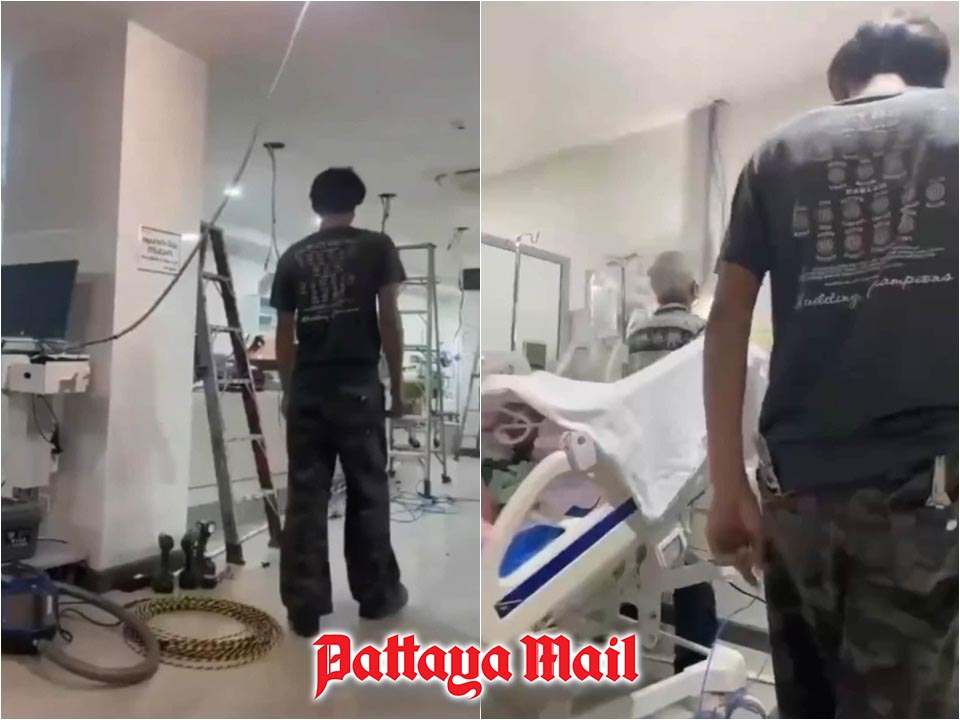
Nursing staff reportedly covered Tonkhao’s head and face with a sheet secured to the bed to protect her from dust. Although workers also used a small dust-extraction machine, the family remained concerned about airborne particles and the noise from the work. Saowalak said the hospital had not informed the family in advance, only notifying them on the day the work was due to take place. She was reluctant to object because she feared disrupting her daughter’s care.
Her father, Surachit, 40, said the family had accepted the daily room charge despite financial hardship because they wanted their daughter to have the best possible chance of recovery. They had even begun preparing medical equipment, including a suction machine, for her eventual return home. However, the family said Tonkhao’s condition later deteriorated. They were informed that she had developed a urinary tract infection and subsequently complications involving fluid in the brain. She was transferred back to Rajavithi Hospital on October 20, where she died on November 11.
According to the death certificate, the recorded cause of death was a central nervous system tumour. No medical evidence or conclusion has established whether the renovation work or dust exposure contributed to her deterioration or death. The parents stressed that they were not accusing the hospital of causing their daughter’s death. Their concern was whether adequate precautions had been taken to protect a critically ill patient who had undergone a tracheostomy and required respiratory support.
The family is asking hospital management and relevant authorities to investigate why the work was permitted while patients were occupying the room, what dust-control and infection-prevention measures were implemented, and whether high-risk patients should have been moved before maintenance work began. They hope the hospital will provide a clear explanation and review its procedures to prevent similar concerns involving other vulnerable patients.