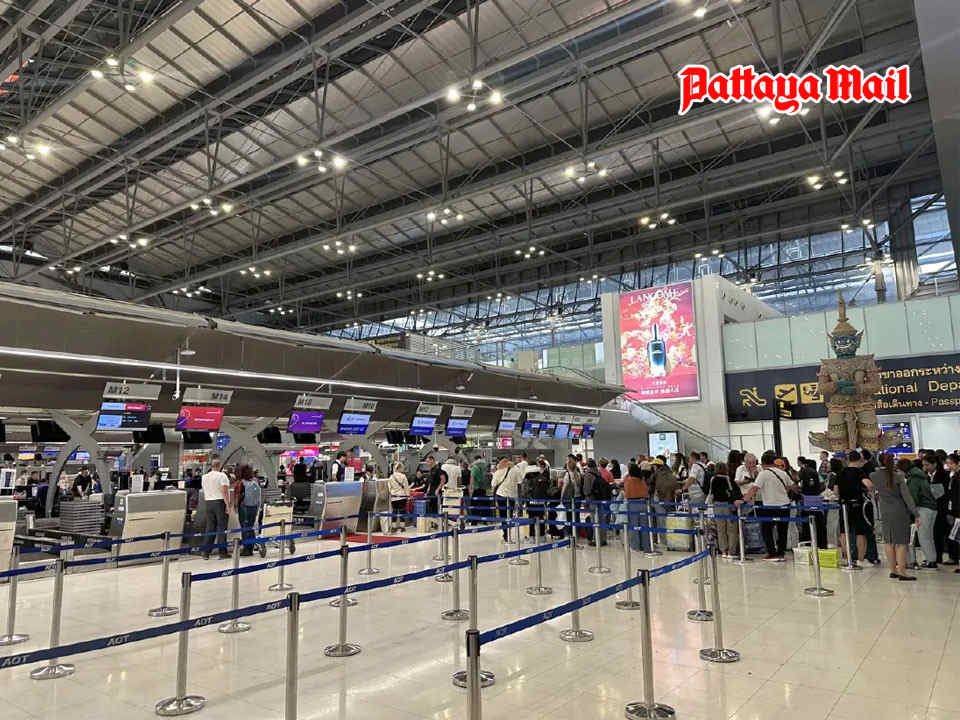
PATTAYA, Thailand – Thailand is a nation without its own core technologies. For decades, we have relied almost entirely on agricultural exports and tourism revenue – a tragedy in the making that could prove unforgivable.
Calculated against the combined number of outbound air passengers—including an estimated 10-12 million Thai citizens travelling abroad and 25-30 million foreign tourists departing Thailand annually—the proposed departure tax could affect roughly 35-40 million travellers each year.
At 1,000 baht per person per outbound flight, the levy would extract approximately 35-40 billion baht directly from travellers’ pockets annually. This revenue would not be channelled into technology, innovation or modern infrastructure to advance the nation. Instead, it would flow into general government revenue to support routine spending and administrative costs.
For Thais required to pay this levy, any claim that increasing travel costs would curb inflation or ease the cost of living is fundamentally flawed economics. A departure tax does not address the structural causes of inflation, such as energy costs or raw material prices. Instead, it directly reduces consumer purchasing power. Taking billions of baht from Thai citizens during a period of high living costs would further restrict household liquidity and dampen domestic consumption.
Departure levies should be distinguished from tax-residency exit taxes, which can target unrealised capital gains when individuals cease to be tax residents. These are different mechanisms with different purposes and should not be treated as equivalent policies.
Developed economies have advanced through sustained innovation, technology and research. Thailand should likewise focus on strengthening its productive capacity and competitiveness.
Introducing an outbound travel levy could create another barrier to growth. If cross-border travel were to fall by 50%, as the tourism and hospitality associations cited in this argument have warned, the economic consequences could be severe.
First, hundreds of billions of baht in circulating spending could be lost. Under this scenario, reduced spending by foreign tourists could remove an estimated 600-800 billion baht annually from the economy.
Second, international flight capacity could contract. As passenger demand declines among both Thai travellers and foreign visitors, airlines could face mounting commercial pressure, resulting in cancelled routes, reduced seat capacity and higher airfares.
Third, hospitality businesses and local economies could suffer widespread disruption. Spending that supports hotels, restaurants, transport operators and community vendors could decline sharply, putting jobs across the service sector at risk.
Trading roughly 40 billion baht in tax revenue for potential economic losses approaching one trillion baht would represent a serious policy miscalculation. Such a decision risks overlooking the wider economic consequences while placing one of Thailand’s principal economic drivers under further pressure.