

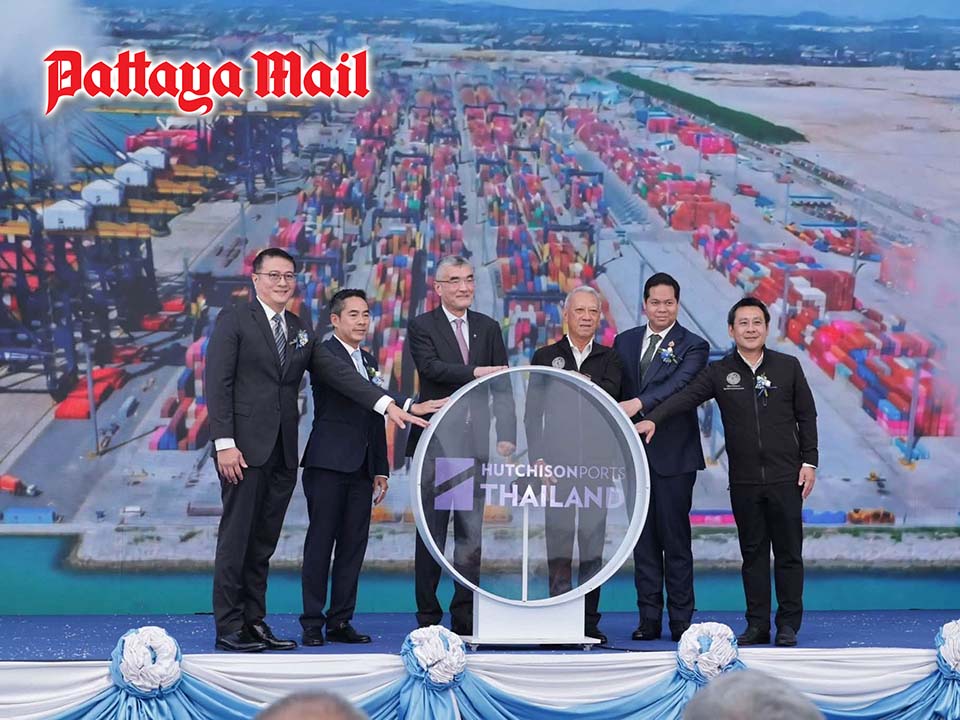
CHONBURI, Thailand – Laem Chabang Port officially opened its Terminal D container facilities on November 26, marking a major development in Thailand’s logistics infrastructure with an investment of approximately 20 billion baht. Deputy Prime Minister and Transport Minister Phiphat Ratchakitprakarn said the opening of Terminal D marked an important step in developing Thailand’s logistics infrastructure, increasing cargo-handling capacity and supporting international trade and investment. The development is also expected to improve the country’s competitiveness in the global economy.

He said the government remained committed to the development of Laem Chabang Port Phase 3, alongside better connections between road, rail, maritime and air transport networks. These improvements are intended to reduce logistics costs and create new economic opportunities.
Hutchison Ports Thailand has invested approximately 20 billion baht in Terminal D, which will provide additional container-handling capacity of 3.5 million TEUs (twenty-foot equivalent units) annually. The terminal can accommodate some of the world’s largest container ships, measuring up to 400 meters in length, facilitating direct trade connections between Thailand, Europe and North America.
The new facility incorporates advanced technologies, including automated operations, intelligent terminal management systems, remotely controlled machinery and driverless trucks. Renewable energy is also being introduced to improve operational efficiency, enhance safety and reduce carbon emissions. The opening reflects continued cooperation between the public and private sectors and investor confidence in Thailand’s transport infrastructure. It is also expected to support the development of the Eastern Economic Corridor (EEC) and the country’s ambition to become a major regional transportation and logistics hub.