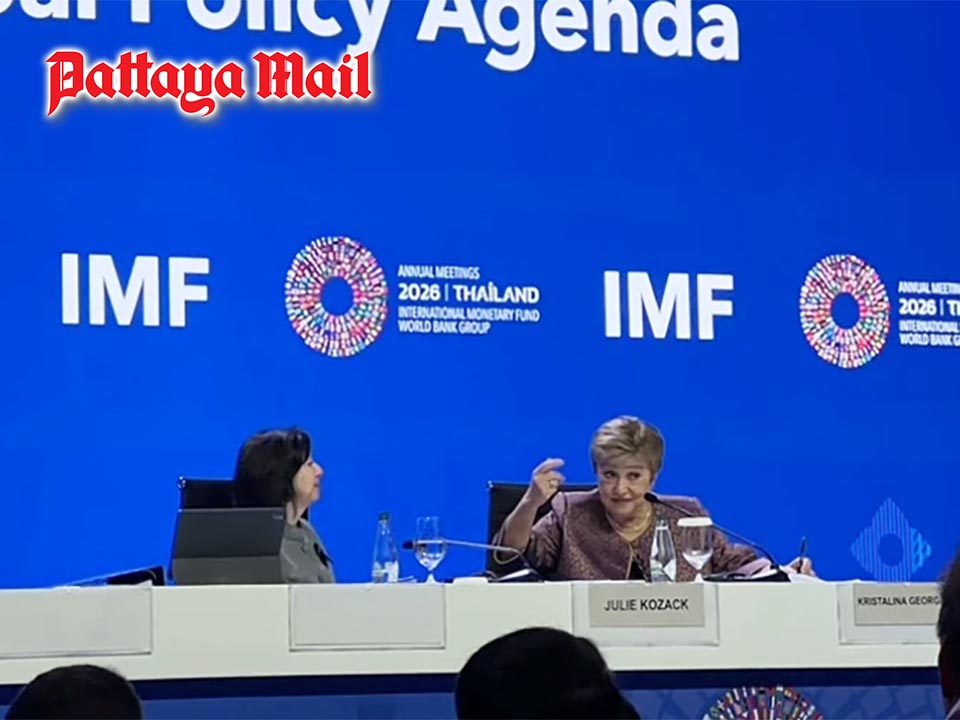
BANGKOK, Thailand – International Monetary Fund Managing Director Kristalina Georgieva has warned that Thailand and other emerging economies face rising borrowing costs, urging ASEAN members to trade more with one another to reduce vulnerability to external economic shocks.
Speaking at a global policy press conference at the Queen Sirikit National Convention Center in Bangkok during the 2026 IMF–World Bank Group Annual Meetings, Georgieva said structural pressures in major economies, including the United States, were pushing up the underlying level of global interest rates and increasing debt-servicing costs for emerging markets.
Although financial markets remain relatively stable and interest-rate spreads have largely held steady, the higher baseline means countries such as Thailand will have to pay more to borrow, she said.
Georgieva said Thailand should focus on economic growth and building stronger macroeconomic foundations to withstand external shocks, particularly given its high household debt burden.
She also called on Thailand and its ASEAN neighbors to make greater use of regional economic integration by expanding trade among member states.
Internal trade accounts for only 22% of ASEAN’s total trade, compared with around 60% within the European Union, Georgieva noted. The disparity highlights considerable room for Southeast Asian economies to deepen commercial ties and reduce their reliance on markets outside the region.
She described ASEAN as a dynamic region with a relatively young population, saying stronger regional trade could help its economies capture more benefits from their collective economic strength.
Georgieva also highlighted Thailand’s position among countries benefiting from the rapid expansion of artificial intelligence investment, welcoming the fact that the country was beginning to consider the risks associated with AI investment at an early stage.
Singapore, meanwhile, was described as a regional leader in AI. Georgieva said she had been impressed during her October 7 visit by the country’s attention to the risks accompanying the technology, alongside its potential benefits. She stressed that AI offers significant opportunities but also presents risks that governments and businesses must recognize and manage. Her remarks placed regional trade, economic resilience and responsible AI development among the issues facing Southeast Asia amid a more challenging global financial environment.