

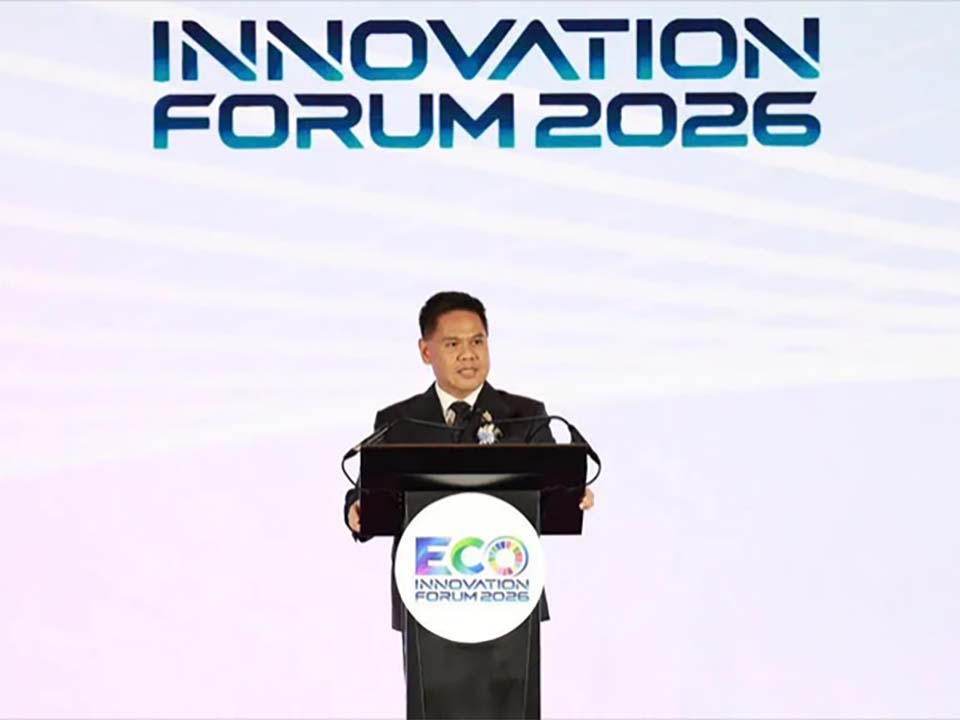
BANGKOK, Thailand – Thailand’s industrial sector must adapt to changing global rules and technological disruption, turning potential setbacks into opportunities for long-term growth, Industry Minister Varawut Silpa-archa said, following reports that NVIDIA has instructed manufacturing partners to suspend shipments of AI servers to four Southeast Asian countries, including Thailand.
Speaking at the 10th annual Eco Innovation Forum 2026, organized by the Industrial Estate Authority of Thailand (IEAT) and the Federation of Thai Industries (FTI), Varawut said the reported suspension could affect Thailand’s AI and data centre industries in the short term. However, he believes the situation could ultimately encourage the country to develop greater domestic manufacturing capabilities and reduce reliance on imported technology. He said Thailand is an important part of the global AI and data center supply chain, and that the government would consult the private sector and relevant agencies to monitor developments and assess the potential impact.

Varawut said the country must move beyond traditional industrial practices amid what he described as a period of “polycrisis”. Thailand must seize opportunities arising from the growth of AI while upgrading workforce skills to meet technological demands and the challenges of an ageing society. He identified two major pressures facing manufacturers: new international regulations and technological disruption. These include the European Union’s Carbon Border Adjustment Mechanism (CBAM), which entered its definitive phase on January 1, 2026, and Thailand’s proposed Climate Change Act, which is expected to introduce monitoring, reporting and verification systems and a carbon tax.
Manufacturers must also contend with cheaper imported goods, higher energy costs and growing expectations from communities surrounding industrial estates. Varawut said industrial estates should become “Sandbox and Scale-up Hubs” through three key development priorities: circular industry, low-carbon industry and competitive industry.
The circular industry approach would encourage businesses to reuse one another’s waste, treated wastewater and excess heat as raw materials or energy. The Closed Loop Sandbox at the Map Ta Phut Complex was cited as a model of industrial symbiosis. The low-carbon strategy aims to turn industrial estates into decarbonisation hubs while improving resilience to extreme weather. Thailand ranks 17th globally for extreme weather risk in the Climate Risk Index 2026, he said.
The competitive industry strategy would help manufacturers comply with emerging international requirements, including the EU’s Packaging and Packaging Waste Regulation (PPWR), through traceable data and environmental, social and governance (ESG) practices.
Varawut also called for a shift from “Made in Thailand” to “Made WITH Thailand”, emphasizing technology transfer and workforce development. He pointed to cooperation with Japan to upgrade Thai automotive parts manufacturers and the FTI’s letter of intent signed with the Japan Aerospace Exploration Agency (JAXA) and the Japan External Trade Organization (JETRO) on November 19 to help Thai suppliers enter the space industry.
He also outlined the “TRUST” approach introduced by Deputy Prime Minister and Finance Minister Ekniti Nitithanprapas. The framework covers Trust Connector, Realize the Importance of Relationship, Unlock Investment, Seize Opportunity and Transform Together. Its aims include building confidence, removing barriers to investment and ensuring that SMEs, workers and local communities share in future industrial growth.
On international cooperation, Varawut highlighted a low-carbon city and carbon market development program involving the IEAT, the World Bank, the Export-Import Bank of Thailand and Krungthai Bank. The program has more than US$100 million in World Bank funding to support solar power installations in industrial estates, with private companies providing the investment rather than adding to public debt. Certified carbon credits generated through the program can then enter the carbon market.
FTI Chairwoman Pimjai Leeissaranukul said the economy, society and environment had become interconnected challenges for industrial competitiveness. She stressed the need to help SMEs gain access to technology, financing and reliable carbon data to reduce costs and maintain international trade opportunities.
IEAT Chairman Trairat Wiriyasirikul said the authority would apply the TRUST approach to improve relations between industrial estates and surrounding communities, respond to complaints transparently, monitor industrial waste from its source to final disposal and remove regulatory obstacles to green investment.
IEAT Governor Sumet Tangprasert said the forum’s 10th consecutive year demonstrated that Thailand’s sustainable industrial development was moving beyond declarations of intent towards measurable action.
Market impact seen as short-term
Meanwhile, securities analysts largely viewed the reported NVIDIA AI server shipment suspension as a short-term sentiment shock for Thai equities rather than a major threat to the underlying earnings of listed companies. The news weighed on market sentiment on November 27, with the Stock Exchange of Thailand fluctuating within the 1,400–1,440-point range.
Asia Plus Securities estimated that even if data center projects in Thailand were delayed by 10–30%, the impact on annual GDP growth would be limited to approximately 0.06–0.18%. Pi Securities recommended focusing on domestic-oriented stocks, including retail, telecommunications and financial services. InnovestX, meanwhile, viewed declines in power and electronics shares as potential opportunities to accumulate stocks at lower prices, noting that their long-term fundamentals remained unchanged. Analysts also distinguished between the different parts of Thailand’s AI supply chain.
Upstream manufacturers were expected to face limited direct disruption because Thailand produces important hardware components for global AI systems, including high-speed optical communication chips supplied by companies such as Lumentum, advanced printed circuit boards (PCBs) and high-capacity hard drives. These products are primarily manufactured for export.
Data center operators, however, could face short-term delays because their projects depend on importing AI servers from the United States. Thailand has 57 data center projects approved by the Board of Investment (BOI), and these installations may face additional customer checks and US export licensing requirements to prevent advanced technology from being diverted to China.
The differing exposure highlights the importance of Thailand’s position in both upstream hardware manufacturing and downstream data center investment, while reinforcing the need to develop a more resilient domestic industrial ecosystem. (TNA)