
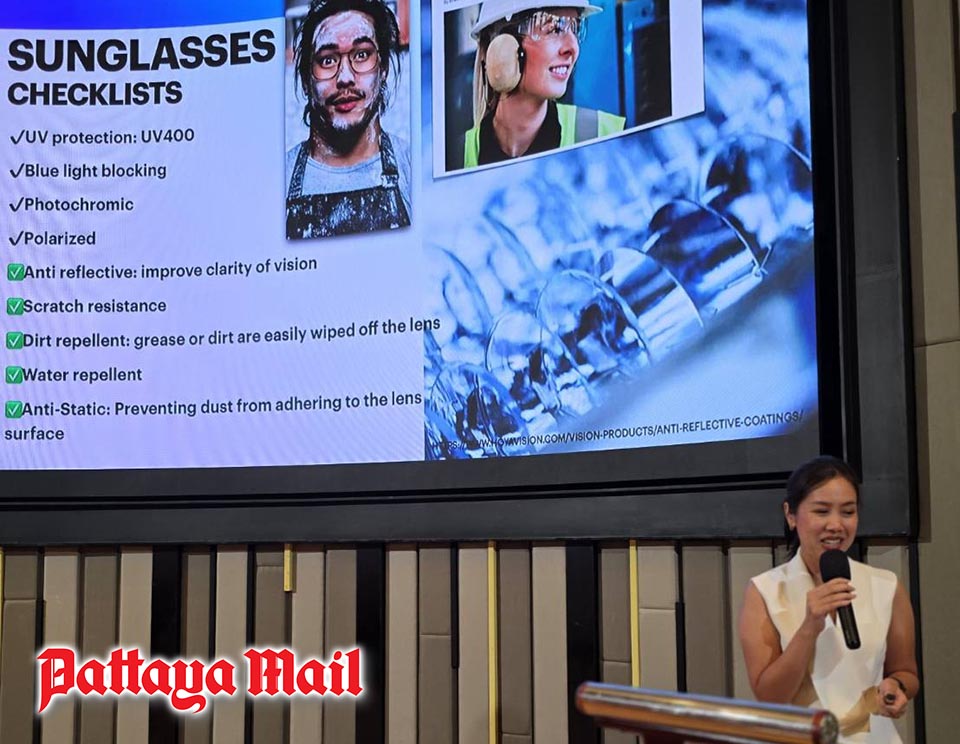
PATTAYA, Thailand – Sunglasses should do more than look stylish—they should provide verified protection from ultraviolet radiation, ophthalmologist Dr. Bunyaporn “Mo” Chandra-Chamnong told the Pattaya City Expats Club during her presentation on November 4, 2026. Her topic was entitled “Are Your Sunglasses Really Protecting Your Eyes, or Do They Just Look Good?”
Dr. Mo explained that lens darkness is not a reliable measure of UV protection. Consumers should instead look for a UV400 label, indicating protection against ultraviolet wavelengths up to 400 nanometers. Even clear lenses can provide full UV protection.
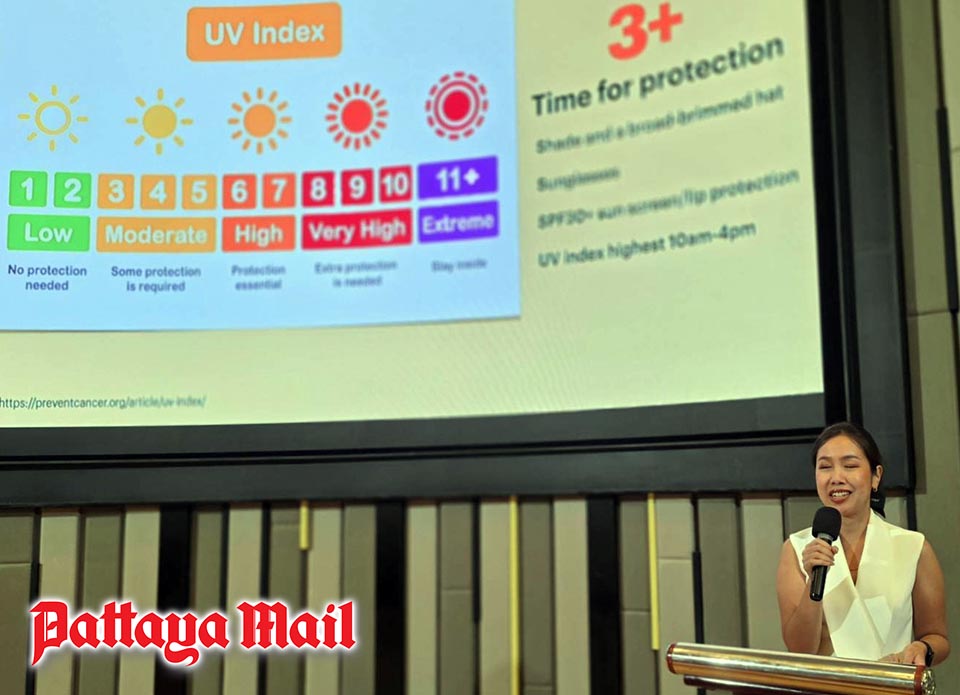
She warned that prolonged UV exposure can affect the eyelids, ocular surface, cornea, lens and retina. Possible consequences include photokeratitis, cataracts and other eye conditions. Further, protection is still necessary on cloudy days. Dr. Mo recommended wearing sunglasses, a wide-brimmed hat and sunscreen when the UV index reaches three or higher.
She also distinguished UV protection from visible light transmission, or VLT. While UV filtering protects the eyes from harmful radiation, VLT determines how much visible light passes through a lens. Categories 2 and 3 are generally suitable for moderate to bright sunlight, while very dark category 4 lenses should not be used for driving.
Dr. Mo described polarized lenses as useful for reducing reflected glare during activities such as driving, boating, fishing and golf. However, she stressed that polarization does not automatically provide UV protection. Polarized lenses may also make some LCD screens, dashboards and mobile phones harder to read.
Photochromic lenses, which darken outdoors and become clear indoors, offer another option—particularly for prescription wearers. Their performance may be reduced in hot weather or behind car windscreens that already filter UV light, and the photochromic layer can deteriorate over time.
Lens color can also influence visual comfort. Grey lenses preserve natural colors, brown and rose tints enhance contrast, and green lenses offer a balance between contrast and color accuracy. Dr. Mo said personal comfort and intended use should guide the final choice.
During a question-and-answer session, audience members asked about nighttime driving glare, early signs of cataracts, windscreen tinting, motorcycle visors and lens durability. Dr. Mo said possible cataract symptoms include blurred or changing vision, glare and double vision in one eye, and advised regular eye examinations.
Her main message was straightforward: buyers should first confirm UV400 protection and then consider VLT, polarization, photochromic treatment, coatings, comfort and frame style according to their needs.
Following the presentations, MC Ren Lexander brought everyone up to date on upcoming Club events followed by the Open Forum portion of the meeting where questions are asked and comments made about Expat living in Thailand, especially Pattaya. To learn more about the PCEC, visit their website at https:/pcec.club. A video of the presentation and subsequent interview will be uploaded to the PCEC’s YouTube Channel at https://www.youtube.com/@pcecclub6255/videos.