

BANGKOK, Thailand – Thailand’s pickup truck market is facing a prolonged downturn, with domestic sales forecast to fall to a historic low of 140,000 vehicles in 2026, even as major automakers continue launching new models and investing in the country as a global production and export base.
The contraction reflects mounting pressure on household purchasing power, high debt levels, stricter vehicle financing, rising fuel costs and changing consumer preferences. The growing availability of competitively priced electric passenger cars and SUVs has also intensified competition for traditional pickup trucks.
According to figures reported by Prachachat Business, Thailand recorded total domestic vehicle sales of 532,355 units in the first nine months of 2026, an increase of 18% year on year. Pickup sales, however, reached just 103,220 units, down 3.7% from the same period last year.
The figures highlight a widening divide between the recovering passenger vehicle market and the continuing weakness in pickups, which have long been a cornerstone of Thailand’s automotive industry.
Pickup sales fall from historic highs
Thailand’s pickup market was considerably stronger a decade ago. In 2012, during the government’s first-car purchasing program, domestic pickup sales exceeded 594,000 vehicles, accounting for approximately 41% of total vehicle sales. Pickups subsequently maintained a share of around 40–45% of the domestic market for years. However, consumer preferences and vehicle usage have gradually changed, while economic pressures have made it more difficult for many traditional buyers to secure financing. The decline accelerated after 2022, when annual pickup sales stood at approximately 388,000 vehicles.
Sales subsequently fell to around 265,000 units in 2023, 163,000 in 2024 and 144,000 in 2025. The cumulative contraction over those three years exceeded 62%. For 2026, the industry expects the market to shrink further to approximately 140,000 pickups, potentially its lowest annual level on record. Despite the domestic downturn, Thailand remains an important international production centre for one-tonne pickups, encouraging manufacturers to maintain investment and production capacity for export markets.
Household debt and tighter lending weigh on buyers
Suwat Suppakandechakul, vice chairman of the Federation of Thai Industries and chairman of its Automotive Industry Club, said the pickup market had contracted by approximately 65% from its 2022 level. The weakness extends beyond domestic sales, with pickup exports also facing pressure, according to the industry representative. High household debt, tighter lending standards and weaker purchasing power have particularly affected traditional pickup customers, including farmers, traders, factory workers and small business operators who rely on their vehicles to earn a living.
International conflicts and fluctuations in energy prices have added to concerns over fuel expenses and the overall cost of vehicle ownership. Suwat said government measures to stimulate demand were needed to help sustain production, protect Thailand’s competitiveness and preserve the wider supply chain associated with the country’s automotive industry.
Isuzu targets premium buyers
Hiroyasu Sato, managing director of Tri Petch Isuzu Sales, acknowledged the continuing decline and forecast that Thailand’s total pickup market would reach approximately 140,000 units this year, out of an estimated 700,000 domestic vehicle sales. That would reduce pickups to around 20% of the overall market, compared with a historical share of as much as 40%.
Sato said traditional customers had not necessarily abandoned pickups in favour of other vehicle types. Instead, many were struggling to qualify for financing under stricter lending conditions. Meanwhile, some buyers, particularly lower-level employees, are increasingly considering passenger cars and SUVs that offer competitive prices and may be easier to finance. In response, Isuzu is expanding its appeal to higher-income customers with better-equipped, more premium models.
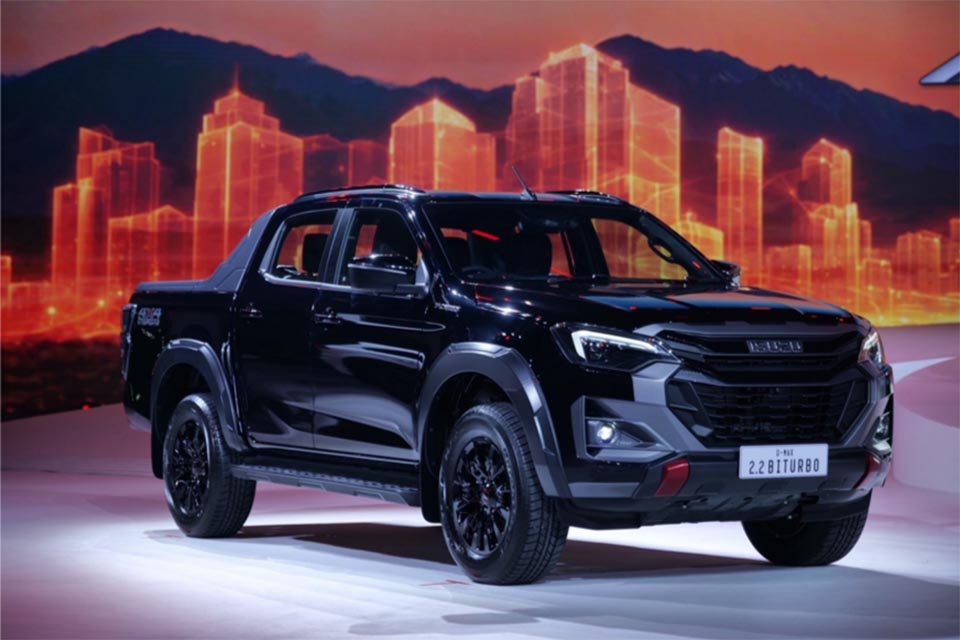
The company recently introduced a new pickup powered by its 2.2 Ddi MAXFORCE Biturbo engine, offering six variants priced from 1.194 million to 1.774 million baht. Sato said the company believed demand could improve if financing conditions eased and household purchasing power recovered.
Toyota and Ford expand their pickup line-ups
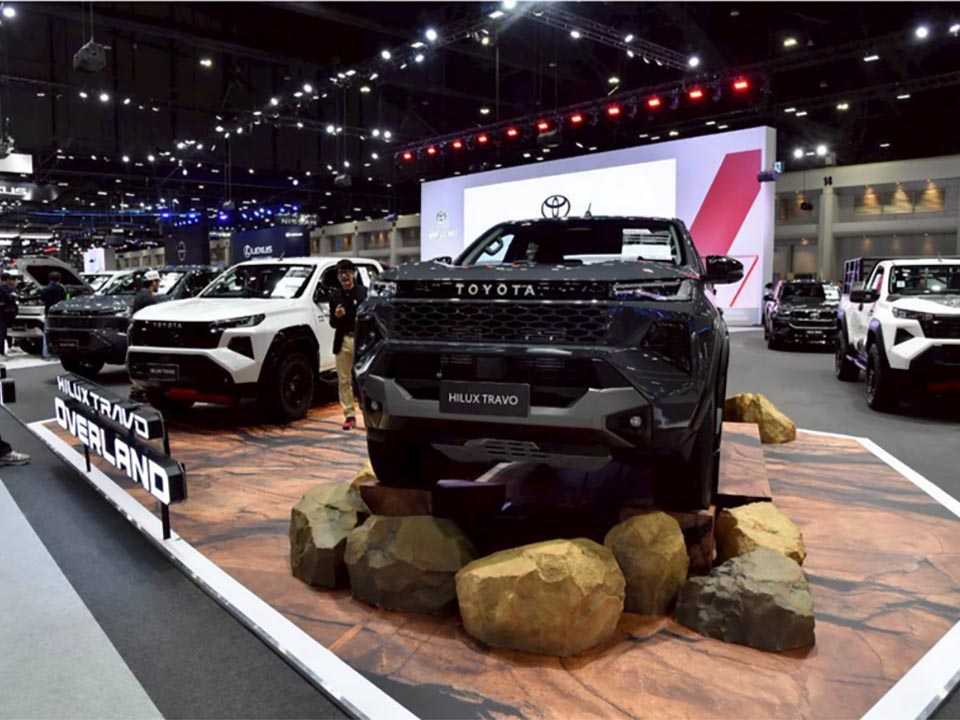
Toyota Motor Thailand is preparing to introduce the Hilux Travo Z Edition, a lowered pickup variant, on November 24, adding another model to its existing Hilux Travo range. Toyota executive vice president Supakorn Rattanaworaha said the market continued to face economic uncertainty, cautious consumer spending, restrictive vehicle financing and concerns over fuel costs. However, he sees potential for improvement in the final quarter of 2026 as new models reach the market.
Recent flooding has also increased interest in raised pickups, although any sustained recovery will depend on economic conditions, purchasing power and access to financing. Ford, meanwhile, has focused on lifestyle-oriented and specialist pickup customers through models such as the Ranger Wildtrak and Ranger Raptor.
The company has also introduced the Ranger Super Duty, priced at 1.599 million baht, and the Ranger Super Duty Chassis Cab, priced at 1.464 million baht. Both are aimed at customers requiring vehicles for demanding cargo, towing and heavy-duty applications. By targeting more specialized customer groups, manufacturers hope to maintain sales even as the broader market remains weak.

Automakers call for government support
Toyota says pickups remain strategically important to Thailand because of their high domestic parts content, employment generation and contribution to exports. The company uses locally sourced components for more than 95% of its pickup production, according to Supakorn.
Toyota has urged the government to consider short-term measures to stimulate domestic demand, including trade-in programs and tax deductions for buyers of new pickups. Such incentives could support vehicle sales while helping to maintain production levels, employment and the competitiveness of Thailand’s automotive supply chain. Isuzu has also called for measures that would make it easier for eligible consumers to purchase pickups.
Sato suggested a possible tax deduction model under which buyers could deduct a portion of their vehicle expenditure, citing a hypothetical 100,000-baht deduction as one approach. He also acknowledged previous government support for pickup operators through the Thai Credit Guarantee Corporation, but said more direct measures to improve consumers’ access to vehicle purchases were needed.
The proposals come as manufacturers seek ways to sustain demand for vehicles that remain essential to many agricultural, commercial and industrial operations.
Isuzu maintains its investment commitment
Despite the domestic slowdown, Isuzu is continuing to invest in Thailand. The company announced a five-year investment plan worth more than 32 billion baht for 2024–2028. An initial investment of 15 billion baht began in April 2024, supporting production improvements, automation, robotics, clean energy and product development to meet Euro 6 emissions standards.
Sato reaffirmed the company’s commitment to Thailand and said locally sourced components had consistently accounted for more than 90% of its production. The investment reflects Thailand’s continuing importance to manufacturers seeking an established industrial base, experienced suppliers and export capacity.
Toyota invests in hydrogen-powered pickups
Toyota Mtor Thailand has announced an additional investment of 1.2 billion baht to establish Thailand’s first production base for hydrogen fuel-cell electric Hilux pickups. The vehicles will be manufactured at Toyota’s Ban Pho plant in Chachoengsao province, with planned annual capacity of 3,000 units. Production is expected to begin in December 2027, with exports to Europe, Australia and New Zealand planned. The project is intended to support the development of future vehicle technologies while building the capabilities of Thai workers and local parts suppliers.
Toyota has also introduced the Hilux Travo E, a fully electric pickup, and invested in local production of the Toyota Land Cruiser FJ. The latter is expected to share at least 50% of its components with the Hilux pickup. The hydrogen project illustrates how manufacturers are seeking to diversify their powertrain technologies while retaining Thailand as a key production base.
Honda and Mitsubishi plan a new pickup
Honda Motor and Mitsubishi Motors have agreed to jointly develop a new Honda pickup based on the Mitsubishi Triton platform. According to their announcement in Japan, the vehicle will be manufactured at Mitsubishi’s Laem Chabang facility in Rayong province, with a launch planned for Thailand and other ASEAN markets in 2028.
The companies have not yet specified the powertrain technology that the new pickup will use.
Mitsubishi Motors Thailand president Ryoichi Inaba has previously confirmed a 16-billion-baht investment in Thailand for electric vehicle technologies and future vehicle development.
The company’s Thai operations include production programs for the Pajero, Triton and Xpander, with electrified technologies such as hybrid and plug-in hybrid systems forming part of its broader development plans. The Honda–Mitsubishi agreement signals continued confidence in Thailand’s manufacturing capabilities, even as domestic pickup demand contracts.
Export production remains vital to Thailand
The sharp decline in domestic pickup sales presents a challenge for manufacturers, dealers, suppliers and workers across the automotive sector. However, continued investment by Isuzu, Toyota, Mitsubishi and other automakers indicates that Thailand retains a significant role in global pickup production.
New models, specialized vehicle segments and alternative powertrains offer manufacturers ways to adapt to changing demand. Yet a sustained domestic recovery will depend heavily on household finances, access to vehicle loans, fuel prices and the wider economic outlook. For Thailand, the central challenge is to maintain the strength of its automotive manufacturing and export base while addressing the financial pressures that have made new pickups increasingly difficult for many local buyers to afford. (Story, Photo: Prachachat Business)