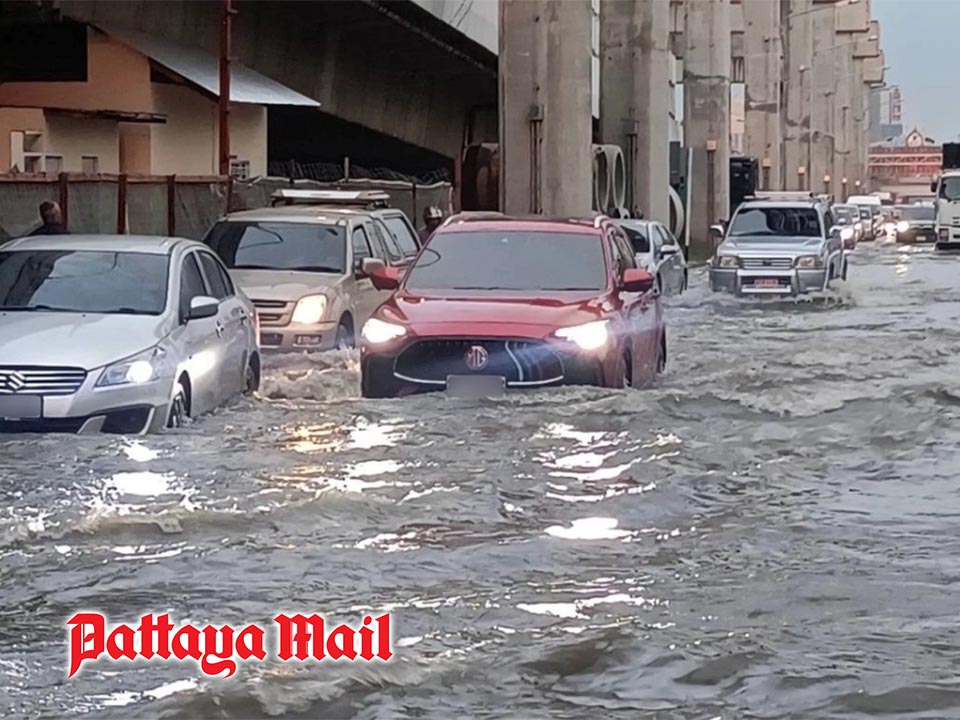
BANGKOK, Thailand – Thailand’s property developers are revising construction plans and investing in stronger flood defenses after the 2026 floods exposed weaknesses in residential projects and industrial estates, raising questions about how flooding could reshape future property demand.
Measures include raising land levels and access roads, expanding water-retention ponds, installing additional pumps and strengthening barriers to prevent water from entering housing projects. Some developers are also reviewing drainage systems and the placement of flood-control infrastructure in condominium buildings.
For low-rise housing projects, planned improvements include raising entrance roads by 20–30 centimeters, adding concrete retention ponds and building higher walls around vulnerable developments. Sloped entrances and barriers are also being considered to keep floodwater out of residential areas.
However, protecting individual developments cannot prevent flooding on surrounding public roads. Property industry representatives have called for faster and more effective public drainage management, including canal maintenance, improved pumping capacity and quicker assistance for affected residents.
The floods may also change how homebuyers assess locations. Areas in eastern Bangkok, including Rom Klao, Lat Krabang and Min Buri, could face weaker demand following severe inundation. Buyers are expected to pay closer attention to flood history, land elevation and the effectiveness of drainage systems before committing to a property.
Whether this leads to widespread relocation or falling property prices remains uncertain. Some industry observers believe repeated flooding could push residents to sell older homes and move to locations perceived as safer, while others argue that employment, family ties and financial constraints will discourage many households from leaving established neighborhoods.
Flood prevention could also increase development costs. Developers may account for additional spending on raised land, retaining walls, drainage systems and pumping equipment when assessing future land purchases. Property owners in flood-prone areas may therefore face greater scrutiny from prospective buyers, although prices will also depend on local demand and wider economic conditions.
The industrial sector faces similar challenges. Plans are being considered for a new industrial zone in Chonburi, with proposed land levels approximately two metres higher than those of an existing area affected by flooding. The planned expansion would incorporate improved drainage, pumping systems and canals, while a proposal to buy factories from investors could allow businesses to relocate. The new industrial zone remains under design and study, with development and phased sales expected to begin in late 2027.
The longer-term challenge is to ensure that flood resilience extends beyond individual buildings and industrial sites. Better-designed developments can reduce damage, but coordinated public drainage and water management will remain critical to protecting homes, businesses and investment.