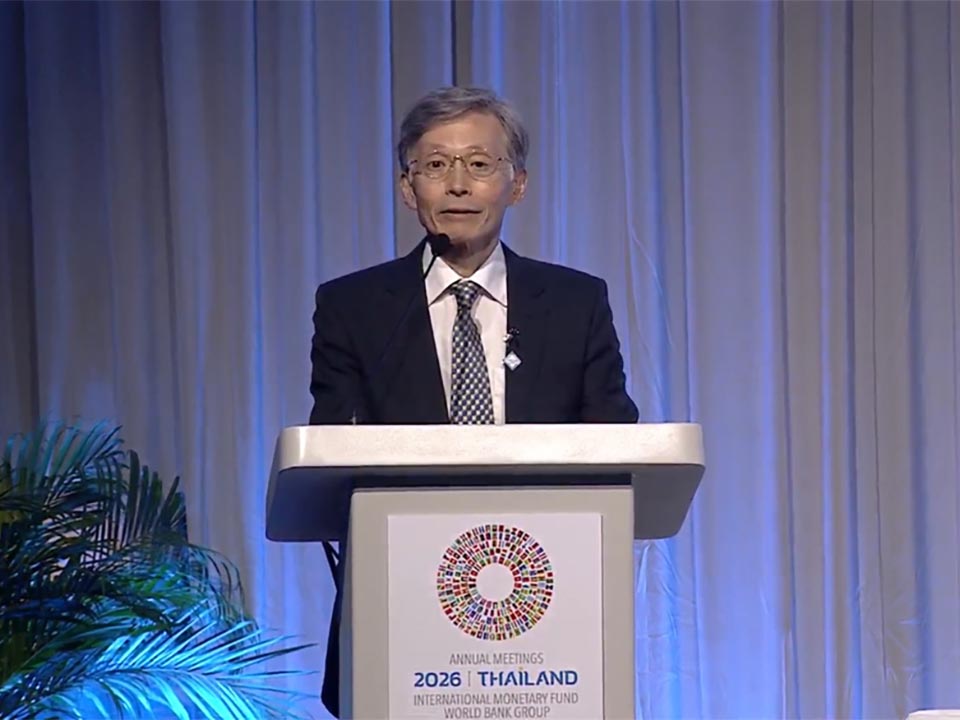
BANGKOK, Thailand – International Monetary Fund (IMF) Deputy Managing Director Kenji Okamura expressed deep appreciation for Thailand’s warm hospitality as the nation hosts the 2026 IMF-World Bank Group Annual Meetings in Bangkok. Speaking at the Special Seminar “Bangkok 1991–2026: Thailand’s Path to Resilient, Inclusive Growth,” Okamura reflected on the nation’s dramatic evolution over the past 35 years. He noted that Thailand today is a vastly different country from when it last hosted the meetings in 1991, having expanded its economy nearly threefold.
Through high-productivity services and manufacturing, the country has successfully established itself as a vibrant regional hub for trade, manufacturing, and tourism, a level of transformation achieved by very few nations globally. Highlighting the foundation behind this economic rise, Okamura identified three pivotal factors that drove Thailand’s transformation.
First, sound institutions and credible macroeconomic frameworks established since the Asian Financial Crisis have significantly strengthened the country’s policy environment, preserving stability and enabling the economy to absorb a succession of natural and external shocks. Second, Thailand’s deep openness and integration into the regional and global economy have catalyzed foreign investment and trade flows, creating new opportunities while facilitating structural growth.
Third, continuous investment in human capital, particularly through health and skills development, has laid a solid foundation for future prosperity. Despite these remarkable accomplishments, Okamura cautioned that Thailand must prepare to navigate an increasingly fragmented and uncertain global environment.
Looking ahead, Okamura stressed that Thailand must unlock new sources of growth, including harnessing productivity gains driven by artificial intelligence while simultaneously creating meaningful opportunities for the younger generation. He concluded that exploring these vital topics and strategic pathways remains a primary goal of the seminar discussions as Thailand charts its next phase of resilient growth. (NNT)