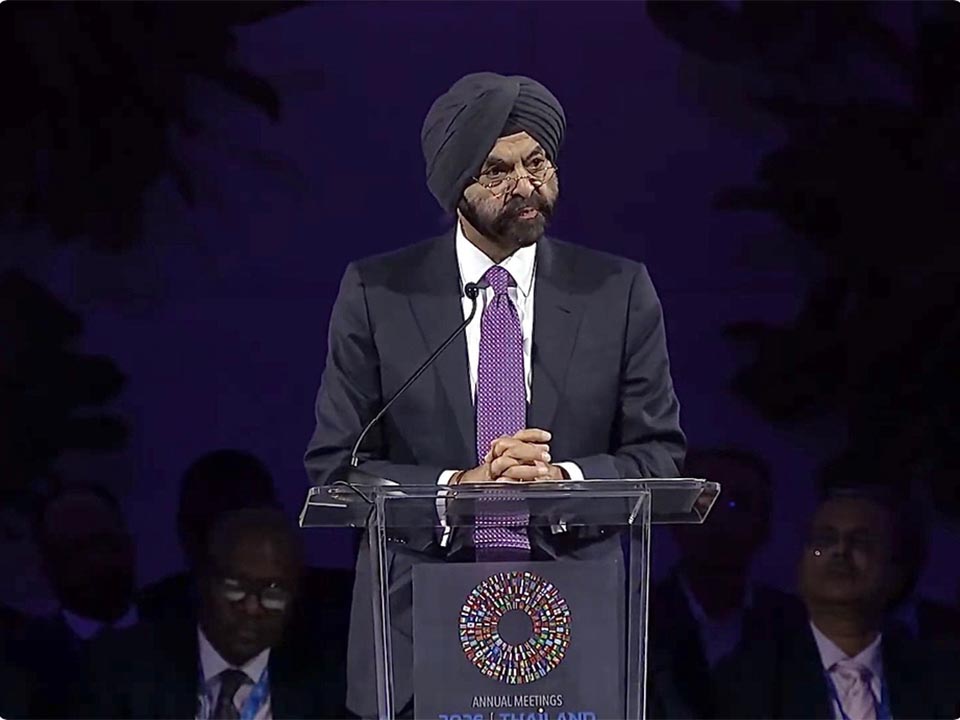
BANGKOK, Thailand – The World Bank Group has introduced a new digital strategy to help micro, small, and medium-sized enterprises (MSMEs) access financing, expand operations, and create jobs. Speaking at the 2026 IMF–World Bank Group Annual Meetings in Bangkok, World Bank Group President Ajay Banga detailed plans to address an annual financing gap exceeding 4 trillion US dollars for MSMEs in developing countries through digital technology, financial data, and private investment.
Banga stressed the urgency of job creation, with approximately 1.2 billion young people in developing countries expected to reach working age over the next 10 to 15 years, compared with just 420 million jobs projected during that period. The World Bank Group’s employment strategy prioritizes infrastructure, governance, and private capital across five sectors: energy and infrastructure, agribusiness, primary healthcare, tourism, and value-added manufacturing.
The new strategy addresses barriers that limit smaller businesses’ access to affordable credit, including collateral requirements, high lending costs, and limited financial records. It promotes digital payments, electronic invoicing, and transaction data to help lenders assess repayment capacity based on cash flow rather than physical assets. The measures make businesses more visible to financial institutions and improve their access to credit.
The strategy covers four priorities: business visibility, connectivity, operational support, and financing. Over the past three years, the World Bank Group has helped 20 countries develop interoperable digital infrastructure, eight improve electronic invoicing and access to financial data, and five establish open finance frameworks. It also supports platforms such as Agri-Connect, which links farmers with buyers and lenders, alongside regulatory reforms to simplify business operations.
The World Bank Group is also exploring partnerships with financial technology companies using AI-based credit assessments to approve loans within 24 hours, often without traditional collateral. Such lending has reached approximately 400 billion dollars in emerging markets. Through equity investment and MSME receivables-backed financing, the organization is now working to combine established banks’ resources with digital technology to expand credit access, support business growth, and generate employment. (NNT)