BANGKOK, Thailand – You may have heard a doctor say that your “good cholesterol is too low” or your “bad cholesterol is too high,” leaving you wondering how the two can be so different when both are called cholesterol. The answer lies in how they work in the body. High-density lipoprotein (HDL) is commonly known as “good cholesterol,” while low-density lipoprotein (LDL) is known as “bad cholesterol.” Although both are involved in transporting cholesterol through the bloodstream, their effects on cardiovascular health are different.
HDL helps remove excess cholesterol
HDL acts somewhat like a cleanup system in the bloodstream. It helps collect excess cholesterol from tissues and artery walls and carries it back to the liver, where it can be processed and removed from the body. Higher HDL levels have traditionally been associated with better cardiovascular health. General reference levels often consider HDL above 40 mg/dL desirable for men and above 50 mg/dL for women. However, cholesterol readings should be considered together with other health factors rather than viewed in isolation.
LDL can contribute to artery blockage
LDL carries cholesterol from the liver to cells throughout the body, where cholesterol is needed for normal functions. Problems can arise when LDL levels become too high. Excess LDL can contribute to the formation of fatty deposits, or plaques, in artery walls. Over time, these plaques can narrow and stiffen the arteries and increase the risk of cardiovascular disease, including heart attacks and strokes. For many people, an LDL level below 100 mg/dL is considered desirable, although the appropriate target can be lower for people at higher cardiovascular risk. Doctors may therefore set different LDL targets depending on a person’s overall health and medical history.
Foods that support a healthier cholesterol profile
Managing cholesterol does not mean eliminating all fat from the diet. The type of fat matters.
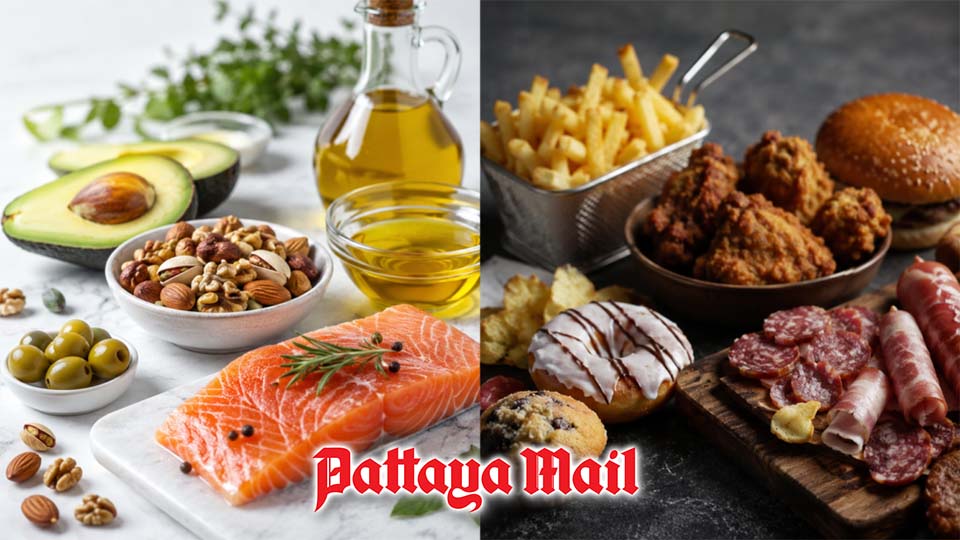
Fatty fish such as salmon, mackerel and Thai mackerel provide omega-3 fatty acids and can be part of a heart-healthy diet. Nuts and seeds, including walnuts, almonds and pumpkin seeds, provide unsaturated fats and other nutrients. Avocados and olive oil are also sources of monounsaturated fats. Whole grains such as oats and brown rice provide dietary fibre, including soluble fibre, which can help reduce the absorption of cholesterol.
Foods to limit when managing LDL
Foods high in trans fats should be limited. These can include some processed baked goods, certain margarines, non-dairy creamers and foods prepared using repeatedly heated oils. Fatty meats and processed meats such as bacon, sausages, crispy pork and Chinese-style preserved sausage can also contain substantial amounts of saturated fat. Full-fat dairy products, including butter, cheese and cream, are another source of saturated fat and are best consumed in moderation when managing cholesterol. Coconut milk and coconut oil also contain high levels of saturated fat, so portion size and overall dietary balance are important.
Cholesterol is about balance, not avoiding all fat
HDL and LDL perform different roles in the body. HDL helps transport excess cholesterol back to the liver, while excessive LDL can contribute to plaque formation in the arteries. Maintaining healthy cholesterol levels is therefore not simply about avoiding all dietary fat. A balanced diet that favours unsaturated fats, includes fibre-rich foods, limits saturated and trans fats, and is combined with regular physical activity can support cardiovascular health. Anyone with abnormal cholesterol results should discuss their individual levels and treatment targets with a healthcare professional, particularly if they have other cardiovascular risk factors.