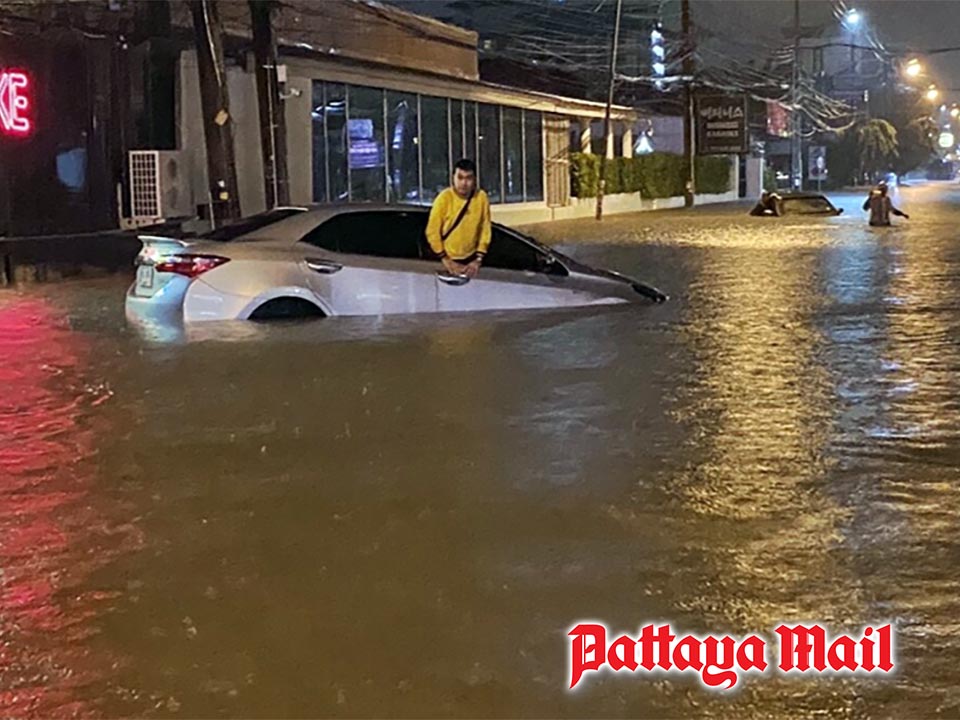
BANGKOK, Thailand – Heavy rain and flooding in several areas have left many vehicles damaged, raising questions among motorists about whether flood damage is covered by insurance, how damage is assessed and whether a completely submerged vehicle qualifies for a full insurance payout.
For vehicles covered by Class 1 motor insurance, flood damage is generally included in the policy coverage. If a flooded vehicle can be repaired and restored to its previous condition, the insurer may arrange repairs, replace the vehicle or equipment with items of equivalent condition, or provide financial compensation, subject to the policy’s coverage limits and conditions.
Owners with Class 2 or Class 3 insurance, as well as policies offering specific-perils coverage, should check their policy and any endorsements to determine whether flood damage is included. Flood protection can be purchased as additional coverage, with compensation limited to the amount stated in the relevant policy endorsement.
The Office of Insurance Commission (OIC) has guidelines for assessing vehicle damage from flooding, dividing damage into five levels.
At the first level, where water reaches the vehicle floor or carpeting, preliminary damage is estimated at around 8,000–10,000 baht.
At the second level, where water reaches the seats, the preliminary estimate is around 15,000–20,000 baht.
At the third level, where water reaches the lower dashboard or console, the estimate is around 25,000–30,000 baht.
At the fourth level, where water reaches the upper dashboard or console, the estimate is 30,000 baht or more.
The fifth level involves a vehicle being completely submerged and may qualify for a full insurance payout if it meets the conditions for total loss.
However, these figures are only guidelines for preliminary damage assessment and are not automatic compensation rates. Insurers must inspect and assess the actual damage while considering the type of policy, coverage amount and specific terms and conditions.
For example, water reaching the seats does not automatically mean the owner will receive 15,000–20,000 baht. Likewise, a vehicle being completely submerged does not automatically mean the insurer will pay the full insured amount.
A full payout depends on whether the vehicle qualifies as “total loss.” Under motor insurance policy conditions, a vehicle may be considered totally damaged when it cannot be repaired and restored to its previous condition, or when the damage reaches at least 70% of the vehicle’s value at the time of the incident.
If the vehicle meets the total-loss criteria, the insurer will pay compensation based on the full insured amount stated in the policy schedule, subject to the applicable policy conditions.
Motorists therefore should not assess a flood insurance claim solely by how high the water reached on the vehicle. The actual extent of damage, type of insurance, flood coverage, insured amount and the vehicle’s value at the time of the incident all need to be considered before an insurer determines whether the vehicle should be repaired, compensated for the damage or treated as a total loss.