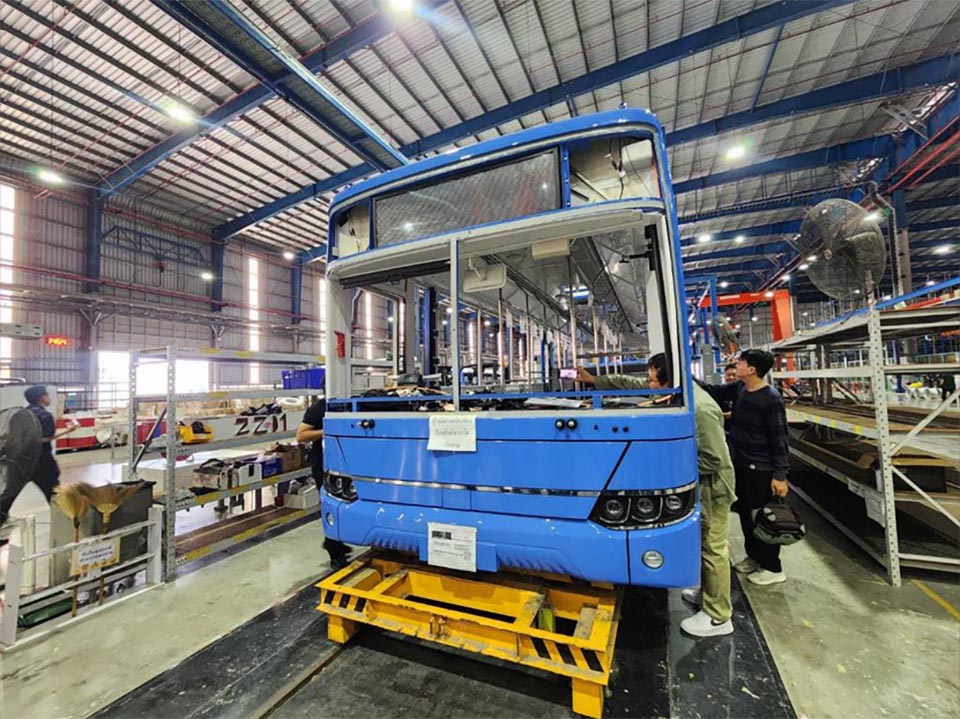
BANGKOK, Thailand – Bangkok’s familiar red hot buses are set to disappear from the capital’s roads, with 1,520 new air-conditioned electric buses scheduled to replace the ageing diesel fleet under a 15-billion-baht leasing project. The Bangkok Mass Transit Authority (BMTA) signed a seven-year contract worth more than 15 billion baht with Nakornchai Air Co Ltd on January 29, 2026, for the lease of 1,520 clean-energy air-conditioned buses together with charging infrastructure.
The contract was followed by a four-month wait before BMTA issued the formal notice to proceed on June 4, allowing production preparations to move forward. Nakornchai Air has appointed NEX to manufacture the buses for the project. On September 1, BMTA Director Kittikarn Chomduang Jaruworapolkul took members of the media to Absolute Assembly Co Ltd (AAB) in Ban Pho district, Chachoengsao, where the buses will be assembled. AAB is a joint venture in which Energy Absolute (EA) holds a 55% stake and NEX Point Group holds 45%.
The company demonstrated its assembly line and production capability, which can reach up to 15 buses a day. Around 700 employees are being prepared for the project. The project has faced a complication over the Chinese manufacturers originally selected to supply components for assembly in Thailand. Under Nakornchai Air’s proposal, 1,000 buses were to use components from FOTON, while another 520 would use components from CRRC. FOTON has since withdrawn, leaving CRRC as the sole remaining supplier.
The change has not been regarded as a major threat to the project, with CRRC already having a close relationship with BTS. BTS is also currently the actual owner of Nakornchai Air. CRRC shipped the first batch of components for 40 buses from China to Thailand on August 30, with assembly expected to begin within two weeks.
Earlier, six major structural components — the floor frame, roof frame, front frame, rear frame and right and left side frames — were shipped to Thailand and assembled into a prototype for inspection against the project’s terms of reference. The prototype has passed the required inspection. BMTA remains confident that the private-sector contractor will deliver the new buses according to schedule in 2027.
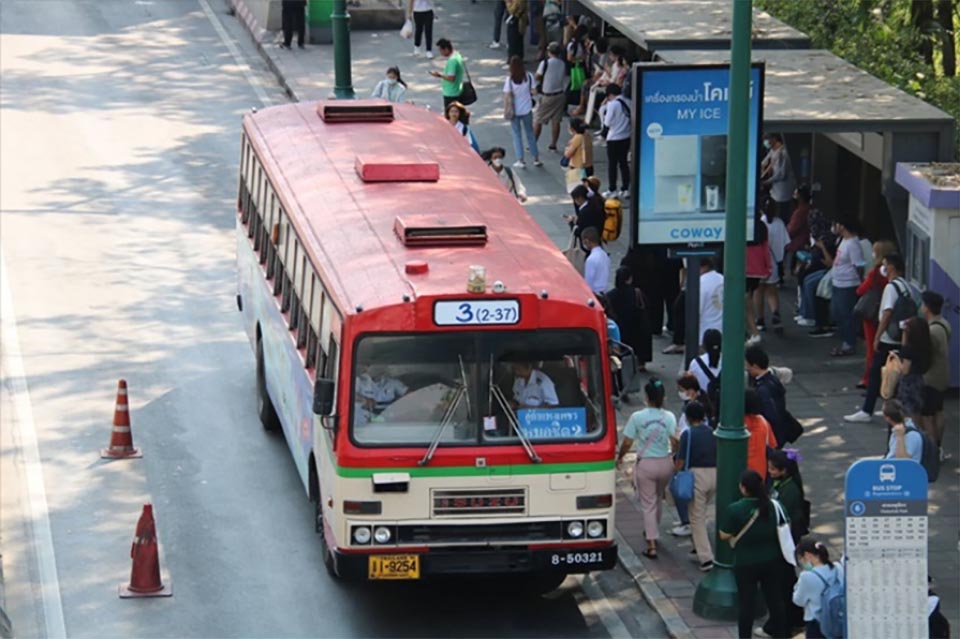
The new electric fleet is expected to replace the existing red cream-coloured non-air-conditioned buses, effectively bringing an end to a form of public transport that has served Bangkok residents for decades. The transition is also expected to reduce BMTA’s operating expenses. The agency estimates that switching from diesel-powered buses to electric vehicles could save more than 4 billion baht a year through lower maintenance, diesel and personnel costs. For passengers, however, the change will come with higher fares.
The current eight-baht flat fare for non-air-conditioned buses will disappear. The new air-conditioned electric buses will charge according to distance, with fares starting at 15 baht and reaching a maximum of 25 baht.
Transport officials have said low-income passengers holding state welfare cards will receive fare assistance from the government, meaning they will not necessarily face the full increase. Other passengers, however, will pay more in exchange for newer buses, air conditioning and electric-powered transport. The replacement program marks a major change for Bangkok’s public bus system, combining the retirement of its iconic hot buses with a shift away from diesel and toward electric public transport.