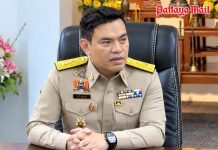
BANGKOK, Thailand – Prime Minister Anutin Charnvirakul has called a meeting with security agencies to assess the latest surge in violence across Thailand’s three southern border provinces after 51 incidents were reported in a single night. Deputy Prime Minister and Foreign Minister Sihasak Phuangketkeow, who chairs the government’s special representative committee on the southern border issue, said on August 24 that he would meet with the prime minister and senior security officials to assess the situation and determine the next steps.
The meeting will include National Security Council Secretary-General Chatchai Bangchuad and National Intelligence Agency Director Thanat Suwannanon. Sihasak described the situation as concerning and acknowledged that authorities had received intelligence about possible incidents in advance. However, he said it was difficult to accurately predict when and where the attacks would take place, particularly when operations were carried out simultaneously across multiple locations.
He said authorities would review both intelligence gathering and their preparedness to prevent similar incidents, particularly because the violence has affected civilians. The prime minister has ordered authorities to provide full assistance and compensation to those affected.
Sihasak also said Thailand had already coordinated with Malaysian authorities regarding the possibility of suspects fleeing across the border. Malaysia is prepared to cooperate if Thailand provides information on the suspects and their movements.
Asked whether the incidents could be linked to efforts to suppress smuggling and other illegal trade, Sihasak said there could be several factors involved and that it was too early to draw conclusions.
He also rejected calls to immediately attribute the violence to possible involvement by state officials, saying authorities needed to examine the evidence first.
Sihasak said the recent frequency of attacks raised questions about whether there was an identifiable pattern or other underlying factors. He added that security mechanisms and preparedness would have to be reviewed to determine whether existing measures were sufficiently robust. When asked again whether officials or insiders could have been involved, he reiterated that authorities needed to discuss and assess the matter before reaching any conclusion.