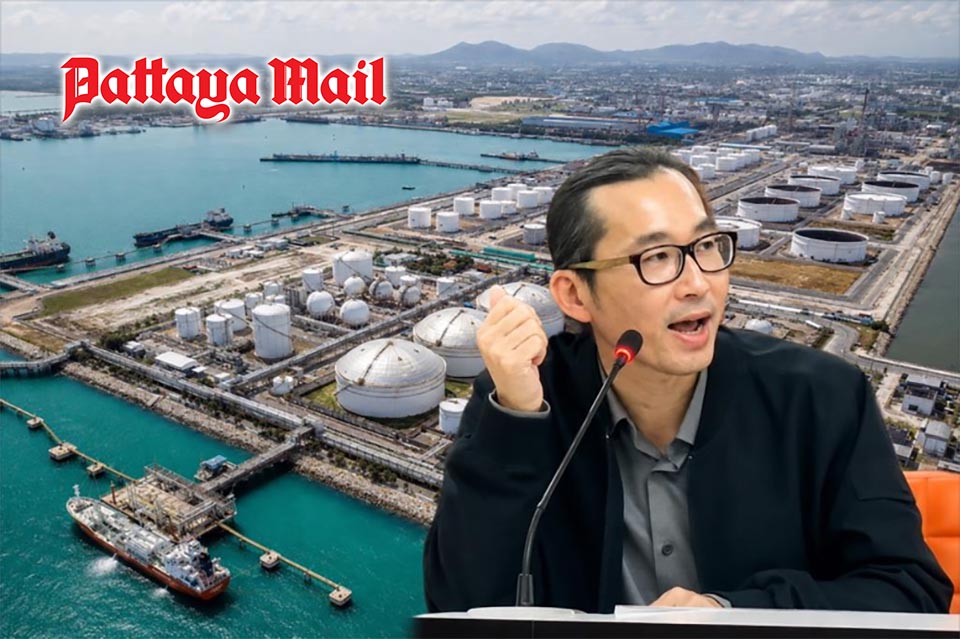
PRACHINBURI, Thailand – Nearly a decade after Thailand launched the Eastern Economic Corridor (EEC), questions are emerging over whether the region’s rapid industrial growth is delivering enough benefits to local communities while adequately addressing environmental risks. The EEC, established in 2017, was designed to transform Thailand’s eastern provinces into a hub for next-generation industries, attract foreign investment, promote advanced technology and innovation, and strengthen the country’s competitiveness.
While investment and major infrastructure projects have continued to expand, environmental academics and local communities are increasingly questioning who ultimately benefits from the development and whether Thai workers and businesses are gaining a meaningful share of the opportunities.
Dr. Somnuek Jongmeewasin, research director and environmental academic with EEC Watch, said the EEC had succeeded in attracting investment and driving infrastructure development over nearly a decade, but several issues required urgent review, including environmental impacts, industrial waste, resource consumption and employment structures. Prachinburi is among the areas drawing particular attention as industrial activity and foreign investment increase. One concern is whether local people will receive sufficient opportunities from the influx of foreign capital. “Who owns the factories? Chinese. Who works for them? There are Chinese and Myanmar workers. Where are the Thai people?” Somnuek was quoted as asking.
The question reflects broader concerns about changes in the local employment structure. Although foreign investment can generate economic activity and jobs, the quality of those jobs, opportunities for career advancement and the extent to which Thai workers can move into higher-skilled positions remain important measures of whether the development is benefiting local communities.
Somnuek argued that the success of the EEC should not be measured solely by the amount of investment attracted to the region.
Instead, he said, authorities should also assess how many quality jobs are created for Thai workers, whether workers receive opportunities to upgrade their skills, whether technology is transferred effectively and whether local businesses are connected to major industrial investments.
Concerns Grow Over Industrial and Electronic Waste
Environmental concerns are another major issue, particularly the potential increase in industrial waste, hazardous materials and electronic waste accompanying the expansion of manufacturing and foreign investment. Eastern Thailand faces the risk of becoming a destination for waste processing, recycling or disposal if controls over the movement of industrial waste are not sufficiently effective from its point of origin through transportation and final disposal. Hazardous waste that is improperly handled can pose long-term risks to soil, water sources, air quality and nearby communities.
In Prachinburi, concerns have been raised that weaknesses in monitoring the import, transportation, processing and disposal of industrial waste could leave some areas vulnerable to becoming receiving points for waste generated by expanding industries, including electronic and hazardous waste.
Warnings that “two districts in Prachinburi could become the world’s dumping ground” have intensified concerns among local communities. While the statement reflects concerns expressed by environmental groups and academics rather than an established fact, it highlights the demand for stronger monitoring and transparent tracking of industrial waste from its source to its final destination. The concerns have also contributed to growing dissatisfaction among some residents, with opposition emerging toward further expansion of the EEC area. The debate therefore goes beyond whether the EEC should attract more investment. It increasingly focuses on what kind of development the eastern region should pursue, how much of the economic value should remain with local communities and whether environmental safeguards can keep pace with industrial expansion.
For critics, the next phase of the EEC will need to demonstrate that foreign investment does not come at the expense of local employment opportunities, natural resources and the quality of life of communities living alongside the expanding industrial base.