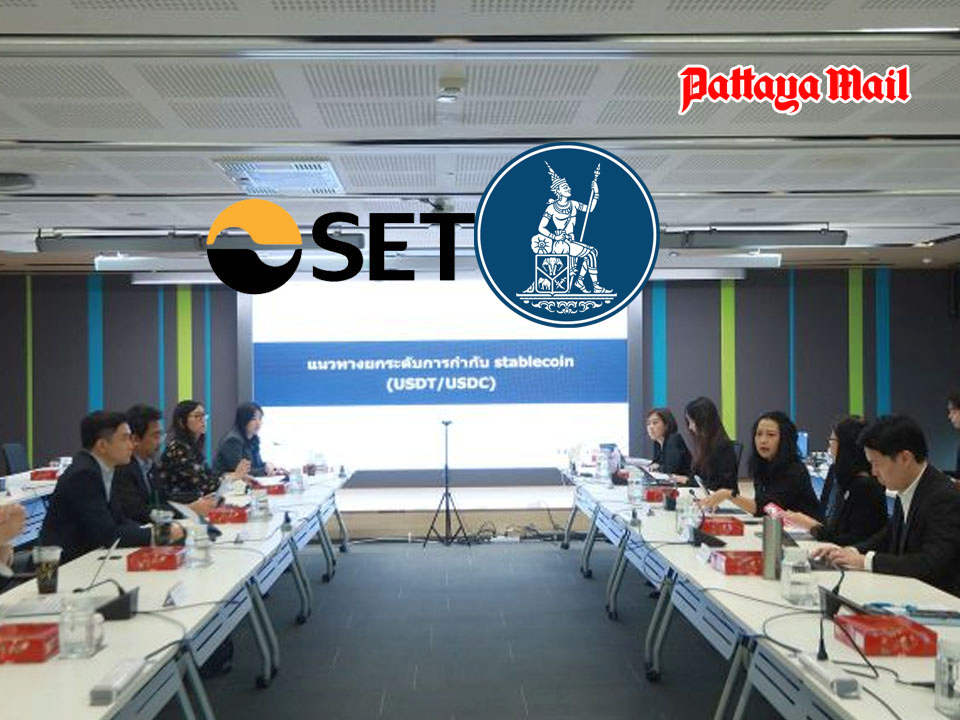
PATTAYA, Thailand – As someone deeply involved in investment law, business, and finance, I view the recent development on August 7, 2026, as a significant milestone and a major overhaul of Thailand’s digital asset ecosystem. The collaboration between the Securities and Exchange Commission (SEC) and the Bank of Thailand (BOT) to urgently strengthen the regulatory framework for stablecoin transactions such as USDT and USDC is not surprising. Rather, it is an urgent necessity for the state to close existing loopholes.
The reason authorities are taking such firm action and seriously overhauling the system stems from alarming statistics on cyber threats and grey-market financial trails. If we examine the damage caused by cybercrime and online scams over the past year, we find a staggering surge of more than 380,000 cases, resulting in economic losses exceeding 25 billion baht.
This massive flow of money from victims is no longer hidden solely in traditional mule accounts. Instead, scammers and transnational call-centre syndicates have upgraded their tactics, converting Thai baht into stablecoins, particularly USDT, which offers high liquidity and can be transferred across borders to neighbouring countries within seconds. Previously, authorities detected highly irregular spikes in USDT trading volumes involving foreign groups operating in Thailand, which were linked to money laundering by illicit businesses. These transactions are therefore no longer simply a matter of financial innovation; they pose a serious threat to national financial security.
Driven by the scale of these losses, signals of stricter enforcement have been clear since early this year. The SEC, BOT, Anti-Money Laundering Office (AMLO), and Central Investigation Bureau (CIB) have been increasingly integrating their data. The current regulatory upgrade targets the impending enforcement of the “Travel Rule”, a strict requirement for digital asset service providers to attach originator and beneficiary information to transactions. The SEC has outlined a timeline to issue the guidelines within this year, with full enforcement taking effect in February 2027. This will be implemented alongside a unified industry standard for Enhanced Due Diligence (EDD) for high-risk customers.
From a compliance perspective, these new regulations will inevitably send shockwaves through the industry. Operating costs will rise as digital asset exchanges and brokers are required to invest heavily in blockchain analytics systems and smart-detection technologies to trace transaction trails in real time. Furthermore, increasingly complex operational processes could cause delays in account openings and transaction approvals. In the long run, however, these measures could act as a sieve, filtering out substandard players, preventing Thailand from becoming a safe haven for money laundering, and helping restore institutional trust in the broader crypto industry.
The biggest challenge in enforcing the Travel Rule lies in balancing technological requirements with the Personal Data Protection Act (PDPA). Technically, platform providers, both domestic and international, must find common ground by using compatible backend systems and standard protocols to ensure seamless data transmission across exchanges. At the same time, the personal data of investors attached to these transactions must be strictly encrypted. Transparent consent mechanisms and robust data-retention and destruction policies will also be necessary to mitigate litigation risks.
Ultimately, we must acknowledge that stablecoin transactions are inherently borderless. Strict regulations confined solely within Thailand’s borders are insufficient and potentially futile. Moving forward, Thai authorities will need to urgently strengthen their operations to align with the standards of the Financial Action Task Force (FATF). The signing of Memorandums of Understanding (MoUs) for cross-border data sharing with foreign regulators is likely to increase. Tip-offs and suspicious-activity data from Thai exchanges could become crucial for AMLO and cyber police in coordinating with Interpol, enabling the prompt suspension and freezing of criminals’ digital wallets abroad.
This is the new landscape of Thai digital finance—one in which the law and its enforcement must sprint to keep pace with the speed of technology.