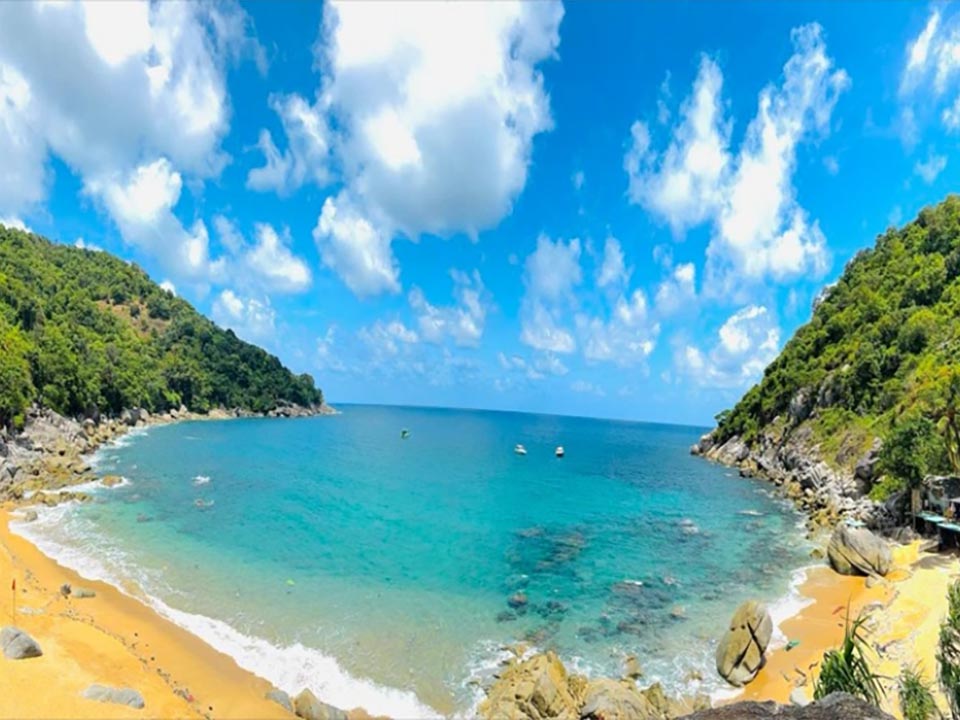
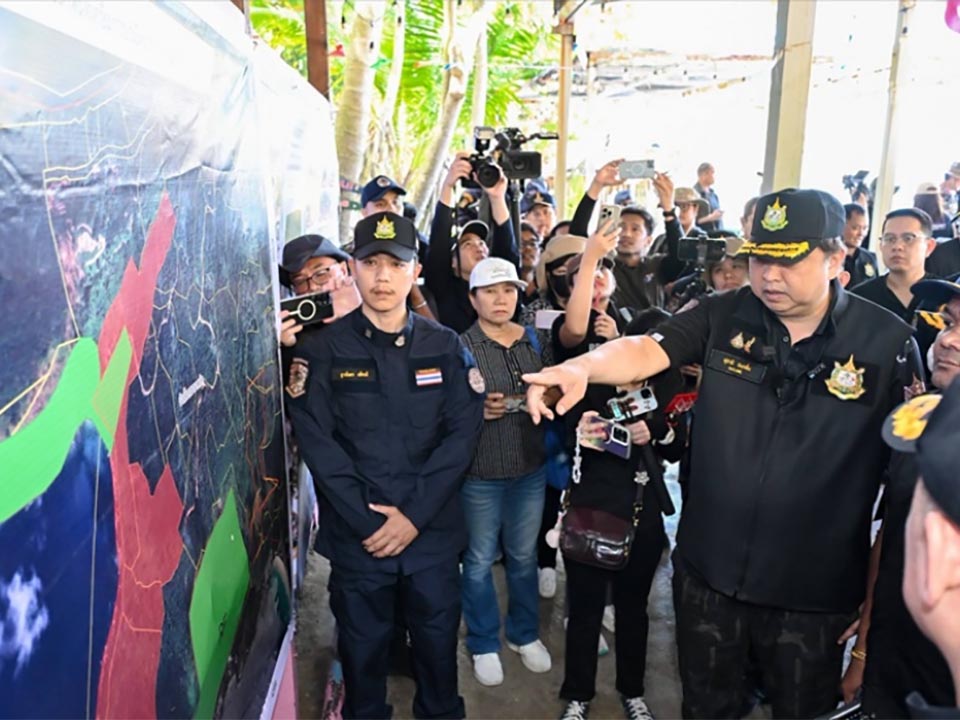
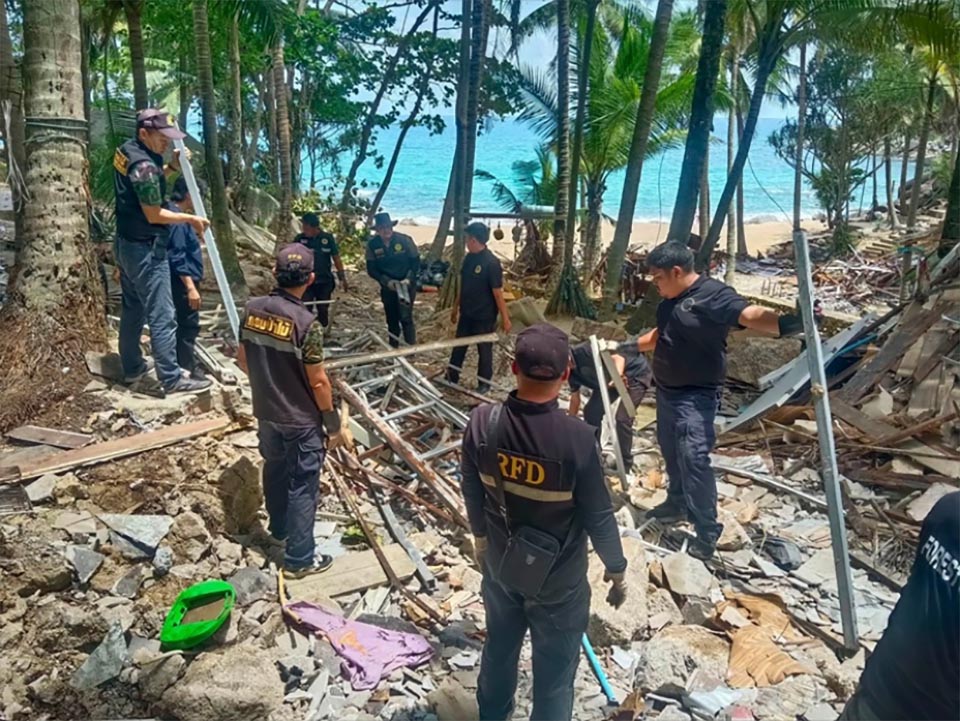
PHUKET, Thailand – A more than 20-year dispute over the use of Nui Beach is moving toward a new chapter after authorities completed the demolition of 11 structures found to have encroached on protected forest land, paving the way for the site to be restored and developed as a public recreational forest. The operation forms part of the government’s “Phuket Model” initiative, which targets illegal occupation and commercial use of protected natural areas. More than 400 officials from the Ministry of Natural Resources and Environment, Royal Forest Department, police, local authorities and specialist enforcement units took part in the operation launched on July 20. The Royal Forest Department has now confirmed that demolition of all 11 structures covered by the latest cases has been completed. Officials said the structures were linked to forest clearing and land modification for tourism activities, with the encroachment affecting around 18 rai of national reserved forest.
The demolished structures have been cleared from the site, with officials preparing to restore the area and develop it into Nui Beach Recreational Forest, with the long-term goal of opening the beach for public use. The action was carried out under an administrative order issued by the Royal Forest Department under Section 25 of the National Reserved Forest Act of 1964 and its amendments. The 11 cases were investigated in 2026 and had passed the appeal period, allowing demolition to proceed under the law. However, another 39 structures linked to cases dating from 2020 and 2024 remain subject to proceedings before the Administrative Court. Officials said those cases would continue through the legal process.
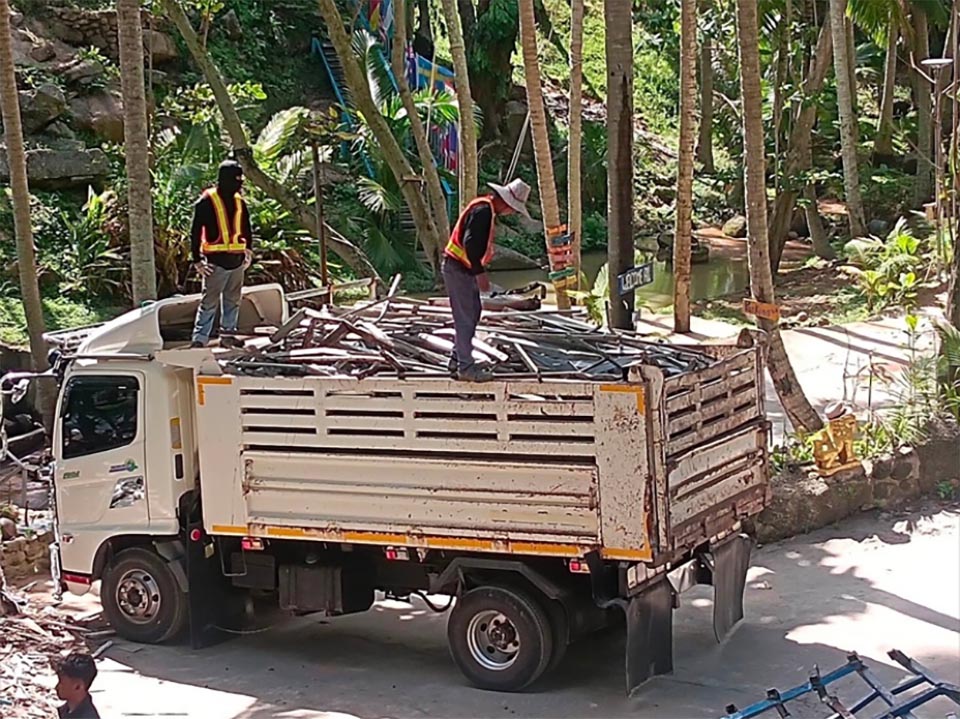
After the demolition, authorities began removing construction debris and preparing the damaged areas for ecological restoration. Officials said the site has strong potential for nature-based tourism and could become one of the country’s significant recreational forest destinations. One unusual feature at the site is a large Naga sculpture, which was also recorded as part of the case. Officials said its future requires careful consideration because of its connection with local beliefs and the fact that the site forms part of the Khao Nak Koet National Reserved Forest. The Naga is also viewed as a symbol compatible with the area.
If its owner agrees to hand the sculpture over to the Royal Forest Department, officials said it could potentially remain after the recreational forest is formally established. A ceremonial blessing and further development of the sculpture as a tourism attraction could then be considered. Officials distinguished the sculpture from the illegal buildings and other structures that were subject to demolition orders. The beach itself is not yet open to the public. Officials said pieces of metal, concrete and other construction materials remain at the site and could pose safety risks. Cleanup, landscaping and the installation of basic facilities such as toilets and an administrative station are expected to take another one to two months before the area can officially open.
Phuket authorities and the Phuket Provincial Administrative Organisation are also coordinating with the Royal Forest Department on improvements to the road leading to Nui Beach. Plans include paving the access route to make the area more suitable for nature tourism, with a possible future connection toward Laem Krating. The government’s action at Nui Beach marks a significant step in addressing a long-running dispute over access and commercial use of the site. For many visitors, the bigger question now is whether the same approach will eventually be applied to other beaches where public access remains limited. The planned transformation of Nui Beach into a public recreational forest could therefore become a test of whether the “Phuket Model” can move beyond one beach and deliver a wider promise: public access to Phuket’s beaches without illegal barriers or private control of public natural resources.