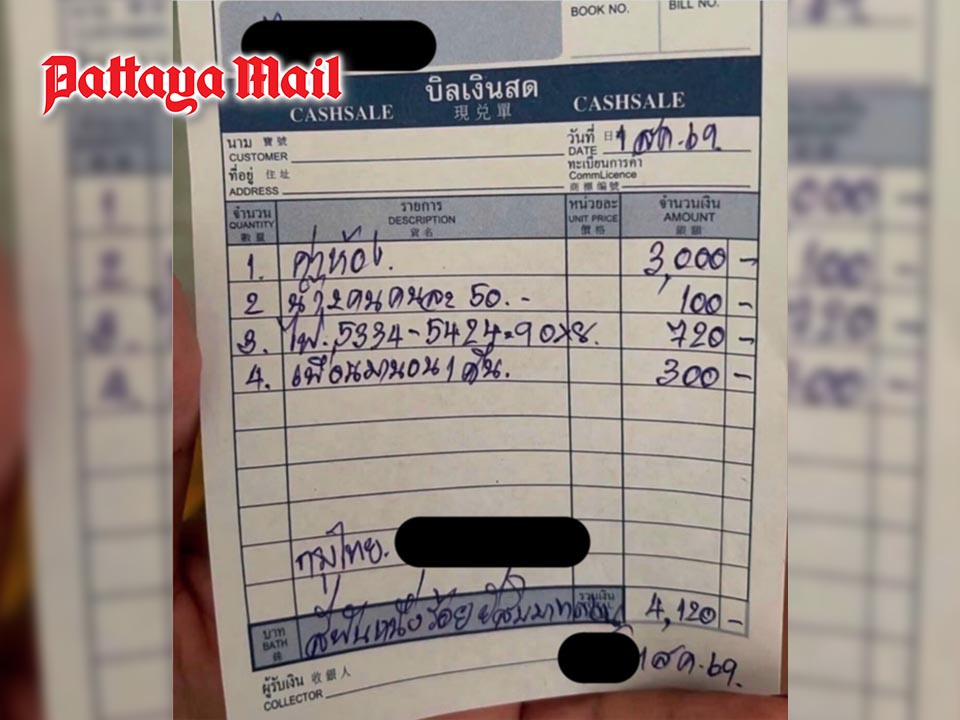
HUA HIN, Thailand – A dispute over a dormitory charging an additional 300 baht after a tenant brought a friend to stay overnight has been clarified after Hua Hin officials inspected the property and found that the condition was included in the rental agreement. The issue gained attention after a female tenant posted on social media claiming she was charged an extra 300 baht on top of her monthly rent because she had allowed a friend to stay in her room for one night. The post included a rental bill showing the additional charge, prompting questions over whether the tenant had been treated unfairly.
On August 6, Prachuap Khiri Khan’s Hua Hin Municipality officials visited the dormitory in the Bo Fai community to investigate the complaint and review the facts. The inspection team was led by Hua Hin Municipal Clerk Jirawat Brahmani, together with officials from the legal affairs division, public health and environmental management section, and members of the Consumer Protection Subcommittee under the Hua Hin Consumer Protection Center.
Jirawat said Hua Hin Mayor Nopporn Wuttikul had expressed concern over the matter and instructed officials to investigate the complaint while providing guidance on relevant laws and consumer rights. Officials examined the building permits, rental documents and other related paperwork. They found that the dormitory operator was able to provide complete documentation and had complied with relevant requirements.
Regarding the 300-baht additional fee for allowing an outside guest to stay overnight, officials found that the condition was clearly stated in the rental contract signed between the landlord and tenant. The dormitory operator explained that the rule was introduced as a safety measure for other residents and that the condition had been communicated to tenants before signing the agreement.
Officials also provided information regarding consumer protection laws, dormitory regulations, public health requirements and other related legal matters to ensure both tenants and operators understood their rights and responsibilities. The operator confirmed that the tenant had been informed of the condition and continued living at the dormitory as normal after the clarification. Authorities said the case highlights the importance for both landlords and tenants to carefully review rental agreements, especially conditions involving additional fees, before entering into contracts.