
BANGKOK, Thailand – After more than 35 years living and working in Thailand’s tourism industry, I have learned that tourism rarely moves in a straight line. If one were to plot Thailand’s hotel occupancy over the course of a typical year, the graph would resemble a series of rolling waves, rising to predictable peaks before falling into seasonal troughs.
An extended green season
Today, Thailand finds itself in one of those troughs. What feels different this year is that the traditional green season has become an extended green season. The slowdown has lingered longer, dipped deeper and tested the patience of many tourism operators who would normally be preparing for the first signs of recovery.
Unlike previous slow periods that could largely be explained by seasonal travel patterns, this year’s market has been shaped by a convergence of international events arriving at precisely the wrong time. Continuing disruption to air routes serving Europe and the Middle East has complicated long-haul travel, increased airline operating costs and reduced scheduling flexibility.
At the same time, an exceptional heatwave across much of Europe has altered traditional summer travel patterns, while economic uncertainty in several key source markets has encouraged some travellers to postpone or shorten overseas holidays. The consequences have been felt across Thailand.
Flight disruptions ripple across Thailand
During the recent Middle East airspace closures, more than 30 flights serving Phuket were cancelled or disrupted, leaving over 5,000 visitors temporarily stranded on the island. Koh Samui and Koh Phangan also experienced significant disruption, while airlines including Emirates, Qatar Airways, Etihad Airways and Air Arabia were forced to reroute or suspend services.
Airports of Thailand, local authorities, hotels and tourism operators responded quickly, providing assistance and helping affected visitors while travel schedules gradually returned to normal. Even after airspace restrictions eased, the effects have continued to ripple through booking patterns. Travellers naturally become more cautious when uncertainty surrounds international air travel, particularly on long-haul journeys involving multiple connections.
The softer market is also becoming visible within Thailand itself. Airlines are quietly adjusting capacity on selected domestic routes, particularly to secondary and tertiary destinations where several daily services operate. Earlier departures have, in some cases, been consolidated into later flights, enabling airlines to maintain healthier load factors while responding sensibly to reduced demand. Such adjustments are entirely normal commercial practice, but they also underline the extent of this year’s extended green season.
What I’m seeing on the ground
Statistics tell one story. Personal observation often tells another. Having lived in Thailand for more than half of my adult life, I have witnessed the extraordinary highs and occasional lows of one of the world’s most successful tourism destinations.
Throughout those years I have learned that conversations with hotel general managers, restaurant owners, airline executives, tour operators, taxi drivers and shopkeepers frequently reveal emerging trends long before official statistics are published.
During recent weeks, those conversations have been remarkably consistent. As the owner of property in Pattaya, I visit the resort regularly and have seen the quieter atmosphere firsthand. The beaches remain attractive, the restaurants welcoming and the city’s famous hospitality remains as warm as ever. Yet there is no denying that visitor numbers are noticeably lower than many businesses had anticipated.
What I’m hearing in Pattaya and Hua Hin
Following a recent 10-day stay, local tourism operators consistently described one of the quietest green seasons they have experienced in many years.
Among the common observations were: Hotels reporting occupancy below normal expectations for this time of year. Tourism businesses estimating visitor numbers around 20 percent lower than during a typical low season. Nightlife venues welcoming fewer than 15 customers on some evenings. Restaurants seeing fewer walk-in diners and noticeably quieter trading.
Individually, these observations remain anecdotal. Collectively, however, they paint a picture of an extended green season proving more challenging than usual.
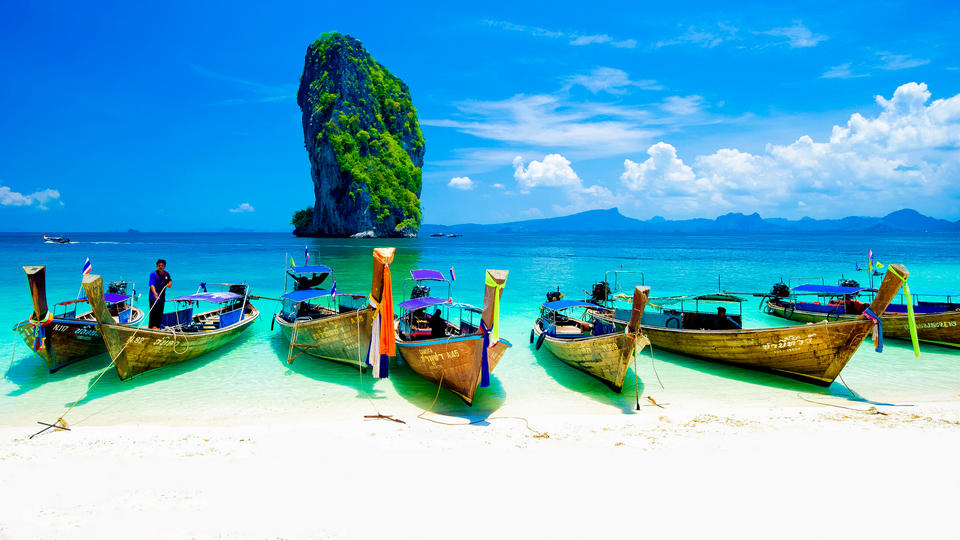
Phuket faces similar challenges
Phuket, Thailand’s largest resort destination, presents a similar—although not identical—picture. Several senior hotel executives have told me that some of the island’s larger international resorts are currently operating with occupancies around 20 to 30 percent below what they would normally expect at this stage of the year.
Smaller boutique hotels appear to be performing rather better, with occupancy levels generally between 50 and 60 percent. Their smaller room inventory and greater pricing flexibility allow them to adapt more quickly to changing market conditions. The contrast is significant.
Thailand is not experiencing a collapse in tourism. Rather, demand has softened unevenly across different destinations, market segments and accommodation types. Larger resorts that rely heavily on long-haul international visitors are feeling greater pressure than smaller properties serving domestic travellers and regional markets.
Elsewhere around the Kingdom, the picture is mixed. Chiang Mai and Chiang Rai continue to benefit from domestic tourism and visitors from neighbouring countries, while Koh Samui’s established luxury market has helped cushion the impact of softer international demand.
Bangkok, as Thailand’s principal gateway, remains comparatively resilient, although many hotels report that booking windows have shortened as travellers delay making firm commitments.
If there is one lesson that more than three decades in Thailand has taught me, it is that no two tourism downturns are ever exactly alike. Every slowdown has its own causes, its own characteristics and, ultimately, its own recovery.

Why recovery is likely
History offers reassurance. Thailand’s tourism industry has weathered financial crises, natural disasters, political uncertainty and global pandemics. Each time, the downturn felt significant in the moment. Each time, recovery followed. The key reason is simple. Thailand remains one of the most compelling travel destinations in the world.
Its appeal is not built on a single attraction but on a powerful combination of natural beauty, cultural richness, value for money and a hospitality culture that consistently exceeds expectations. These fundamentals do not disappear during a slowdown. They remain intact, quietly waiting for conditions to improve.

Reasons for optimism
There are already encouraging signs that the tide is beginning to turn. Airlines are gradually restoring schedules as operational conditions stabilise. Travel demand from regional markets, particularly within Asia, continues to show resilience. Domestic tourism remains an important stabilising force, helping sustain businesses during quieter international periods.
Equally important is the adaptability of Thailand’s tourism sector. Hotels are adjusting pricing strategies, refining marketing efforts and targeting new customer segments. Airlines are managing capacity carefully. Tourism authorities continue promoting Thailand in both established and emerging markets. This ability to adapt has always been one of Thailand’s greatest strengths.
 Looking ahead
For travellers, the current environment presents an opportunity. Fewer crowds, competitive pricing and a more relaxed atmosphere allow visitors to experience Thailand in a different way—one that many seasoned travellers find particularly appealing.
For businesses, however, the challenge is to navigate the present while preparing for the future. Maintaining service standards, supporting staff and preserving brand reputation during quieter periods requires careful management. Those who succeed are often best positioned to benefit when demand returns. And return it will.
Tourism, by its nature, is cyclical. External events may temporarily disrupt travel patterns, but the underlying desire to explore, relax and connect with new cultures remains strong. When uncertainty fades, that demand tends to re-emerge, often more quickly than expected.
Thailand has seen this pattern many times before. The current extended green season may feel prolonged, but it is unlikely to be permanent. For now, the tide may be out. But history suggests it will come back in.
 About the author
Andrew J. Wood is a British-born, Bangkok-based travel writer and former hotel general manager with almost five decades of hospitality experience in Asia. A former President of Skål International Asia and a two-time President of Skål International Bangkok, he writes regularly on tourism and hospitality across the Asia-Pacific region.