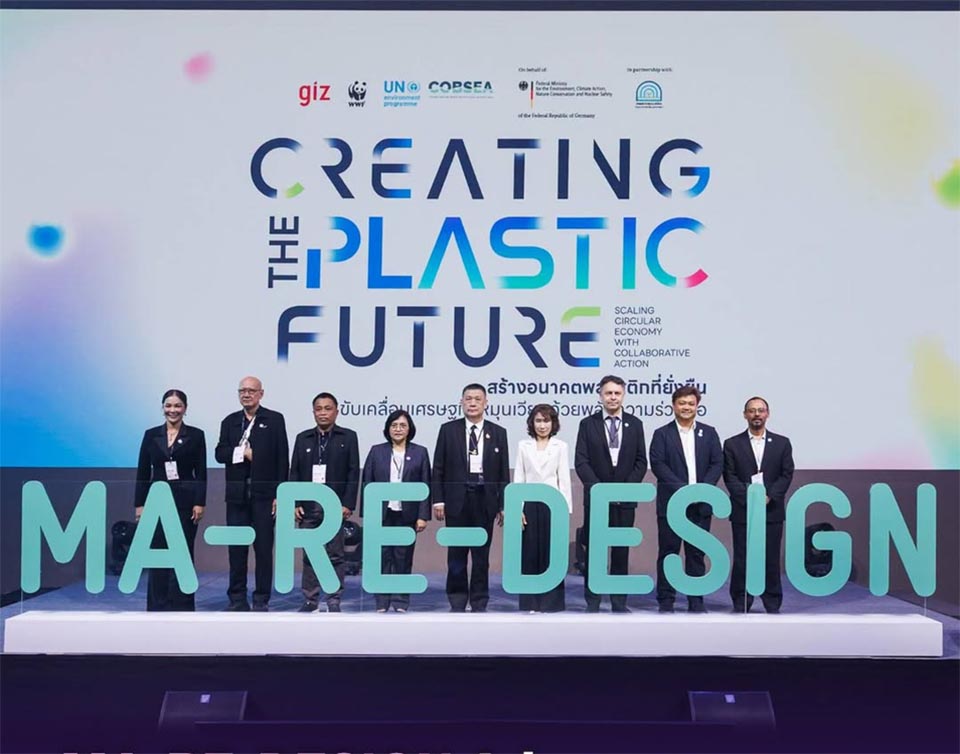
BANGKOK, Thailand – Thailand has completed the Marine Litter Prevention through Reduction, Sustainable Design and Recycling of Plastic Packaging (MA-RE-DESIGN) project after four years of work to improve plastic waste management and reduce marine litter. The project’s closing event, titled “Creating the Plastic Future: Scaling Circular Economy with Collaborative Action,” involved more than 150 representatives from government agencies, businesses, international organizations, universities, and civil society in Bangkok. The project ran from 2023 to 2026 with funding from Germany and was carried out by GIZ, WWF Thailand, and UNEP-COBSEA in cooperation with Thailand’s Ministry of Natural Resources and Environment, the Pollution Control Department, and the Department of Marine and Coastal Resources.
Pilot projects in Koh Tao and Trang province introduced circular economy practices, including deposit-return systems, refill stations, reverse logistics, and community waste banks, to reduce plastic waste entering the ocean. Local communities also developed waste management systems tailored to their needs. The campaign also supported recyclable packaging through Design for Recycling principles, technical recommendations for Thailand’s future Extended Producer Responsibility system, and guidance for businesses developing more recyclable packaging. It also promoted knowledge-sharing among countries in the East Asian Seas on marine litter prevention and circular economy practices. Organizers said the project’s results provide a foundation for future plastic waste management policies and preparation for evolving international regulations. They also expressed hope that the partnerships, policy recommendations, and community-based models developed during the project will continue supporting Thailand’s transition toward a circular economy and lower levels of plastic pollution. (NNT)