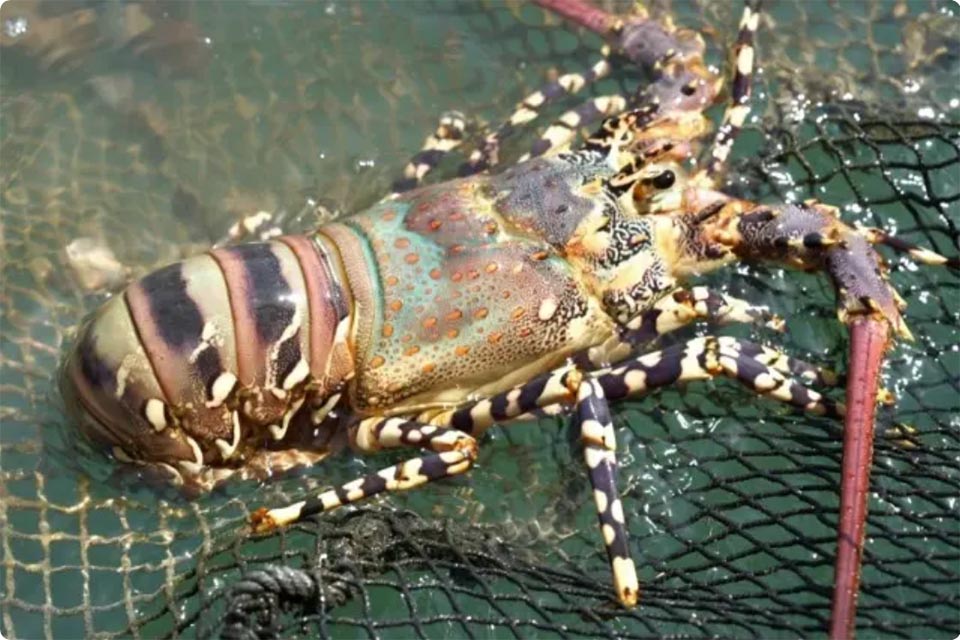
BANGKOK, Thailand – The Department of Intellectual Property (DIP), under the Ministry of Commerce, has registered “Phuket Seven-Color Lobster” (Phuket Lobster) as a Geographical Indication (GI) product, recognizing it as a premium local specialty from the Andaman Sea. This designation affirms its unique quality and reputation as the “Foie Gras of the Sea,” and supports initiatives to improve quality control and promote gastronomy tourism to attract international visitors.
DIP Director-General Auramon Supthaweethum stated that the lobster is Phuket Province’s fourth GI product, following Phuket pineapple, Phuket som kwai orange, and Phuket pearls. The registration strengthens protection of the product’s name and origin, and highlights its economic significance and established reputation in Phuket’s culinary tourism.
The lobster’s distinctive qualities result from Phuket’s nutrient-rich Andaman waters, ideal salinity, and constant tidal exchange, combined with local aquaculture expertise. Raised in sea cages and fed calcium-rich local shellfish, the lobsters develop firm muscles and robust shells. They typically weigh at least 500 grams, have strong antennae and a fan-shaped tail, and display at least 7 colors. The flesh is firm, translucent, sweet, rich in roe, and free of fishy odor, making it suitable for sashimi, grilling, or baking.
With an average annual output of 21,670 kilograms and selling prices up to 3,000 baht per kilogram, the product generates over 65 million baht annually. It has been featured at major international events, including APEC 2022, and is recognized by Michelin-listed restaurants and luxury hotels in Thailand and abroad.
Local operators welcomed the GI status as a way to add value, enhance credibility, and support sustainable income for fishing communities. The Department of Intellectual Property will further develop a GI quality-control system and collaborate with local agencies to promote gastronomic tourism and expand access to premium markets. (NNT)