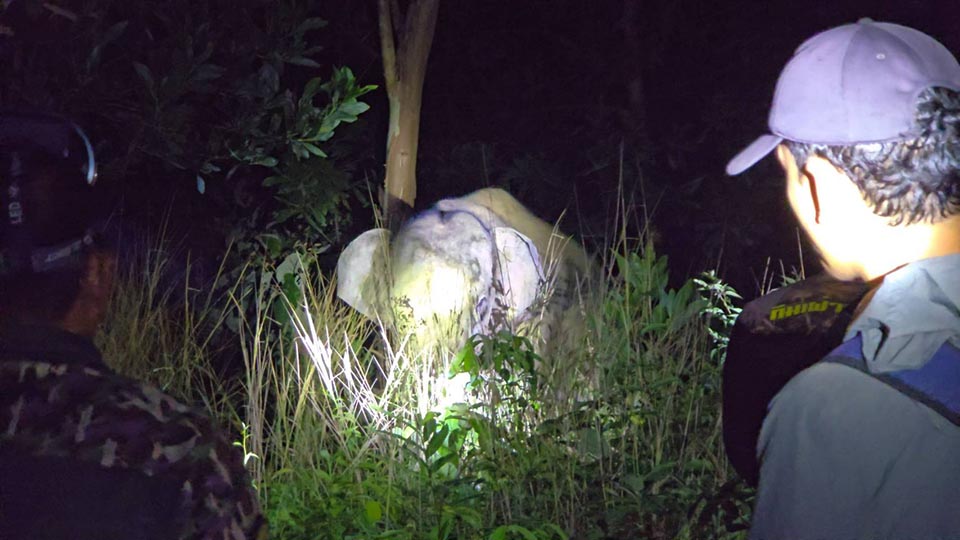
TRAT, Thailand – Thai wildlife authorities have launched the country’s first contraceptive vaccination program for wild elephants in the eastern forest complex, aiming to curb a rapidly growing population that has led to a decade of deadly human-elephant conflicts.
The Department of National Parks, Wildlife and Plant Conservation (DNP), in collaboration with Chiang Mai University, initiated the trial in Namtok Khlong Kaeo National Park. The project seeks to balance elephant numbers with the carrying capacity of available forest habitats.
Sukhee Boonsrang, Director of the Wildlife Conservation Office, said the wild elephant population in the eastern region surged from 334 in 2015 to 799 in 2025, an average annual growth of 8.2%.
The population boom has forced elephants out of shrinking habitats into farmland across 100 sub-districts in six provinces. Since 2012, human-elephant encounters have resulted in 141 deaths and 170 injuries, alongside widespread crop and property damage.
“The vaccine is not sterilization or surgery, and it does not harm the animals,” the DNP said. The vaccine induces an immune response in female elephants that prevents fertilization for seven years. It is reversible, allowing elephants to conceive again if booster shots are not administered.
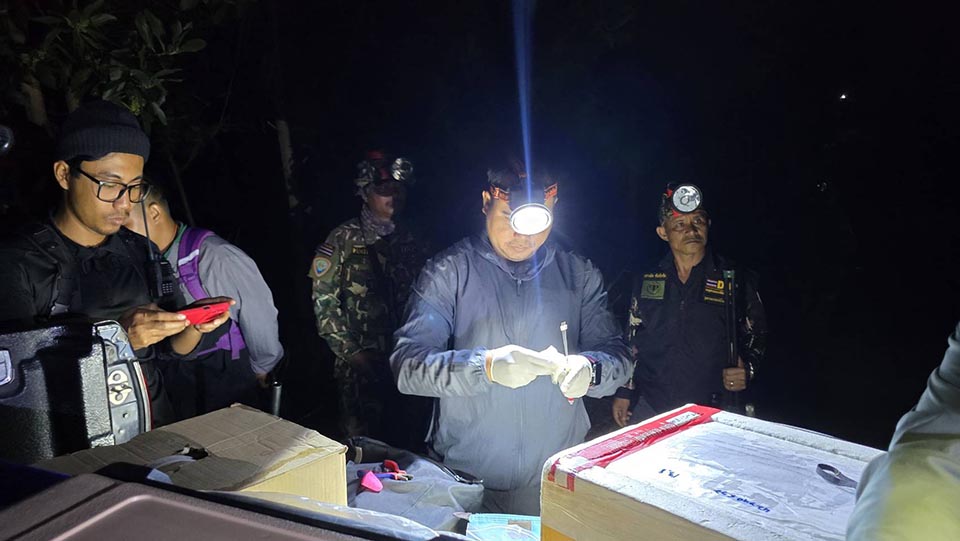
The vaccine was previously tested on seven African elephants and captive elephants in Thailand with no observed side effects. Authorities noted it does not affect pregnancy, lactation, or social behaviors within the herd.
In a late-night operation on Monday, a team of veterinarians and officials successfully vaccinated three adult females from a herd of 12. Using air rifles to deliver the darts, the team avoided the use of tranquilizers to minimize risk to the animals and ensure they could remain with their herd.
The DNP will monitor the vaccinated elephants closely for 48 hours. Long-term follow-ups, including blood and fecal analysis to check immunity levels, will be conducted every six to eight months over a seven-year period.
Wildlife officials emphasized that population control is a matter of welfare. Without intervention, overpopulation leads to food and water scarcities, forcing elephants into dangerous encounters with humans involving road accidents, electrocution, and retaliatory violence.
The program marks a shift toward long-term conservation strategies focused on sustainability and the coexistence of humans and wildlife. (TNA)