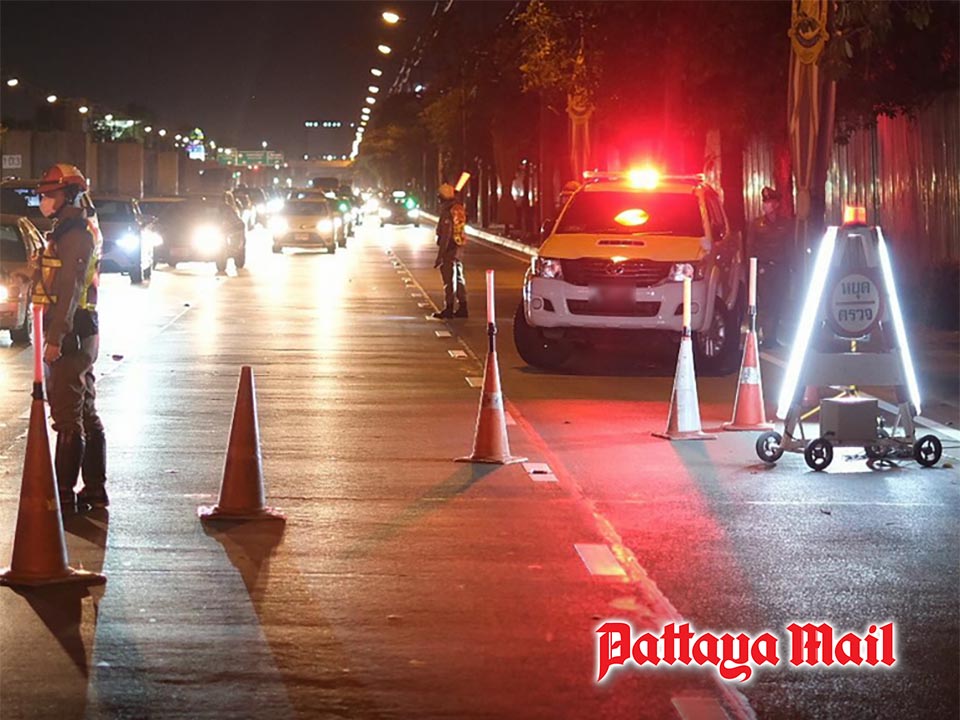
PATTAYA, Thailand – As Thailand enters the New Year “Seven Dangerous Days,” police warnings across the country carry a message that Pattaya residents and visitors should not ignore: refuse a breath test, and you are treated as drunk—no debate, no loopholes.
The policy is blunt by design. Motorists who see a checkpoint and decide to stop, pull over, or even sleep in their vehicles to avoid a test will still be considered intoxicated if they refuse to blow when officers call them. The same applies to anyone who outright declines a breathalyzer. In the eyes of the law, silence equals guilt.
While the warning comes from provincial police, the implications are especially relevant for Pattaya, a city internationally known for its nightlife, alcohol culture, and constant flow of tourists. Here, drink driving is not an abstract risk—it is a recurring and deadly reality. Every holiday season, headlines repeat the same tragic pattern: high-speed crashes, motorcycles without helmets, families losing loved ones, and tourists injured or killed within days of arrival.
The penalties are no longer symbolic. A first offence can bring a fine of up to 20,000 baht and up to one year in prison. Repeat offenders face far harsher consequences—up to two years in jail and fines ranging from 50,000 to 100,000 baht. Yet despite these penalties, enforcement has long been inconsistent, allowing many drivers to believe they can talk their way out, wait it out, or dodge checkpoints entirely.
That belief is now being challenged.
Treating refusal as automatic intoxication closes one of the most abused loopholes in Thai traffic enforcement. It sends a clear signal that responsibility does not end when the engine stops or when a driver pretends to be asleep. The road does not reset just because someone thinks they are clever enough to avoid a test.
For Pattaya, this tougher stance is overdue. The city depends on tourism, but it also suffers from the consequences of unchecked drink driving—overburdened hospitals, shaken public confidence, and a growing sense among long-term visitors and locals that road safety is more talk than action. Real deterrence requires real enforcement, not seasonal slogans.
The New Year message is simple and uncomfortable: if you drink, do not drive. Take a taxi, use a ride-hailing app, walk, or stay put. In a city with endless transport options, there is no excuse left—only consequences.
If Pattaya wants to be seen as a world-class destination rather than a cautionary tale, the crackdown on drink driving must be consistent, visible, and uncompromising. Lives depend on it.