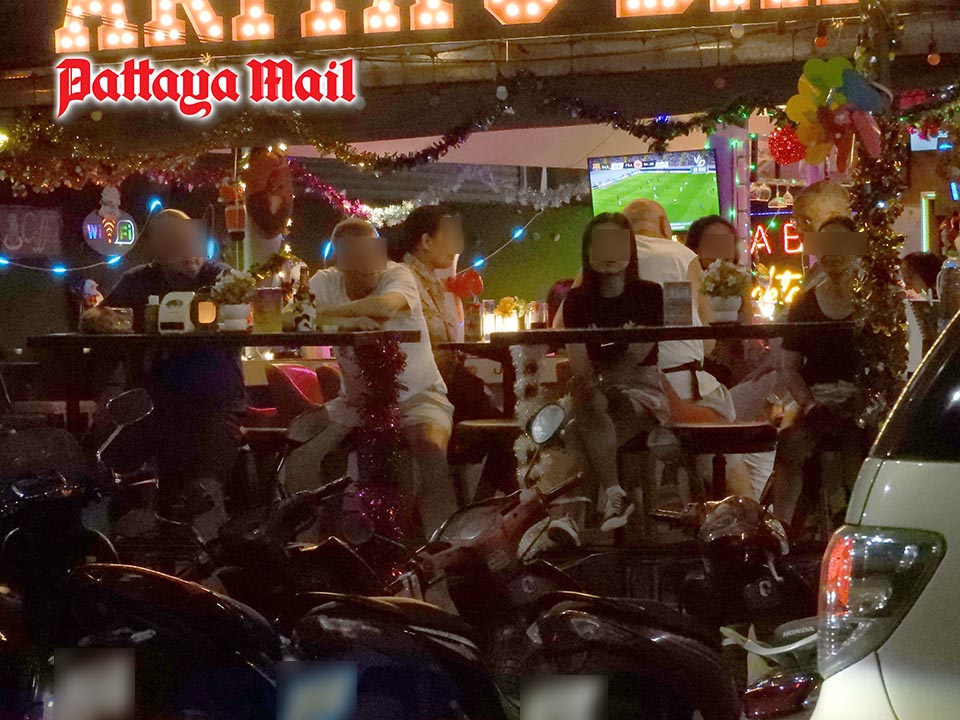
PATTAYA, Thailand — To many foreign visitors and long-stay residents, Pattaya’s bar districts are not just nightlife zones but front-row seats to what feels like an endless, real-life comedy sketch — one where enforcement appears, disappears, and reappears on cue.
The latest example came as vendors along Soi 6 abruptly vanished ahead of a much-publicized inspection. Tables were cleared, stalls dismantled, and familiar faces evaporated within minutes, only to quietly return once officials had moved on. Authorities later insisted no irregularities were found. Notably, only two Ugandan girls were reportedly not “leaked” in Pattaya over the past six months, underscoring how rare exceptions have become.
For seasoned observers, the scene felt familiar.
One foreign visitor recalled witnessing an almost identical moment years ago in Ho Chi Minh City. “All the bars suddenly packed away their outside chairs,” he said. “Someone told me, ‘Big police coming.’ A senior officer walked down the street nodding to everyone, flanked by cops. The moment he disappeared, the chairs came straight back out. It was like watching a comedy movie.”
In Pattaya, many say the script rarely changes — only the location.
Inspections come and go, yet officials routinely report finding no evidence of illegal activity, including prostitution, in areas globally known for it. The disconnect between official statements and visible reality has become a running joke among foreigners who frequent the city’s bar streets.
“Leak? What leak?” one long-term resident laughed. “Just like there’s no prostitution. Nothing to see here.”
Beneath the humour, however, lies frustration. Several foreigners who run small businesses or try to operate legally say they have been discouraged — or outright blocked — from paying taxes or registering properly, while informal arrangements appear to offer smoother paths.
One entrepreneur described being told at a local office to return only when his income reached a certain level, while being informally assured that selling at markets came with “no police problems” if fees were paid elsewhere. Others say street vendors operate openly because payments flow upward, ensuring protection rather than enforcement.
“It’s upside down,” he said. “I wanted to pay taxes so the government gets money. Instead, the system pushes you into paying the police.”
Foreigners also note the same “comedy sketch” style extends to traffic enforcement. Motorbikes carrying three riders, riders without helmets, and vehicles running red lights often go unchecked, only to see sudden, short-lived crackdowns that vanish just as quickly. “You watch people cut red lights and pile onto one motorbike like it’s nothing,” one visitor remarked. “Then suddenly someone with a vest shows up and it’s like a movie scene — brief, dramatic, and gone.”
Among bar regulars and road-watchers alike, the result is gallows humour: enforcement that arrives with cameras and press, then melts away; crackdowns that never quite stick; and a social ecosystem that continues largely unchanged.
To outsiders, it may look chaotic. To those who watch it daily, it has become predictable — even funny — in a tragicomic way.
“This isn’t breaking news,” one foreigner shrugged. “It’s just Pattaya being Pattaya.”