Perhaps because we rely so much on the senses of sight and hearing, our sense of smell sometimes takes a back seat in our experience of the world around us. But it’s surely one of the most magical and rewarding of senses. Just think of the delicate smell of roses or jasmine flowers, hot toast, pizza or even the inside of a brand-new car. As a child, I enjoyed the smell of wax crayons and I loved that tingling, pungent burnt-rubber odour of newly-laid hot tar on a road. The ethereal aroma of freshly-cut grass was especially uplifting to the spirit, even though it usually brought on a fit of hay fever.
I also loved that distinctive woody-vanilla smell that often comes from the unread pages of a new book. At the back of our house just outside Pattaya, there’s a small jungle of trees and wild shrubs. After it’s been raining, I always open a back window to relish that characteristic “peaty” aroma of the wet earth. It’s known as petrichor, a word coined in 1964 by scientists Isabel Bear and Richard Thomas. Petrichor is a kind of elemental aroma: the smell of the earth – perhaps the aroma of biological creation.
Your tongue can detect only five primary flavours whereas your nose can identify countless aromas. A couple of years ago, researchers at Rockefeller University in New York City claimed that the human nose can detect up to one trillion different smells. Bears and dogs can detect even more, especially bloodhounds, those large melancholy-looking brown dogs with the enormous ears. It’s estimated that they have a sense of smell forty times greater than that of humans.

You may have found that some smells trigger memories of specific places, people or past times. This is because the sense of smell is more closely linked with memory than any of the other senses. “As humans, we navigate the world mainly using sight,” says psychiatrist Dr Drew Cumming of the Cleveland Clinic. “But the primitive areas of our brains still have connections from when our ancestors relied on smell to survive. These connections are the basis for scent memories.”
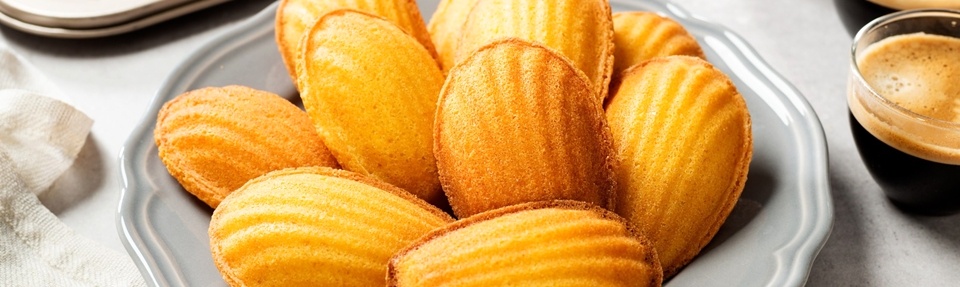
Recent studies have confirmed that smell-induced memories often recall experiences from childhood. Marcel Proust famously illustrated this kind of involuntary memory in his monumental novel In Search of Lost Time. He describes how he experienced a flood of intensely joyful childhood memories when he tasted a madeleine cake dipped in linden tea. In case you’ve forgotten (or possibly never knew), a “madeleine” is a small sponge cake with a characteristic shell-like shape and originates in the Lorraine region of in France.
Cigar smoke for me, always evokes vivid impressions of childhood Christmas evenings of long ago. It was one of the rare times of year that my father treated himself to the luxury of a box of cigars. I was told that they came from the Dominican Republic and they were clearly prized possessions. And that’s another thing. Can you recall the smell of a Christmas tree? They are usually evergreen conifers such as firs, spruces, and pines.
That cozy, woody aroma is difficult to forget. It’s caused by chemical compounds called terpenes which are found in the tree’s sap. Terpenes bring those evocative earthy, citrusy, feel-good scents associated with Christmas trees. Wine aromas too, can be amazingly evocative and they’re created during fermentation. They are caused by microscopic chemicals with slightly ominous names like pyrazines, thiols and lactones. And yes, terpenes too, since you asked.
Two wines bring powerful memories of Christmas evenings when I became old enough to appreciate wine. You might be able to guess what they are, when I tell you that both have rich and distinguished histories and they’re produced in adjacent European countries. They’re both fortified, meaning they have distilled spirit added during the production process. They both play a role in the traditional Christmas Dinner. But that’s about all they have in common. One is made primarily from white grapes and usually enjoyed as an apéritif, while the other is made mainly from red grapes and traditionally served as a dessert wine, sometime paired with cheese or chocolate.
I am of course referring to Sherry and Port. Once a popular pre-dinner drink among Britain’s more affluent classes, Sherry has now rather fallen out of fashion and become associated with maiden aunts and country vicars. The production of Sherry as we know it evolved during the Moorish period which lasted until the 13th century. The name “Sherry” comes from the Arabic name Jerez, the Spanish town at the heart of Sherry production. Sadly, you’ll be hard-pressed to find a bottle of Sherry in this neck of the woods.
During a recent wine trek, I found only two bottles at a popular supermarket in South Pattaya but nowhere else. Even the specialist wine outlets had none. However, if you are a Sherry enthusiast, salvation is at hand. There is one company in Thailand that offers an excellent selection of sherries, some from small artisan bodegas. The modestly-named Wine Garage is based in Bangkok and has one of the most fascinating and extensive wine lists in Thailand which is available on request. If you ask them nicely (and buy enough wine), they will deliver to Pattaya. (https://www.facebook.com/winegaragebangkok)
In contrast, Port is easily obtainable in Thailand and makes a splendid finale to a Christmas Dinner. Or any other dinner, for that matter. Generations ago, it was the traditional after-dinner drink among the British aristocracy. After the dessert, the ladies would be expected to depart modestly to the sitting room, while the men remained at table and lit their obligatory cigars. The Port would then be served and passed to the left, clockwise around the table in the time-honoured fashion. This custom has largely disappeared but in certain privileged British classes, Port often appears after dinner though any ladies present are no longer banished to another room.
For some people, Port is something of a mystery, so let’s just pull together a few key facts.
- Genuine Port is made in Portugal and nowhere else.
- It’s a lusciously sweet, high-alcohol wine and first produced in the late 17th century.
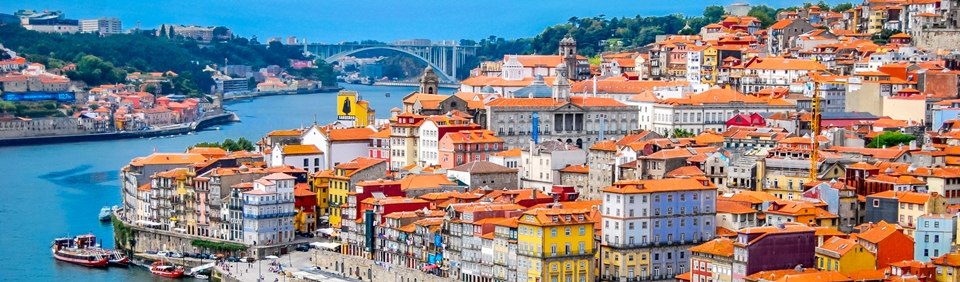
- The name is derived from the city of Oporto (or Porto) which lies on the Atlantic coast at the mouth of the Douro River.
- Grapes were traditionally crushed by treading them in shallow granite troughs called lagares but today the process is mostly automated.
- Port is fortified by adding grape spirit (usually brandy) to the blend, two or three days into the fermentation process.
- There are ten different styles of Port. The most expensive variety is vintage Port.
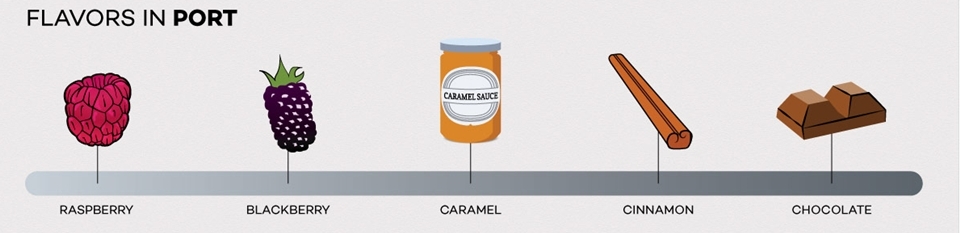
- Port often carries flavours of raspberry, blackberry, caramel, cinnamon and chocolate.
- It makes an excellent partner for fine chocolates or assertive cheeses.
We don’t need to concern ourselves with the ten different styles of Port; only the few you might encounter in these parts. Ruby Port and Tawny Port are the simplest, the least complex, the cheapest and the most popular. Both are sweet, but ruby has a fresh, fruity flavour and pairs well with fruity desserts, chocolate or soft cheese such as Gorgonzola and Stilton. Tawny is more reminiscent of caramel and nuts and because it’s allowed more oxygen contact in the barrel, it has the characteristic rusty colouring. Tawny is more suited to sweet pies and dry cheeses like Parmesan.
Aged Tawny Port is matured in the barrel for much longer until the colour fades and the aroma and taste take on a more complex character. It’s usually sold as being ten, twenty or even thirty years old and its high quality is reflected in the price. The most sought-after and eloquent of them all is Vintage Port. In the Port trade, the word “vintage” is applied to wines made from grapes harvested during just one exceptional year. It’s aged in bottle for a considerable time and fetches extremely high prices. Unlike ordinary Port, it’s intended for long-term ageing.
Port is usually sold under a company name and some of the oldest companies have reassuringly English names such as Croft (founded in 1588), Warre (1670), Taylor (1692), Sandeman (1790), Dow (1798), Cockburn (pronounced COH-burn) (1815) and Graham (1820). Other old-established names to remember are Quinta do Noval (1715), Ferreira (1751) and Fonseca (1840). Once bottled, ordinary Port doesn’t change so nothing will be gained by ageing it. Because Port is about 20% ABV it’s served in small glasses rather like half-size wine glasses with a tulip shape to focus the aroma. We used to have a set of elegant crystal Port glasses in the family for years. They had flared rims which caused the aromas to drift into the air instead of towards the nose. They were pretty glasses, but pretty useless.

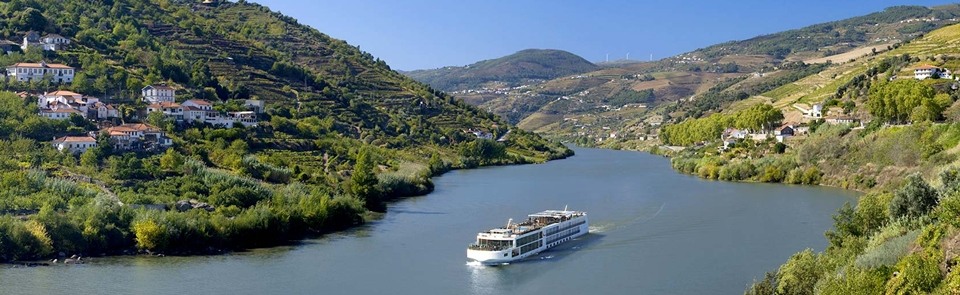
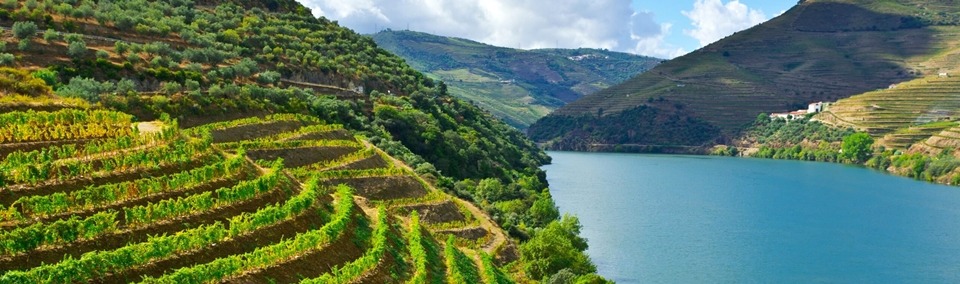
Over a hundred red and white grape varieties are authorized for Port production and they grow on the steep hills along the banks of The River Douro, which rises in the Spanish province of Soria. It flows south for a bit then, as though suddenly changing its mind, defiantly swings to the west. The river eventually enters the Atlantic Ocean at the sprawling historic city of Porto, the spiritual home of the wine which takes its name. The Douro Wine Region Valley is the oldest demarcated wine region in the world and today is home to more than 83,000 vineyard properties.
Ferreira Ruby Port (Portugal) Bt 1,095 @ Villa Market
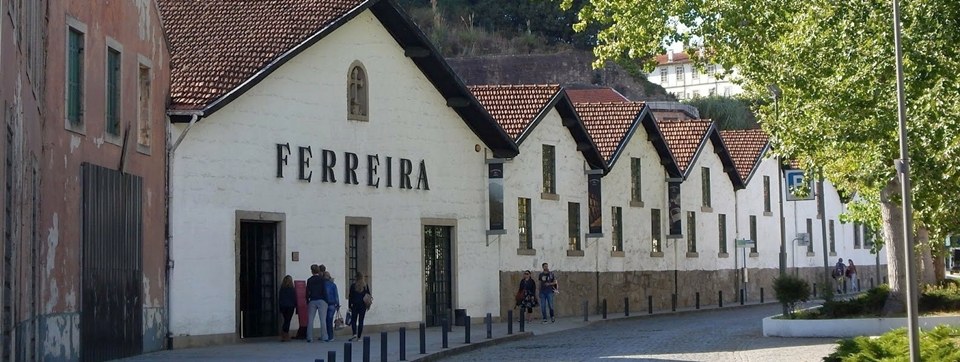
The Ferreira (feh-RAY-rah) name has long been synonymous with high-quality Port. The company was founded in 1751, and it’s the only Port wine company that has always been in Portuguese hands. It grew significantly in the 18th century and invested primarily in high quality wines, buying and cultivating some of the main wine estates in the Douro. Today, Ferreira is the main national Port brand and a symbol of quality, tradition and knowledge that has been passed down from generation to generation.
This is a splendid example of a ruby Port: an intense, purplish red colour and the aroma of fully ripened and slightly jammy fruit which wafts out of the bottle as you pour it. On the palate, it’s silky and smooth with plenty of sweet fruit and a pleasing, slightly syrupy texture. At 19.5% ABV, it’s rich and full-bodied and there’s a satisfying balance between the sweetness of the fruit and the seductively soft tannins.
The wine has a long and warming finish which seems to go on and on. In Britain, Port is usually served at the ambient temperature, though in our tropical climate, a few degrees under won’t do it any harm. The makers suggest a serving temperature of between 14ºC-16ºC which is probably just right for Europe but here it might feel a bit too chilly. This wine is superbly made and it would make a fine partner for strong cheese, fruit tarts or even chocolate desserts. If you are a newcomer to Port, this would make an excellent introduction.
Quinta Do Portal Fine Tawny Port. Bt 899 (+ VAT) @ VinestoVino, Thepprasit Road, Pattaya
Quinta do Portal is an independent family-owned estate. In the wine world, the Portuguese word quinta means “estate” and this award-winning company produces a wide range of excellent wines. Being a tawny, the wine is a brownish-pink colour and has a complex aroma which reminded me of cinnamon, toffee, fruit and orange with a dominant aroma of woody nut-like spices.
Aged four years in the barrel, the wine has an unmistakable rich, smooth texture with pronounced flavours of orange and honey. The rich, almost unctuous mouth-feel conceals the 19.5% ABV, which (in case your mind goes blank when you see percentages) is about four times stronger than a typical beer. The makers suggest that you could drink this wine with olives and salted almonds but I think I’d prefer it with a light and airy dessert. It’s an excellent budget-priced example of a Tawny Port.
The American polymath Benjamin Franklin, who apart from being one of the Founding Fathers of the United States was a writer, scientist, inventor and political philosopher. He once wrote: “In wine there is wisdom, in beer there is freedom, in water there are bacteria and in port there is joy.” I’m not sure about the “freedom in beer” but there’s certainly much joy to be had with a glass or two of Port. Especially after a sumptuous dinner.