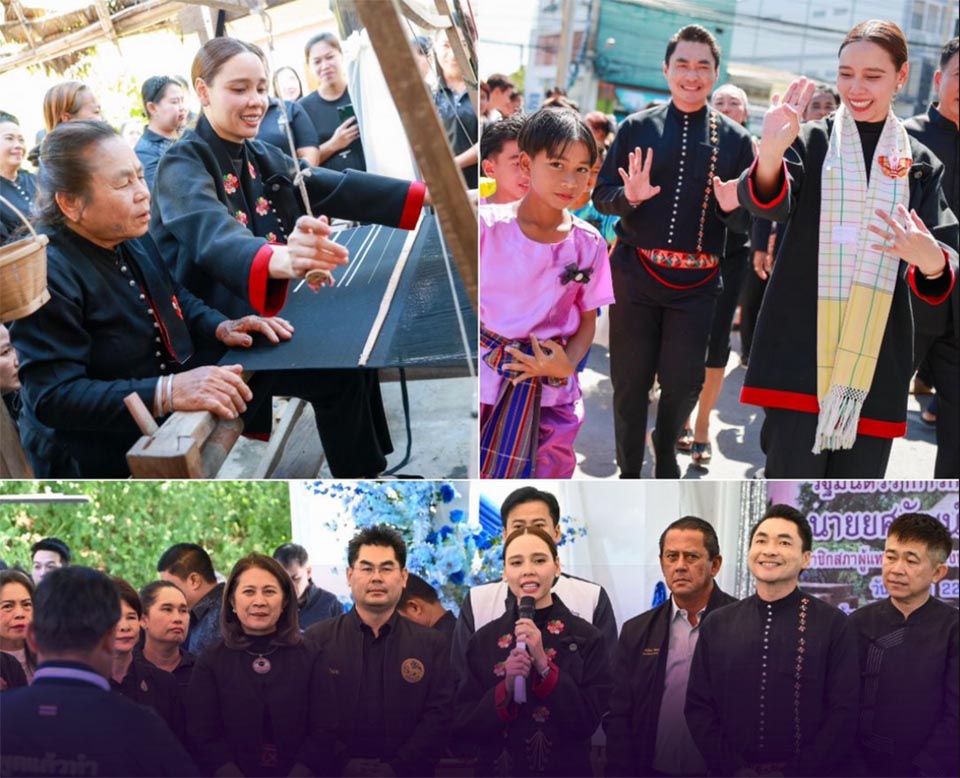
KANCHANABURI, Thailand – Culture Minister Sabeeda Thaised visited Kanchanaburi Province on November 22 to promote cultural preservation and advance the “Tai Thai” policy, which aims to transform local cultural capital into tangible economic benefits. The visit focused on supporting the Thai Song Dam ethnic community, strengthening model cultural communities, and highlighting the economic potential of important heritage sites, in line with the ministry’s goal of driving sustainable creative-economy development rooted in local identity.
The minister and senior officials from the Ministry of Culture started their visit at Wat Sa Ban Kluay in Phanom Thuan District, the cultural heart of the Tai Song Dam community. During the visit, the delegation explored ways to preserve local traditions and turn them into creative-economy opportunities. The minister watched traditional performances, observed local craft demonstrations, and highlighted that the Tai Song Dam’s distinctive cultural identity is a valuable asset that can generate income and create new opportunities for residents. She noted that the ministry will continue to support efforts to secure international recognition for this heritage.
The delegation then traveled to Ban Nong Khao in Tha Muang District, a model moral community known for preserving local traditions, including white-house architecture, folk performances, traditional food, and handicrafts. In partnership with Wat Intharam under the “Baworn” concept (Home–Temple–School), the community has strengthened cultural tourism and created income for residents. The minister praised the community’s resilience, noting that moral communities are practical examples of how cultural heritage can drive real economic development aligned with the Tai Thai vision.
The delegation also visited the Ban Kao National Museum in Mueang Kanchanaburi District, which preserves artifacts from the Ban Kao archaeological site, one of the most important prehistoric sites in Thailand and Southeast Asia. The site includes Neolithic human remains dating back 3,000–4,000 years, along with tools and pottery of the “Ban Kao Culture.” The minister inspected the displays and reviewed management operations, stressing the need to modernize the museum into an accessible, visitor-friendly institution that supports both tourism and responsible conservation.
In the afternoon, the minister visited the Mueang Sing Historical Park in Sai Yok District, known for its architecture and more than 800 years of history. The site reflects the former prosperity of the Khwae Noi River Basin through its laterite structures and surrounding archaeological remains. The minister received updates on conservation efforts and tourism promotion initiatives, and emphasized that the historical park has strong potential to generate income and expand opportunities for local communities when managed effectively and collaboratively.
The minister said the field visit aimed to help the Rang Wai community and the Wat Intharam moral community grow into cultural-tourism destinations that can generate income and support the grassroots economy. She added that both the Ban Kao National Museum and Mueang Sing Historical Park will continue to be developed as key learning centers. The overall approach underscores that cultural preservation is not merely protective—it is a strategy to extend the value of cultural heritage into practical cultural-economic power, reinforcing local identity and pride in line with the Tai Thai policy to sustain, innovate, and guide Thai culture toward a sustainable future. (NNT)